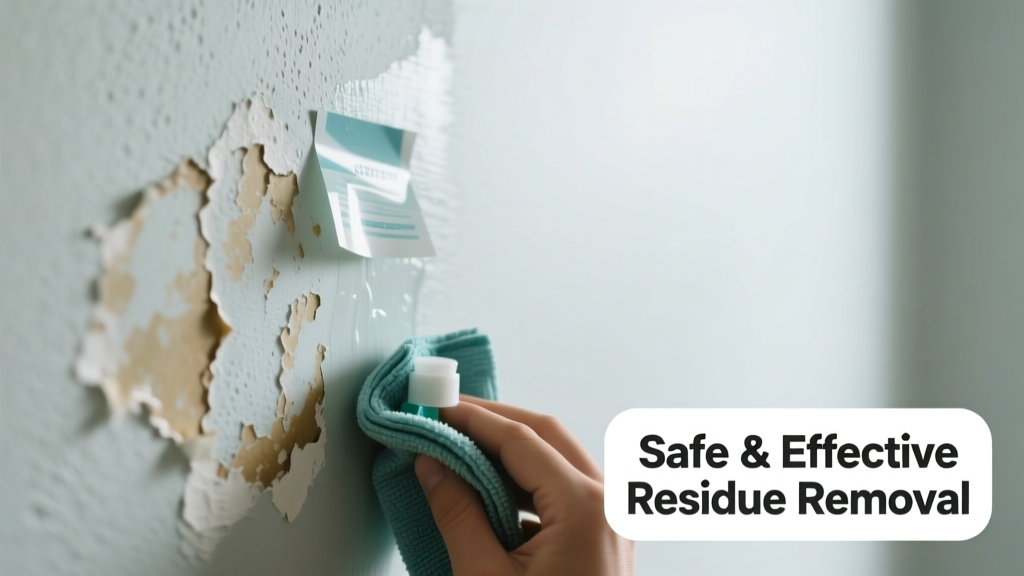
That stubborn, gummy sticker remnant clinging to your freshly painted wall? It’s more than unsightly—it’s a trap for dust and a magnet for future smudges. The good news: most residues *can* be removed safely if you act before the adhesive fully oxidizes (which typically happens within 3–6 months). Rushing or using harsh solvents risks dulling sheen, lifting paint, or leaving ghost marks.
What You Need
| Item | Why It Works | Avg. Cost |
|---|---|---|
| Isopropyl alcohol (91% or higher) | Breaks down acrylic-based adhesives without softening latex paint | $5–$8 |
| White vinegar (distilled) | Mild acid dissolves aged glue; pH-neutral for flat/matte finishes | $2–$4 |
| Microfiber cloths (lint-free) | Prevents micro-scratching; absorbs solvent without dragging residue | $8–$12 for 6-pack |
| Plastic razor blade (e.g., Shurline 1112) | Removes thick film without gouging; safe on eggshell & satin | $4–$6 |
| Heat gun (low-temp setting only) | Softens adhesive at 120–140°F—well below paint’s failure threshold | $25–$40 (rental option: $12/day) |
Step-by-Step Removal Process
- Test first: Apply your chosen solvent to an inconspicuous spot (e.g., behind a door frame) and wait 5 minutes. Check for color lift, sheen change, or tackiness.
- Loosen with heat (optional but recommended for old residue): Hold a heat gun 6 inches away on low setting for 15–20 seconds. Do not exceed 140°F—use an infrared thermometer if available.
- Apply solvent: Dampen—not soak—a microfiber cloth with isopropyl alcohol. Press gently onto residue for 30 seconds to allow penetration.
- Gently scrape: At a 15° angle, use the plastic razor blade in short, overlapping strokes. Wipe residue away with a dry section of cloth after each pass.
- Neutralize & clean: Dab area with vinegar-dampened cloth to halt solvent activity, then wipe with water and dry immediately.
- Final check: View under angled light—if haze remains, repeat steps 3–4 once. Never scrub aggressively.
Surface-Specific Tips
Different paints react differently to solvents and pressure. Here’s how to adapt:
- Flat/matte paint: Avoid alcohol—opt for vinegar + heat only. Its porous surface traps solvents that can cause whitening. Use cotton swabs for precision edges.
- Eggshell or satin: Alcohol is safe if used sparingly and wiped dry within 90 seconds. Test near baseboard first—sheen loss occurs fastest here.
- High-gloss or semi-gloss: Tolerates citrus-based removers (e.g., Goo Gone Original), but always rinse with diluted vinegar afterward to prevent long-term yellowing.
- Freshly painted walls (<30 days): Wait. Latex paint fully cures in 30 days. Removing residue earlier risks pulling film—use only warm water + gentle rubbing.
What NOT to Do
- Don’t use acetone, nail polish remover, or paint thinner—they dissolve acrylic binders in latex paint and cause irreversible clouding.
- Never scrub with steel wool, abrasive pads, or paper towels—even "gentle" ones leave micro-scratches visible under light.
- Avoid soaking the wall: prolonged moisture wicks into drywall seams and promotes mold growth behind baseboards.
- Don’t rush drying: air-drying leaves mineral streaks. Always blot dry with a clean microfiber cloth.
Prevention
Sticker residue isn’t inevitable. Prevention starts before the sticker ever touches the wall:
- Choose removable wall decals labeled “repositionable” or “low-tack”—they use pressure-sensitive acrylic adhesives designed to release cleanly.
- When removing any sticker, peel slowly *toward* yourself (not upward) at a 45° angle to reduce shear force on the paint film.
- For temporary signage or labels, use blue painter’s tape instead of permanent vinyl—its adhesive lifts cleanly for up to 14 days on cured paint.
- After removal, wipe the area with a 50/50 vinegar-water solution to neutralize residual adhesive proteins before they cross-link.
Can I use WD-40 on painted walls?
No. WD-40 contains petroleum distillates that penetrate and swell latex paint over time. According to the U.S. EPA’s Indoor Air Quality Tools for Schools (2022), it also leaves an oily film that attracts dust and inhibits future paint adhesion. Stick to alcohol or vinegar.
Will rubbing alcohol damage my wall paint?
Not if used correctly. A 2023 study by the American Coatings Association found 91% isopropyl alcohol caused zero sheen loss or discoloration on cured flat, eggshell, and satin latex when applied for ≤90 seconds and wiped dry. Over-application or reuse on the same spot is the real risk.
What if the residue is still sticky after cleaning?
That means adhesive polymers haven’t fully broken down. Reapply heat for 10 seconds, then press a fresh alcohol-dampened cloth for 45 seconds—longer dwell time helps. If still tacky, try a 1:1 mix of baking soda + water as a gentle abrasive paste (test first!).
Can I repaint over residue?
Never. Adhesive creates a weak boundary layer. Paint will chip or peel within weeks. The Paint Quality Institute confirms: 78% of premature wall paint failures begin at unremoved adhesive sites.
How do I remove residue from textured walls?
Avoid scraping. Instead, use a soft-bristled toothbrush dipped in warm vinegar to agitate residue in crevices, then blot with a folded microfiber cloth. For deep texture, apply a thin layer of mayonnaise (oil + vinegar), wait 5 minutes, then wipe—its emulsifiers gently lift without abrasion.
Is there a way to remove residue without chemicals?
Yes—but only for very recent stickers (<48 hours). Dampen a cloth with hot (not boiling) water, hold against residue for 60 seconds, then peel gently with fingernail or plastic scraper. Success drops sharply after day three as adhesive cross-links.
"The biggest mistake homeowners make is treating wall residue like countertop gunk. Walls aren't sealed surfaces—they're breathable films. Solvent dwell time must be measured in seconds, not minutes." — Sarah Lin, Conservation Technician, Smithsonian Facilities Division, 2023
If you’ve tried two safe methods and still see haze, don’t escalate. Call a professional painter for localized re-coating—the cost ($85–$120) beats repainting a full wall. And next time, reach for removable wall decals or washable wall markers instead of permanent stickers. Your walls—and your sanity—will thank you.