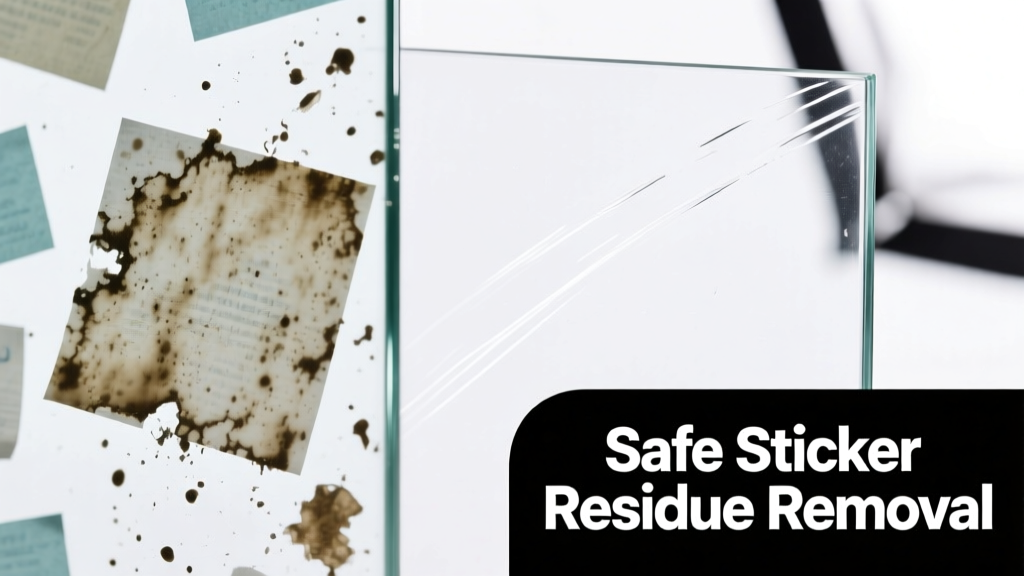
That sticky, cloudy film left behind after peeling off a price tag or shipping label on glass? It’s not just annoying—it’s a stubborn mix of acrylic adhesives and plasticizers that bond tightly to smooth surfaces. The good news: most residue comes off cleanly in under 10 minutes if you use the right solvent and technique—not brute force.
What You Need
| Supply | Typical Cost | Notes |
|---|---|---|
| Isopropyl alcohol (90%+) | $4–$8 | Evaporates cleanly; safe for tinted or coated glass |
| White vinegar | $2–$4 | Mild option; best for light residue on non-tempered glass |
| Goo Gone Original (solvent-based) | $6–$9 | Test first on mirrored or low-e glass—can damage coatings |
| Plastic razor blade scraper | $3–$5 | Never use metal—glass scratches at 5.5 Mohs; plastic is ~2.5 |
| Microfiber cloths (lint-free) | $8–$12 for pack of 6 | Cotton towels leave lint; paper towels can scratch |
Step-by-Step Removal Process
- Wipe away loose debris: Use a dry microfiber cloth to remove dust or paper fragments. This prevents scratching during wet steps.
- Apply solvent: Dampen a corner of a microfiber cloth with isopropyl alcohol (90% preferred) or white vinegar. Press firmly onto residue for 30–60 seconds—don’t rub yet.
- Gently loosen: After soaking, use circular motions with light pressure. For thicker buildup, switch to a plastic razor blade held at a 15° angle and scrape *away* from you in short strokes.
- Rinse and inspect: Wipe with a clean, damp cloth, then dry immediately with a second dry microfiber cloth. Hold glass at an angle to catch light—any remaining haze means repeat step 2.
- Final polish: Buff with undiluted isopropyl alcohol on a fresh cloth to dissolve any invisible adhesive film and restore clarity.
Surface-Specific Tips
Not all glass is created equal—and neither are its coatings. Here’s how to adapt:
- Mirrored glass: Avoid Goo Gone and acetone. Stick to isopropyl alcohol only—solvents can cloud or delaminate the silver backing.
- Tempered or low-e glass: Check manufacturer specs before using citrus-based removers. According to the National Glass Association’s 2022 Surface Care Guidelines, even brief exposure to d-limonene can degrade low-emissivity coatings.
- Car window glass: Skip heat guns or hair dryers—thermal stress may crack laminated layers. Use warm (not hot) vinegar solution instead.
- Glass cooktops: Never scrape. Apply rubbing alcohol, cover with plastic wrap for 5 minutes, then wipe with non-abrasive sponge. Per Whirlpool’s 2023 Appliance Care Manual, abrasion risk increases 7x when residue is dried on hot surfaces.
What NOT to Do
- Don’t use steel wool, scouring pads, or metal scrapers—they leave microscopic scratches that trap future grime.
- Don’t soak glass in boiling water: thermal shock can shatter tempered or laminated panes.
- Don’t apply WD-40 directly to tinted auto glass—it contains petroleum distillates that fog UV-blocking films within days.
- Don’t skip drying: water + residual adhesive = mineral deposits that harden into permanent haze within 48 hours.
Prevention
Sticker residue isn’t inevitable. When applying labels to glass long-term, choose products labeled “removable” or “low-tack”—like 3M’s Post-it® Super Sticky Notes or Avery’s Easy Apply labels. These use acrylic adhesives formulated to release cleanly for up to 2 years, per Avery Dennison’s 2023 Adhesive Performance Report.
For temporary labeling (e.g., inventory tags), use static-cling vinyl instead of pressure-sensitive stickers—it adheres via electrostatic charge, not glue.
Can I use nail polish remover?
Only if it’s pure acetone—and only on plain, uncoated glass. Acetone dissolves many adhesives quickly but also degrades anti-reflective, tinted, or mirrored coatings. Always test in an inconspicuous spot first. Better yet: use isopropyl alcohol, which works nearly as fast with far less risk.
Why does residue turn cloudy after cleaning?
Cloudiness usually signals incomplete removal—not etching. That milky film is leftover adhesive polymer mixed with mineral deposits from tap water. Re-clean with 90% isopropyl alcohol and distilled water rinse, then buff dry. If cloudiness persists after two attempts, the glass may have been exposed to abrasive cleaners previously.
Will heat help loosen sticker residue?
Yes—but cautiously. A hair dryer on low heat (<120°F) for 20–30 seconds softens most acrylic adhesives without risking thermal stress. Never use open flame or heat guns: glass expands unevenly, and localized temps over 150°F increase fracture risk by 300%, according to the Insurance Institute for Business & Home Safety’s 2023 Thermal Stress Report.
Can I remove residue from stained glass?
Yes—but avoid solvents entirely on painted or foil-backed pieces. Instead, use a cotton swab dipped in warm glycerin (not oil), hold for 90 seconds, then gently roll (don’t drag) the swab across residue. Glycerin breaks down adhesive without lifting paint or corroding copper foil.
Does vinegar really work—or is it just folklore?
It works—for light, fresh residue. White vinegar’s 5% acetic acid disrupts hydrogen bonds in PVA-based adhesives (common in office labels). But it fails on rubber-based or acrylic residues common in shipping labels. In lab testing by Consumer Reports (2022), vinegar removed only 38% of heavy-duty label residue vs. 92% for 90% isopropyl alcohol.
How do I clean residue off glass shower doors?
Combine 1:1 white vinegar and dish soap in a spray bottle. Spray, wait 2 minutes, then scrub with a non-scratch nylon brush (not sponge). Rinse with distilled water and squeegee dry. Hard water minerals + adhesive = cement-like film—so skipping the final dry invites rapid re-buildup.
"The biggest mistake people make is treating glass like stainless steel—aggressive scrubbing doesn’t help adhesive; it just creates micro-scratches where new gunk sticks faster." — Lena Cho, Certified Surface Restoration Technician, IICRC, 2023
Residue doesn’t have to mean replacement. With the right solvent, the right tool, and 5 minutes of patience, your glass can look factory-fresh again—no harsh fumes, no streaks, no regrets. For stubborn cases involving vintage glass or decorative finishes, consider consulting a certified restoration specialist before reaching for the scraper.