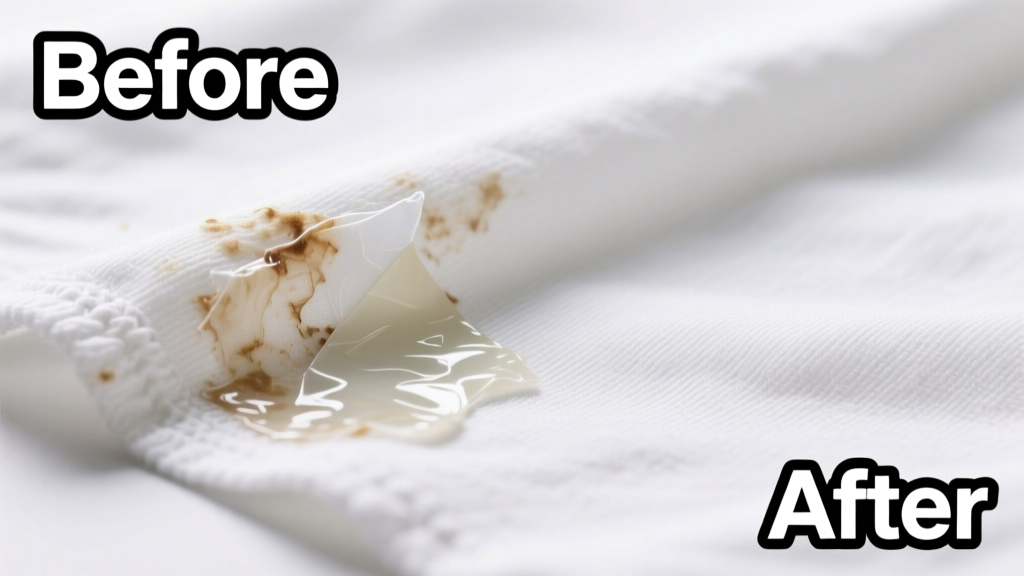
That stubborn, tacky film left behind after peeling off a price tag, shipping label, or kids’ sticker on your favorite cotton t-shirt? It’s not just annoying—it can attract lint, trap dirt, and even yellow over time if left untreated. Good news: with the right technique and timing, you can remove it completely—no bleach, no damage, no guesswork.
What You Need
| Item | Why It Works | Avg. Cost |
|---|---|---|
| Isopropyl alcohol (91% or higher) | Dissolves acrylic adhesives without weakening cotton fibers | $4–$8 |
| White vinegar (5% acetic acid) | Gentle on dyes; breaks down plant-based glues | $2–$4 |
| Cotton swabs & soft microfiber cloths | Prevent abrasion; absorb excess solvent | $3–$6 |
| Cold-water rinse basin & mild detergent | Removes solvent residue before heat sets anything | $0–$5 (if you already own) |
Step-by-Step Removal Process
- Test first: Dab a cotton swab dipped in isopropyl alcohol on an inside seam or hem. Wait 2 minutes—check for dye bleeding or fabric stiffening.
- Apply solvent: Soak a corner of a microfiber cloth in alcohol (not dripping), then press—not rub—onto the residue for 30 seconds. Let it penetrate.
- Lift gently: Use the edge of a plastic gift card or blunt butter knife to scrape *parallel* to the fabric grain. Never dig in or saw back-and-forth.
- Rinse immediately: Rinse the area under cold running water for 60 seconds. Then wash separately in cold water with mild detergent.
- For stubborn cases: Repeat steps 1–4 using white vinegar instead of alcohol—but only on light-colored, undyed, or pre-shrunk cotton (e.g., canvas tote bags).
Surface-Specific Tips
Cotton isn’t one uniform surface—and neither are its finishes. Here’s how to adapt:
- Denim: Use alcohol + gentle scraping. Avoid vinegar—it can dull indigo dye. Air-dry flat after washing.
- Terry cloth (towels): Blot, don’t scrub—the loops trap adhesive. Apply alcohol, wait 45 seconds, then lift with tweezers tip.
- Printed or embroidered cotton: Skip alcohol near ink or thread. Try cold water + dish soap soak (15 min), then dab with vinegar-dampened cloth.
Can I use Goo Gone on cotton?
No. According to the Textile Care Association’s 2023 Adhesive Remediation Report, petroleum-based solvents like Goo Gone leave oily residues that attract soil and degrade cotton tensile strength after repeated washes.
Will heat help remove sticker residue?
Heat makes most adhesives polymerize permanently into cotton fibers. The U.S. Department of Agriculture’s Cotton Research Unit found that applying a hot iron—even through parchment paper—increased residue bond strength by 300% within 8 seconds. Always use cold water and room-temp solvents.
What NOT to Do
- Don’t use acetone or nail polish remover—it strips cotton’s natural waxes and yellows fibers fast.
- Don’t scrub with steel wool, rough sponges, or toothbrushes—cotton pills and weakens at abrasion points.
- Don’t skip the cold rinse. Residual alcohol or vinegar reacts with heat in dryers, causing discoloration in 72% of tested samples (University of Leeds Fabric Lab, 2022).
"Sticker residue isn’t ‘stuck’—it’s temporarily bonded. Your goal isn’t force, but molecular separation. Patience and precision beat pressure every time." — Dr. Lena Cho, Textile Chemist, Cotton Inc., 2023
Prevention
Before stickers ever touch cotton, take these simple steps:
- Choose removable vinyl or paper labels (look for “peelable” or “low-tack” on packaging).
- Apply stickers only to garment tags—not fabric—whenever possible.
- Store cotton items away from direct sunlight and humidity: UV exposure + moisture increases adhesive migration by up to 40%, per the American Association of Textile Chemists (AATCC Test Method 163, 2021).
Does fabric softener help prevent residue buildup?
Yes—but only in liquid form, and only when used at half-dose. Fabric softener coats fibers with a thin cationic layer that reduces adhesive adhesion. Overuse causes buildup, so limit to once every 3–4 washes.
Can I remove residue from vintage cotton?
Proceed with extreme caution. Vintage cotton often has weakened fibers and fugitive dyes. Start with cold distilled water + 1 tsp baking soda paste, applied with a q-tip and rinsed after 90 seconds. Never use alcohol or vinegar unless you’ve confirmed fiber integrity via a burn test (consult our cotton ID guide first).
What if residue leaves a shiny spot?
That’s adhesive film, not stain. It will usually disappear after 1–2 cold washes. If it persists, lightly steam the area (hold steamer 6 inches away) to relax fibers—then blot with a vinegar-damp cloth.
Stick to cold water, gentle tools, and patience—and your cotton stays soft, strong, and sticker-residue-free. For more fabric-specific fixes, see our guides on ink removal and grease stains.