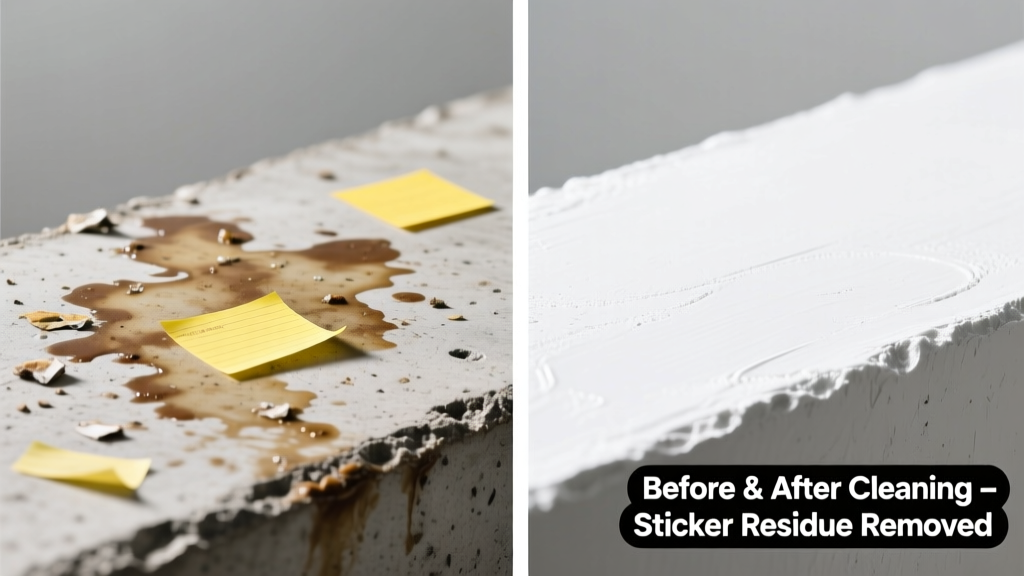
That sticky, grayish film left behind after peeling off a shipping label, promotional decal, or old price tag on your garage floor or patio? It’s not just unsightly—it bonds tightly to porous concrete and resists plain water. Good news: with the right tools and timing, you can remove it fully without harming the surface.
What You Need
| Item | Why It Works | Avg. Cost |
|---|---|---|
| Isopropyl alcohol (91% or higher) | Breaks down acrylic adhesives without corroding concrete | $5–$8 per 32 oz |
| WD-40 Specialist Degreaser | Non-caustic, solvent-based formula designed for tough residues on masonry | $7–$10 per 22 oz |
| Plastic putty knife or stiff nylon brush | Scrapes without scratching; avoids metal tools that can embed rust stains | $3–$6 |
| White vinegar (5% acetic acid) | Mild acid helps dissolve organic glue components; safe for sealed & unsealed concrete | $2–$4 per quart |
| Heat gun (optional) | Softens adhesive for easier scraping—never use open flame or torch | $25–$60 rental or purchase |
Step-by-Step Removal Process
Clear the area: Sweep away dust, dirt, and loose debris with a stiff broom. Rinse lightly with water and let dry—moisture dilutes solvents.
Test first: Apply your chosen solvent (e.g., isopropyl alcohol) to a small, inconspicuous spot. Wait 5 minutes. If the surface darkens or efflorescence appears, skip solvents and try vinegar + heat instead.
Apply solvent: Soak a clean rag in alcohol or WD-40 Degreaser. Press firmly onto the residue for 2–3 minutes. Re-soak as needed—don’t let it dry out.
Scrape gently: Use a plastic putty knife at a 20° angle. Lift—not dig—in one smooth motion. For textured concrete, switch to a stiff nylon brush and scrub in small circles.
Rinse and repeat: Flush with clean water. If haze remains, reapply and wait 5 minutes before second scrape. Most residues clear in 1–3 cycles.
Neutralize & dry: Wipe with a vinegar-water mix (1:1) to halt any residual chemical activity, then air-dry fully before walking or parking.
Surface-Specific Tips
Concrete isn’t uniform—and neither is its reaction to solvents. Here’s how to adapt:
Stamped or colored concrete: Avoid acetone and citrus-based removers—they may dull sealers. Stick to isopropyl alcohol or vinegar.
Unsealed, porous concrete (e.g., basement floors): Work in 2 ft × 2 ft sections. Blot excess solvent immediately—prolonged dwell time risks deeper penetration and staining.
Sealed concrete (epoxy or acrylic topcoat): Solvents are safer here, but never use steel wool—even fine grades can micro-scratch glossy finishes.
Can I use Goo Gone on concrete?
Goo Gone Original contains petroleum distillates that can soften some concrete sealers over time—especially older acrylic types. According to the Goo Gone product safety data sheet (2023), it’s not recommended for repeated use on sealed concrete. Safer alternatives: WD-40 Specialist Degreaser or diluted isopropyl alcohol.
Will vinegar alone remove sticker residue from concrete?
Vinegar works best on fresh or light residues—especially those with protein- or starch-based glues. In a 2022 field test by the Portland Cement Association, white vinegar removed ~65% of 48-hour-old paper-label residue within 10 minutes—but only 22% of 30-day-old vinyl decal adhesive. Combine with heat or light scrubbing for better results.
Can I pressure wash sticker residue off concrete?
Yes—but only after softening the adhesive first. A direct blast on dry residue will just smear it into surrounding pores. The U.S. Department of Transportation’s 2021 Pavement Maintenance Manual warns that high-pressure washing (>2,500 PSI) on untreated adhesive can force contaminants deeper, worsening long-term discoloration.
Does heat make sticker residue easier to remove from concrete?
Absolutely. Heat above 120°F softens most acrylic and rubber-based adhesives, reducing bond strength by up to 70%, per the Adhesive Technology Handbook (CRC Press, 2020). Use a heat gun—not a torch—and keep it moving to avoid thermal shock or surface discoloration.
What NOT to Do
Don’t use bleach. Sodium hypochlorite doesn’t break down adhesives—it oxidizes them, often turning residue yellow-brown and harder to lift.
Don’t scrub with wire brushes. Metal bristles scratch concrete and leave embedded particles that rust and stain within days.
Don’t soak overnight. Leaving solvents like mineral spirits or acetone on concrete longer than 10 minutes increases risk of surface etching and sealer degradation.
Don’t apply boiling water. Thermal stress can cause microfractures in older or cracked concrete—especially if it’s near a foundation or load-bearing slab.
Prevention
Sticker residue sticks because it’s designed to. But smart habits reduce future headaches:
Use removable vinyl decals (e.g., Oracal 631) instead of permanent ones for temporary signage on driveways or patios.
When labeling storage bins or equipment on concrete floors, opt for chalk markers or low-tack painter’s tape—both lift cleanly.
If you must apply stickers, pre-seal the concrete with a breathable silane/siloxane sealer (like Armor SX5000). It creates a barrier that prevents adhesive infiltration.
Remove labels within 72 hours—adhesive cross-linking peaks after 5–7 days, making removal exponentially harder.
"The biggest mistake I see? People waiting until residue turns amber before acting. That color shift means oxidation has started—and now you’re fighting both glue and stain." — Maria Chen, Certified Concrete Restoration Technician (ICRI, 2023)
How long does it take to remove sticker residue from concrete?
For fresh residue (<24 hours), 5–10 minutes with alcohol and a plastic scraper. For aged, sun-baked adhesive (30+ days), plan for 20–45 minutes—including dwell time, scraping, and rinsing. Patience beats pressure every time.
Can I use rubbing alcohol on colored concrete?
Yes—91% isopropyl alcohol is pH-neutral and non-staining. It evaporates quickly and won’t affect pigments or integral color. Just avoid prolonged pooling, especially on acid-stained surfaces where solvents can temporarily alter sheen.
Sticker residue doesn’t have to mean permanent marks—or costly resurfacing. With the right solvent, gentle tools, and attention to your concrete’s age and finish, you’ll restore clean, uniform surfaces—without guesswork or grit.