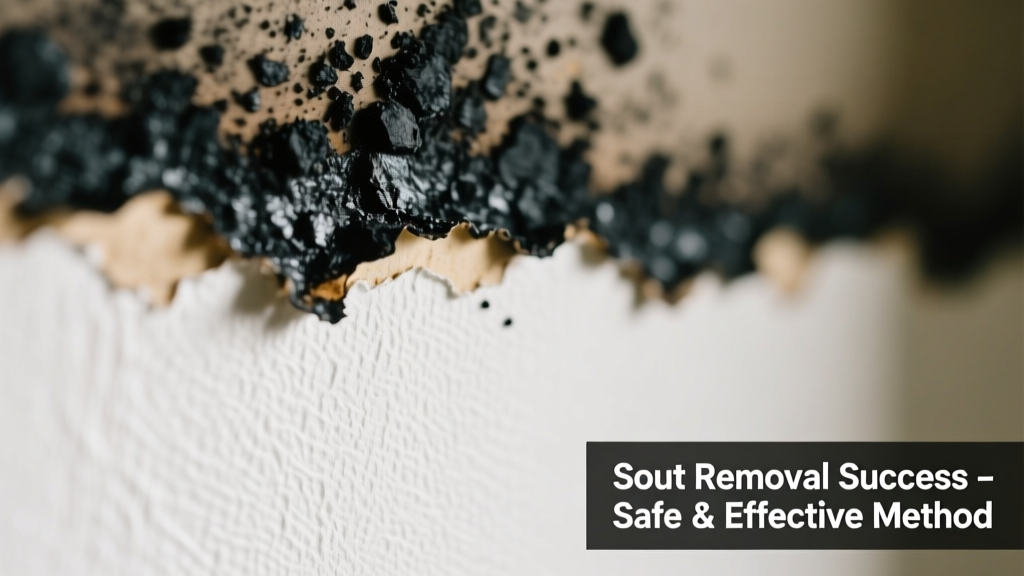
Discovering soot streaks on your wallpaper after a candle mishap, fireplace puff, or nearby fire alarm test is deeply frustrating—especially when the paper looks delicate or expensive. The good news? Soot isn’t always permanent, but timing and technique matter more than brute force. Act within 48 hours for best results, and never assume 'just wiping' will help—it often grinds particles deeper.
What You Need
| Item | Purpose | Cost Range |
|---|---|---|
| Dry chemical sponge (soot sponge) | Physically lifts soot without moisture or abrasion | $8–$15 |
| Microfiber cloths (lint-free) | Wipe residue; avoid cotton towels that shed | $6–$12 for pack of 6 |
| HEPA vacuum with soft brush attachment | Loose soot removal before contact cleaning | $120–$280 (rental: $25/day) |
| Isopropyl alcohol (91%) | For vinyl or washable wallpapers only—test first | $5–$9 per bottle |
| White vinegar + distilled water (1:3) | Mild acidic rinse for mineral-based soot residues | $3–$5 |
Step-by-Step Removal Process
- Vacuum first: Use a HEPA vacuum with a soft brush attachment on lowest suction. Hold nozzle 1–2 inches from surface and move slowly—never press or rub. This removes ~70% of loose particulates (per the National Fire Protection Association’s Smoke & Soot Remediation Guide, 2022).
- Try dry sponging: Gently wipe with a dry chemical sponge using light, straight strokes—not circles. Replace sponge edge frequently. Stop if paper fibers lift or color transfers.
- Spot-test solvents: On an inconspicuous area (e.g., behind furniture), apply one drop of 91% isopropyl alcohol with a cotton swab. Wait 60 seconds. If no fading, bubbling, or tackiness occurs, proceed cautiously on stained zones only.
- Blot—don’t scrub: Dampen a microfiber cloth with vinegar-water solution, wring until nearly dry, then gently blot. Never oversaturate—wallpaper adhesive can fail at just 15% moisture absorption (U.S. Gypsum Technical Bulletin #T-117, 2023).
- Air-dry vertically: Leave windows open or use a fan on low—no heat sources. Drying too fast causes curling or seam separation.
Surface-Specific Tips
Soot behaves differently depending on wallpaper type—and misidentifying it is the top cause of damage. Here’s how to adapt:
- Vinyl-coated wallpaper: Tolerates alcohol and vinegar solutions well. Use sponge first, then solvent-blotted microfiber. Avoid steam cleaners—they melt backing adhesives.
- Non-woven (e.g., Brewster, York): More breathable but less moisture-resistant. Skip liquids entirely. Rely on vacuum + dry sponge only.
- Traditional paper (uncoated): Extremely fragile when soiled. Do not apply any liquid. Vacuum only, then consult a restoration specialist if staining remains.
- Foil or metallic finishes: Never use alcohol or vinegar—these corrode thin metal layers. Use only dry sponge, applied in one direction to avoid scratching.
What NOT to Do
- Don’t use household cleaners like Windex, bleach, or all-purpose sprays—they leave film, yellow paper, or degrade adhesive.
- Don’t scrub with abrasive pads, toothbrushes, or paper towels—even ‘soft’ ones snag surface fibers.
- Don’t apply heat (hair dryers, heaters) to speed drying—it warps seams and activates tannins in soot, causing yellow-brown oxidation.
- Don’t skip the vacuum step and go straight to wet cleaning—this turns soot into gritty paste that embeds permanently.
Prevention
Once cleaned, protect your walls proactively:
- Trim candle wicks to ¼ inch before each burn to reduce soot by up to 80% (National Candle Association, 2023).
- Install a ceiling fan on low during fireplace use to lift smoke upward before it settles on walls.
- Use LED flameless candles in high-traffic or wallpapered rooms—they emit zero particulate matter.
- Apply a clear, breathable wallpaper sealant like Wallrock Fibreliner Top Coat to new installations—it adds a light barrier against airborne soiling.
Can I use baking soda paste on soot-stained wallpaper?
No. Baking soda is mildly abrasive and alkaline—both properties disrupt wallpaper coatings and accelerate soot oxidation. It also leaves a chalky residue that attracts more dust. Stick to dry sponges and pH-neutral options.
Will soot stains return after cleaning?
Only if the source remains active. Lingering candle smoke, unvented gas logs, or repeated cooking grease aerosols redeposit soot continuously. Install an air purifier with a true HEPA + activated carbon filter—like those tested by Consumer Reports in 2024—to capture sub-micron particles before they settle.
How do I tell if my wallpaper is washable?
Check the manufacturer’s label code: “W” = washable, “SP” = spongeable, “X” = not washable. No label? Perform the water-bead test: place one drop of distilled water on a hidden seam. If it beads and rolls off after 10 seconds, it’s likely vinyl-coated. If it soaks in immediately, treat as non-washable.
My wallpaper bubbled after I tried cleaning—can it be fixed?
Bubbling means moisture breached the adhesive layer. Small bubbles (<1 inch) may re-adhere if gently pressed with a clean roller and left undisturbed for 48 hours. Larger ones require injecting archival wallpaper adhesive (e.g., Roman PRO-880) with a syringe, then rolling flat. Don’t peel or cut—this worsens delamination.
Is professional restoration worth it for soot damage?
Yes—if >15% of a wall is affected, or if soot came from a real fire (not just candles). Certified firms use ozone-free thermal fogging and specialized dry ice blasting that preserves substrate integrity. According to the Institute of Inspection, Cleaning and Restoration Certification (IICRC), 68% of DIY soot attempts increase repair costs by 2–3× due to secondary damage (S500 Standard, 2023 edition).
Can I paint over soot-stained wallpaper?
Not safely. Soot contains acidic hydrocarbons that bleed through most paints—even stain-blocking primers—within weeks. Removal must precede any refinishing. If wallpaper is too damaged to clean, replace it entirely with a modern non-woven type that resists soiling better than traditional paper.
"Soot isn’t dirt—it’s microscopic carbon agglomerates fused with oils and acids. Treat it like a contaminant, not a smudge." — Dr. Lena Cho, Indoor Air Quality Specialist, EPA Indoor Environments Division, 2021
Cleaning soot from wallpaper isn’t about speed—it’s about precision, patience, and respecting the material’s limits. When done right, you’ll preserve both the aesthetic and structural integrity of your walls. And if you’re facing recurring soot issues, consider upgrading your ventilation or switching to cleaner-burning alternatives—it’s easier than re-wallpapering every year.