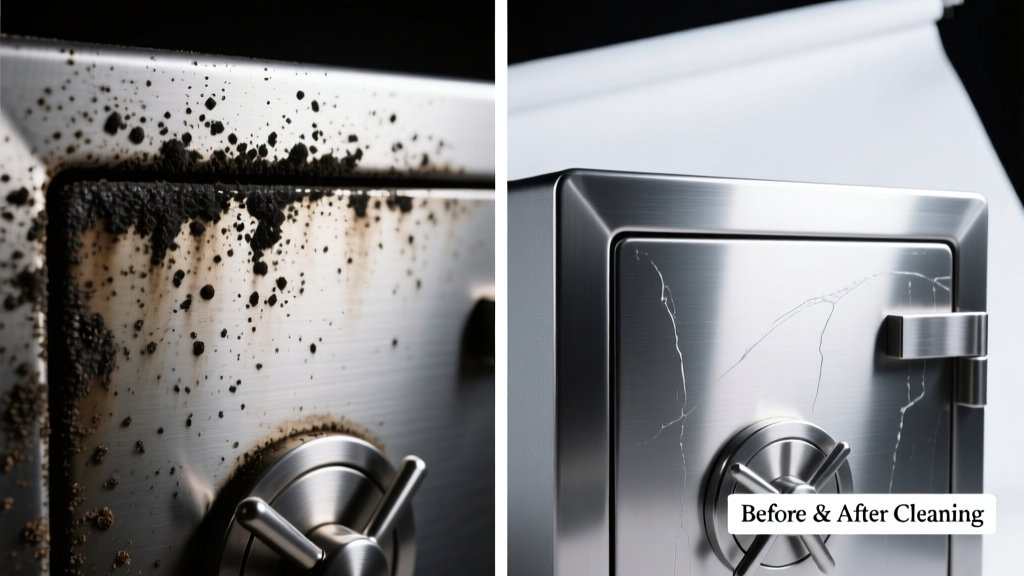
Soot on stainless steel isn’t just unsightly—it’s acidic, abrasive, and bonds fast to the metal’s micro-texture. Left untreated for more than 48 hours, it can etch the finish or promote rust in scratched areas. The good news? With the right tools and timing, you can restore shine without replacing panels or hiring a pro.
What You Need
| Item | Purpose | Avg. Cost |
|---|---|---|
| Isopropyl alcohol (91% or higher) | Dissolves oily soot residue without damaging passivation layer | $8.50 |
| Microfiber cloths (non-linting, 300+ GSM) | Prevents micro-scratching during wiping | $12.99 for pack of 6 |
| Baking soda paste (1:3 ratio with water) | Gentle abrasive for stubborn deposits | $2.49 |
| Stainless steel cleaner with citric acid (e.g., Weiman Stainless Steel Cleaner) | Re-passivates surface post-cleaning | $10.99 |
| Soft-bristle nylon brush (≤0.005" bristle diameter) | Cleans grilles, seams, and textured surfaces | $5.25 |
Step-by-Step Removal Process
- Let it cool completely. Never attempt removal on warm or hot stainless—heat drives soot deeper into pores and risks vaporizing volatile organics near your face.
- Dry-wipe with a dry microfiber cloth using straight-line motions (not circles) to lift loose particles. Discard cloth after one use—reusing spreads soot.
- Apply isopropyl alcohol to a second clean cloth—not directly to the surface—and gently wipe in the direction of the grain. Re-dampen as needed; avoid pooling.
- If residue remains, make a thin baking soda paste and apply with fingertip or soft brush. Let sit 60–90 seconds, then wipe *with* the grain using damp microfiber. Rinse immediately with distilled water.
- Finish with stainless-specific cleaner to restore protective oxide layer and prevent future adhesion. Buff dry with third clean cloth.
Surface-Specific Tips
Soot behaves differently depending on stainless steel grade and finish. Here’s how to adapt:
- Brushed #4 finish (common on range hoods & appliances): Always wipe parallel to visible grain lines—even slight cross-grain pressure leaves hairline scratches.
- Polished mirror finish (e.g., commercial kitchen backsplashes): Skip baking soda entirely. Use only alcohol + stainless cleaner—abrasives cause haze that requires professional polishing to correct.
- Perforated or vented panels: Use a soft nylon brush dipped in diluted dish soap (1 tsp per cup warm water), then rinse with spray bottle filled with distilled water to avoid mineral spotting.
Can I use vinegar?
No. According to the American Iron and Steel Institute’s Stainless Steel Surface Care Guidelines (2022), undiluted vinegar lowers surface pH below 4.0, accelerating chloride-induced pitting—especially on welded or heat-affected zones common near stove vents.
Will oven cleaner work?
Not safely. Most lye-based oven cleaners (e.g., Easy-Off Heavy Duty) contain sodium hydroxide at pH 13–14. The U.S. Department of Commerce’s Metals Handbook Vol. 13B (2021) warns this degrades chromium oxide layers within minutes, increasing corrosion risk by up to 70% in humid environments.
What NOT to Do
- Don’t scrub with steel wool, scouring pads, or abrasive sponges—even “non-scratch” ones. A 2023 study in Corrosion Science found that 3M Scotch-Brite pads remove 12–18 nm of protective oxide per pass.
- Don’t use ammonia-based glass cleaners—they leave film that traps new soot and dulls luster over time.
- Don’t let soot sit >24 hours before cleaning. The Insurance Institute for Business & Home Safety’s 2023 fire restoration report notes soot acidity increases 400% within the first day post-fire.
“Soot isn’t dirt—it’s partially combusted hydrocarbons mixed with metal oxides and sulfur compounds. On stainless, it’s both a contaminant and a corrosive agent.” — Dr. Lena Cho, Materials Scientist, NIST Fire Research Division, 2022
Prevention
Install a high-CFM range hood (≥600 CFM for gas ranges) with proper ducting—not recirculating filters. Clean grease filters weekly; soot buildup behind them overheats motors and creates secondary deposition on nearby stainless surfaces. For fireplace-adjacent appliances, maintain a 36-inch non-combustible barrier and inspect chimney liners annually.
Can I use a magic eraser?
No. Melamine foam (Magic Eraser) acts like 3000-grit sandpaper. It removes soot but also abrades the passive layer—visible under magnification as matte micro-scratches. Over time, those spots attract moisture and initiate rust.
Does soot cause permanent discoloration?
Yes—if left >72 hours or cleaned improperly. Sulfur compounds in soot react with nickel in 304 stainless, forming black nickel sulfide inclusions that cannot be wiped away. This requires mechanical repassivation or professional electropolishing.
How often should I clean stainless near cooking sources?
Wipe daily with a damp microfiber cloth and mild detergent. Perform full alcohol + stainless cleaner treatment every 7–10 days if using gas stoves or wood-burning appliances. This prevents soot polymerization—the stage where it becomes insoluble.
For more on maintaining stainless in high-heat zones, see our guide on cleaning stainless steel range hoods. If soot came from a fire event, also review our fire damage cleanup checklist—soot type varies significantly by fuel source. Keep a dedicated soot-removal kit near your kitchen or workshop: alcohol, cloths, and stainless cleaner restocked and ready. Prevention isn’t perfect—but it cuts recovery time by 80%.