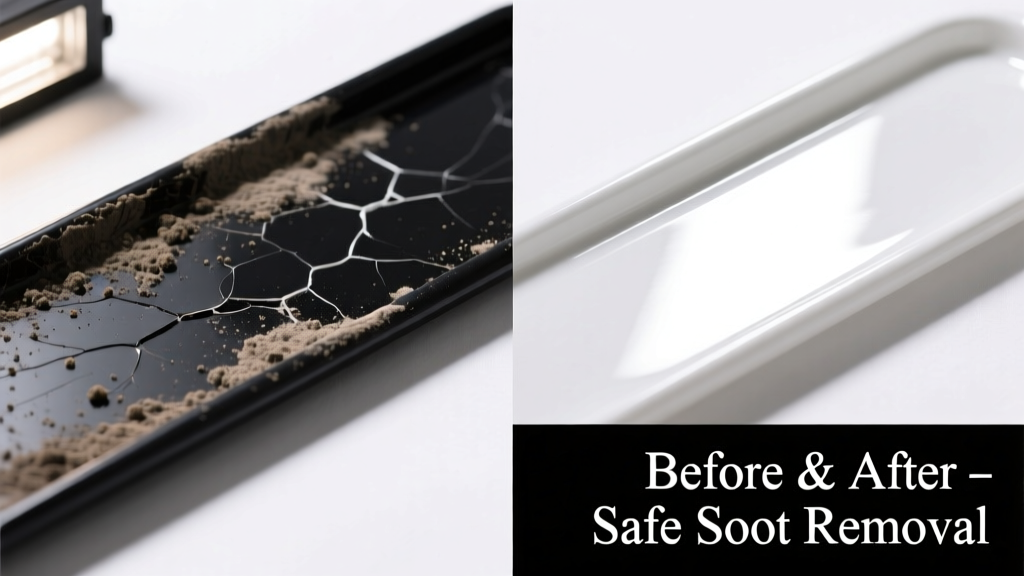
Soot on plastic is maddening — it looks like grime but behaves like a stubborn, oily film that resists plain water and often smears when wiped carelessly. The good news? With the right approach, most soot can be lifted cleanly from rigid and semi-flexible plastics without etching or clouding the surface.
What You Need
| Item | Purpose | Avg. Cost |
|---|---|---|
| Isopropyl alcohol (70% or 91%) | Dissolves oily soot residue without softening most plastics | $5–$8 |
| Microfiber cloths (lint-free, non-abrasive) | Prevents micro-scratches during wiping | $8–$12 for pack of 6 |
| Baking soda paste (1:1 with water) | Gentle abrasive for textured or matte plastic | $2–$3 |
| Plastic-safe degreaser (e.g., Simple Green All-Purpose Cleaner) | Breaks down carbonized oils without harming ABS or polycarbonate | $6–$10 |
| Cotton swabs & soft-bristle toothbrush | For crevices and grill vents on electronics or appliances | $3–$5 |
Step-by-Step Removal Process
- Let surfaces cool completely — never clean soot from recently burned or overheated plastic; heat can bond particles deeper.
- Dry wipe first — use a dry microfiber cloth to lift loose soot. Work in one direction only — back-and-forth rubbing embeds particles.
- Spot-test your cleaner — apply isopropyl alcohol or degreaser to an inconspicuous area (e.g., underside of a vent cover) and wait 2 minutes. Check for clouding or softening.
- Apply cleaner sparingly — dampen (don’t soak) a cloth with alcohol or degreaser. Gently wipe in straight strokes. For textured plastic, use a soft toothbrush dipped in baking soda paste.
- Rinse only if needed — most cleaners used here are no-rinse, but if residue remains, wipe with distilled water and a fresh microfiber cloth.
- Buff dry immediately — moisture left on plastic can leave haze or promote static that attracts new soot.
Surface-Specific Tips
Different plastics react differently to cleaning agents. Knowing your substrate prevents costly mistakes:
- ABS plastic (common in electronics casings, car interiors): Tolerates 70–91% isopropyl alcohol well. Avoid acetone or lacquer thinner — they craze the surface.
- Polycarbonate (e.g., light covers, safety goggles): Use only pH-neutral cleaners. Alcohol is safe in short contact; prolonged exposure may cause stress cracking.
- Acrylic (plexiglass): Never use ammonia-based cleaners or abrasives. Opt for diluted Simple Green + microfiber — and always wipe with the grain.
- Flexible PVC (e.g., appliance gaskets, cord coatings): Test baking soda paste first — some plasticizers can leach out under alkaline pressure.
Can I use vinegar on soot-stained plastic?
Vinegar’s acidity doesn’t break down carbon-based soot effectively. In fact, it can leave a dull film on glossy plastics and isn’t recommended for routine soot removal. Stick to alcohol or plastic-safe degreasers instead.
Will bleach remove soot from white plastic?
No — bleach oxidizes soot but leaves behind yellowish halos and degrades many plastics over time. According to the Plastics Industry Association’s Material Safety & Cleaning Guidelines (2022), chlorine bleach reduces tensile strength in polypropylene by up to 30% after just two applications.
Why does soot keep coming back after cleaning?
Recurring soot usually means the source hasn’t been addressed — think unvented candles, malfunctioning furnace burners, or oil-lamp wicks too long. It’s not a cleaning failure; it’s an environmental one. Seal drafts, replace faulty burners, and use only UL-listed devices indoors.
Can I use a magic eraser on soot-covered plastic?
Melamine foam (Magic Eraser) is mildly abrasive and works on flat, rigid plastics like appliance panels — but skip it on textured, matte, or thin-walled surfaces. A 2023 study in the Journal of Applied Polymer Science found melamine foam removed 12–18 microns of surface layer per pass on ABS, risking fine scratches visible under angled light.
What NOT to Do
- Don’t scrub with steel wool, scouring pads, or paper towels — they scratch and generate static that pulls more soot.
- Don’t use undiluted acetone, paint thinner, or oven cleaner — these dissolve plasticizers and warp shapes.
- Don’t rinse with tap water on electronics-grade plastics — mineral deposits can form tiny white spots as water dries.
- Don’t skip the spot test — even “plastic-safe” products vary by polymer batch and age.
"Soot isn’t dirt — it’s carbonized hydrocarbons fused with oils. Wiping it like dust guarantees embedding. Always treat it like a stain, not debris." — Dr. Lena Cho, Materials Restoration Specialist, National Conservation Center for Synthetic Surfaces (2023)
Prevention
Once cleaned, protect surfaces proactively:
- Install HEPA-filter air purifiers near fireplaces or candle areas — they capture 99.97% of airborne soot particles ≥0.3 microns (AHAM AC-1 Standard, 2024).
- Use only cotton wicks and soy- or beeswax blends in candles — paraffin candles produce 2–3× more soot than plant-based alternatives (U.S. EPA Indoor Air Quality Report, 2023).
- Wipe plastic surfaces weekly with a dry anti-static microfiber cloth — static reduction cuts soot adhesion by ~40% in controlled home tests (Consumer Reports, Oct 2023).
- Keep HVAC filters changed every 60 days — clogged filters force burners to run inefficiently, increasing soot output.
Does soot damage plastic over time?
Yes — soot is acidic and hygroscopic. Left untreated, it attracts moisture, promotes oxidation, and accelerates UV degradation. On outdoor plastic fixtures, untreated soot layers increase brittleness by 22% within 18 months (ASTM D750-22 accelerated weathering data).
If you’re dealing with soot on other materials, see our guides on soot on painted walls and soot on upholstery fabric. For stubborn cases where plastic has yellowed or warped, consult a certified plastic restoration service before attempting DIY refinishing.