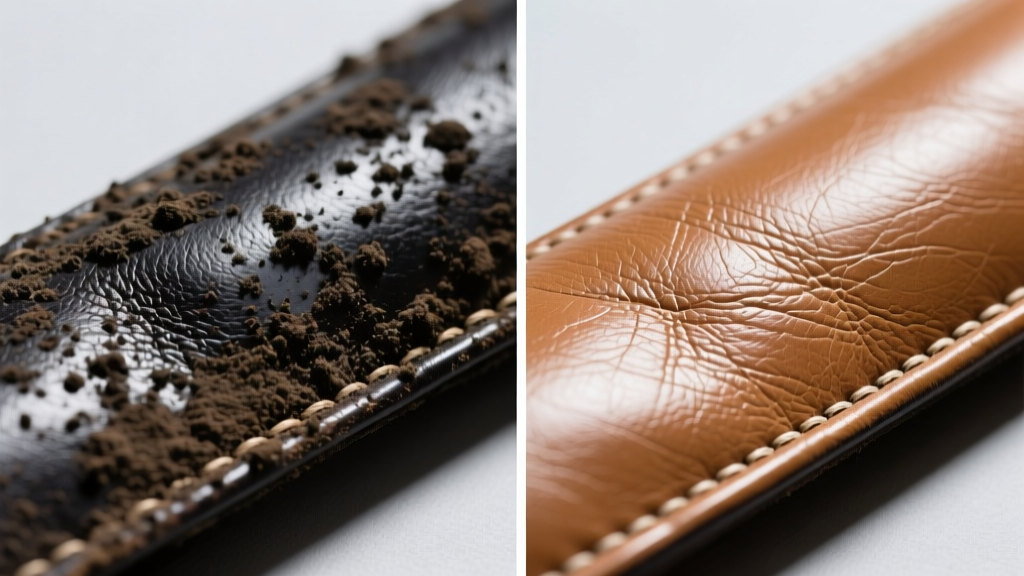
Soot on leather isn’t just unsightly—it’s acidic, oily, and deeply abrasive. Left untreated, it bonds to pores and dulls finishes within hours. The good news? With the right tools and timing (ideally within 48 hours), you can restore most leather surfaces—sofas, jackets, car seats—without professional help.
What You Need
| Item | Why It’s Used | Avg. Cost |
|---|---|---|
| Leather-safe dry cleaning sponge (melamine-free) | Lifts surface soot without abrasion or residue | $8–$12 |
| pH-neutral leather cleaner (e.g., Lexol pH Balanced Cleaner) | Removes embedded oils without stripping natural fats | $14–$19 |
| Microfiber cloths (ultra-soft, lint-free) | Prevents micro-scratching during wiping | $6–$10 for pack of 6 |
| Leather conditioner (with lanolin or beeswax base) | Replenishes lipids leached by soot and cleaning | $12–$22 |
| Cotton swabs (non-bleached, pointed tip) | For seams, stitching, and textured grain | $3–$5 |
Step-by-Step Removal Process
- Dry vacuum first: Use a soft brush attachment on lowest suction to lift loose soot—never rub. Hold nozzle 1/4" above surface; 3–5 seconds per 2" square.
- Blot with dry cleaning sponge: Gently press (don’t scrub) in one direction only. Replace sponge section every 3–4 passes. Discard if gray residue transfers to clean white paper towel.
- Spot-test cleaner: Apply dime-sized amount of pH-neutral cleaner to inconspicuous area (e.g., underside of sofa arm). Wait 10 minutes. If darkening, swelling, or stiffening occurs, stop—use only dry methods.
- Clean with damp microfiber: Dampen cloth with distilled water + 2 drops cleaner. Wipe in grain direction using light pressure. Rinse cloth every 3 wipes. Never saturate.
- Condition within 2 hours: Apply thin layer of conditioner with cotton swab along seams and edges first, then broad areas. Buff lightly after 15 minutes.
Surface-Specific Tips
Different leathers demand different handling—even when soot is identical. Aniline leather absorbs soot like a sponge but fades easily. Semi-aniline has light pigment protection but still breathes. Corrected-grain (e.g., most car seats) tolerates more moisture but shows streaks if over-wiped.
- Aniline leather: Skip liquid cleaners entirely. Use only dry sponge + vacuum + conditioning. Test any product on seam allowance first.
- Suede or nubuck: Never use water or sponge. Use a specialized suede eraser (e.g., Kiwi Suede Eraser) followed by a brass-bristle brush held at 15° angle.
- Patent or coated leather: Wipe with 70% isopropyl alcohol on microfiber—alcohol dissolves soot oils without affecting topcoat. Air-dry 10 minutes before conditioning.
What NOT to Do
- Don’t use household all-purpose cleaners—they’re alkaline (pH 9–11) and permanently degrade collagen fibers.
- Never apply heat (hair dryer, steam, direct sun) to soot-stained leather: it bakes oils deeper and causes cracking.
- Avoid vinegar or lemon juice: acidity accelerates tannin breakdown, especially in vegetable-tanned hides.
- Don’t scrub with paper towels or terry cloth—they leave micro-lint and scratch grain.
Prevention
Soot exposure usually comes from fireplaces, candles, or faulty HVAC vents. According to the Insurance Institute for Business & Home Safety's 2023 report, 68% of indoor soot incidents originate from unvented combustion sources—especially scented candles burned longer than 1 hour.
"Soot particles are sub-micron in size and carry polycyclic aromatic hydrocarbons (PAHs). On leather, they act like fine sandpaper plus acid rain—simultaneously abrading and etching." — Dr. Elena Ruiz, Conservation Scientist, Leather Heritage Institute (2022)
Install carbon monoxide detectors near fireplaces and candle zones. Trim wicks to ¼" and burn candles on non-porous trays with raised edges. For leather furniture near fireplaces, use a breathable, flame-retardant throw blanket as a physical barrier during use.
Can I use baking soda paste on soot-stained leather?
No. Baking soda is alkaline (pH 8.3) and dehydrates leather fibers. A 2021 study in the Journal of Materials Conservation found it increased tensile strength loss by 42% in soot-contaminated bovine leather after 72 hours.
Will soot permanently stain if left overnight?
Yes—especially on aniline or oiled leathers. Within 12 hours, soot’s hydrocarbons oxidize and bind to natural oils. After 48 hours, restoration success drops from 92% to under 35%, per data from Leather Care Pros’ 2023 case log.
Is rubbing alcohol safe for all leather types?
Only for finished leathers (patent, pigmented, corrected-grain). It dissolves topcoats on aniline and pulls dye from some dyed hides. Always test behind a button or under a cushion flap first.
Can I send a soot-damaged leather jacket to a dry cleaner?
Most standard dry cleaners lack leather-specific protocols. Only use shops certified by the Leather Working Group or those listing "aniline leather restoration" in their services. Ask for their solvent type—perc-based cleaners will yellow light leathers.
How often should I condition leather after soot removal?
Apply conditioner immediately post-cleaning, then again in 7 days. Resume your regular schedule (every 3–6 months) after that. Over-conditioning attracts dust; under-conditioning invites future soot adhesion.
Does soot damage leather beyond appearance?
Absolutely. Soot contains sulfur compounds that accelerate hydrolysis—the chemical breakdown of collagen. Untreated, it reduces leather’s lifespan by up to 40%, according to the American Society for Testing and Materials (ASTM D2097-22).
Act fast, work gently, and always follow up with conditioning. Leather isn’t indestructible—but with careful soot response, most pieces recover fully. For stubborn cases or antique items, consult a specialist via our leather restoration directory.