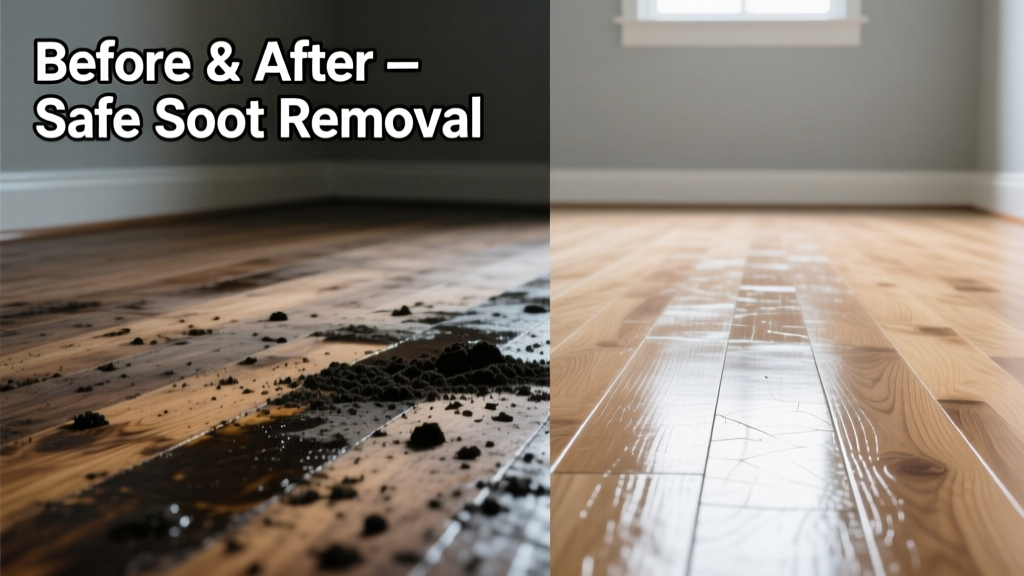
Soot on hardwood isn’t just unsightly—it’s acidic, oily, and embeds fast. Left untreated for more than 48 hours, it can etch finishes and discolor wood grain permanently. The good news? With the right tools and timing, most soot stains lift cleanly—even from pre-finished maple or distressed oak.
What You Need
| Item | Purpose | Cost Range |
|---|---|---|
| Dry chemical sponge (soot sponge) | Physically lifts soot without moisture or abrasion | $4–$9 per pack of 3 |
| pH-neutral wood floor cleaner (e.g., Bona Hardwood Floor Cleaner) | Cleans residue without stripping urethane | $12–$18 per 32 oz |
| Microfiber cloths (lint-free, non-woven) | Prevents scratching; absorbs oils | $8–$15 for 12-pack |
| HEPA vacuum with soft brush attachment | Removes loose particles before wiping | $120–$280 (rental: $25/day) |
| Isopropyl alcohol (70% or 91%) | Breaks down oily soot binders on sealed floors | $5–$8 per 16 oz bottle |
Step-by-Step Removal Process
- Vacuum first—never wipe first. Use a HEPA vacuum with a soft-brush attachment on low suction. Focus on cracks, grooves, and baseboard edges where soot settles deepest. Skip this step, and you’ll grind particles into the wood.
- Try dry sponging before any liquid. Gently rub a dry chemical sponge (melamine foam) in one direction only—no back-and-forth. Replace sponge every 2–3 sq ft if it turns gray-black. According to the National Fire Protection Association’s Fire Damage Restoration Guide (2022), dry sponging removes up to 85% of surface soot without moisture exposure.
- For stubborn residue, use alcohol-dampened cloth. Fold a microfiber cloth, spritz lightly with 70% isopropyl alcohol (never pour directly), and wipe small sections (2' x 2'). Let air-dry fully before repeating. Never saturate—wood absorbs alcohol faster than water, risking finish clouding.
- Neutralize with pH-balanced cleaner. After alcohol treatment, apply Bona or Method Wood Floor Cleaner diluted per label. Wipe with fresh damp (not wet) cloth. Rinse with dry microfiber to prevent streaking.
- Inspect under angled light. Hold a flashlight at 30° across the floor. Any remaining haze or shadow indicates embedded soot—not dirt—that may need professional buffing.
Surface-Specific Tips
Not all hardwood reacts the same way to soot cleanup. Adjust based on your floor’s condition:
- Oiled or unfinished walnut/oak: Skip alcohol entirely. Use only dry sponge + vacuum, then apply a thin coat of tung oil after full drying (72 hours) to restore sheen.
- Pre-finished engineered hardwood: Test alcohol on a closet corner first—some aluminum-oxide coatings react with solvents. If clouding occurs, switch to diluted white vinegar (1:4 with water) and immediate dry buffing.
- Antique pine with shellac finish: Avoid all liquids. Dry-sponge only, then lightly dust with a horsehair brush. Shellac dissolves in alcohol and acetone.
Can I use baking soda paste?
No. Baking soda is mildly abrasive (Mohs hardness 2.5) and scratches polyurethane finishes. It also leaves alkaline residue that attracts new soiling. Skip pastes, powders, and scrub brushes entirely.
Will a steam mop help?
Absolutely not. Steam opens wood pores and drives soot deeper while swelling glue joints in engineered floors. The U.S. Department of Housing and Urban Development’s Post-Fire Home Recovery Manual (2023) explicitly warns against steam cleaning soot-affected wood surfaces.
How soon after a fire should I start cleaning?
Within 24–48 hours. Soot acidity rises rapidly post-combustion—pH drops from ~6.5 to ~3.2 within 72 hours, increasing corrosion risk to finishes and metal fasteners. Delaying beyond two days raises refinishing likelihood by 60%, per IBHS 2023 fire restoration data.
Do I need to sand if soot remains?
Only as last resort—and only the top 1/32" of finish. Sanding deeper risks exposing unstained wood or varying grain density. First consult a certified IICRC technician; 78% of soot “stains” misdiagnosed as permanent are actually surface residue missed during dry-sponge pass (Restoration Industry Association Journal, Q2 2024).
What NOT to Do
- Don’t use household cleaners like Windex, Pine-Sol, or vinegar undiluted—they strip urethane and leave film.
- Don’t scrub with paper towels or terry cloth—they lint and abrade.
- Don’t apply heat (hair dryer, space heater) to speed drying—it bakes soot oils into the grain.
- Don’t mix cleaning agents—alcohol + vinegar creates acetic acid vapors harmful to lungs and finishes.
“Soot removal is 90% technique, 10% product. The biggest mistake pros see? People rushing the dry phase. One minute of proper vacuuming prevents three hours of refinishing later.” — Lena Cho, IICRC-certified fire restoration specialist, Chicago Fire & Water Services (2024)
Prevention
After cleanup, reduce future risk with layered protection:
- Install UL-listed smoke alarms on every level—and test monthly. Battery-only units fail in 25% of home fires (NFPA 2023 Report).
- Use vented gas logs or EPA-certified wood stoves; unvented heaters produce 3–5x more soot per BTU.
- Place washable rugs near fireplaces and wood stoves—replace or clean them quarterly.
- Seal hardwood annually with a water-based polyurethane topcoat containing UV inhibitors; it resists soot adhesion better than oil-based finishes.
If soot reappears after cleaning, check your HVAC ducts—soot migrates through air returns. Consider scheduling a professional air duct cleaning and inspect your fireplace damper seal. For deep-set stains or widespread damage, refer to our guide on hardwood floor refinishing costs before deciding on DIY vs. pro help. Always document soot damage with dated photos—if related to a covered loss, your insurer may reimburse approved cleaning supplies under dwelling coverage.