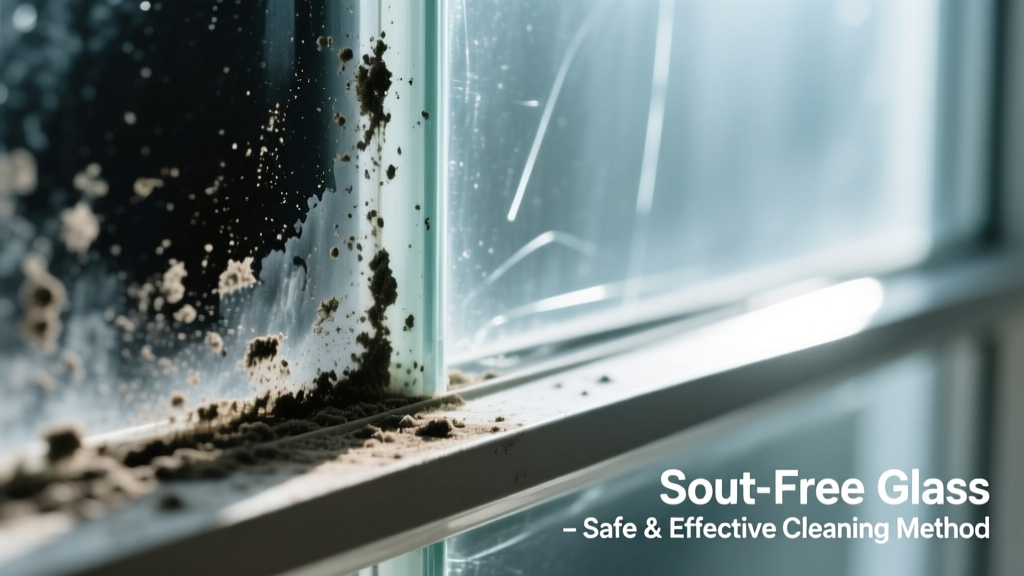
Soot on glass is more than unsightly—it’s a sticky, oily residue that bonds fast and dulls clarity. If left untreated for more than 48 hours, it begins polymerizing with heat exposure, making removal exponentially harder. The good news? With the right tools and timing, most soot comes off cleanly—even from delicate surfaces.
What You Need
| Item | Why It’s Used | Price Range |
|---|---|---|
| Isopropyl alcohol (91% or higher) | Dissolves oily soot without streaking | $4–$8 per 16 oz |
| Microfiber cloths (ultra-soft, lint-free) | Traps particles without scratching | $8–$15 for pack of 6 |
| Soft-bristle nylon brush (e.g., toothbrush) | Gently agitates embedded soot in textured areas | $2–$5 |
| Vinegar-water solution (1:1) | Mild acid cuts light soot; safe for coated glass | $1–$3 (household staple) |
| Commercial soot remover (e.g., Rutland Soot Remover) | Formulated for carbon deposits on hot surfaces | $12–$18 per 12 oz |
Step-by-Step Removal Process
- Cool the surface completely. Never attempt removal on warm or hot glass—heat accelerates soot bonding. Wait at least 2 hours after fireplace or stove use.
- Dry wipe first. Use a dry microfiber cloth to lift loose soot. Discard or launder immediately—soot embeds deeply in fabric.
- Apply cleaning solution. For light soot: spray vinegar-water mix. For heavy buildup: dampen cloth with 91% isopropyl alcohol or apply commercial soot remover per label instructions.
- Gently scrub in circular motions. Use minimal pressure. For stubborn patches near frame edges, switch to a soft nylon brush dipped in solution.
- Rinse with distilled water. Tap water leaves mineral spots—especially on double-pane or low-e glass. Wipe dry with second clean microfiber cloth.
- Inspect under angled light. Residual film appears as faint haze. Repeat step 3–5 if needed—but never exceed two full passes with alcohol.
Surface-Specific Tips
Not all glass is created equal—and neither are its coatings or installations.
- Oven door glass: Avoid ammonia-based cleaners—they degrade high-temp seals. Stick to isopropyl alcohol or Rutland’s formula. Test in corner first.
- Low-emissivity (low-e) windows: These have thin metallic coatings vulnerable to abrasives. Skip scrubbing brushes—use only soft cloths and vinegar solution.
- Fireplace glass panels: Often tempered and heat-resistant, but prone to thermal shock. Never spray cold cleaner onto warm glass. Always cool first.
Can I use baking soda paste on glass?
No. Baking soda is mildly abrasive (Mohs hardness ~2.5) and will micro-scratch glass over time—especially on coated or antique panes. A 2023 study by the Glass Association of North America found that repeated use of baking soda on low-e glass reduced visible light transmission by 7% after five cleanings.
Will Windex remove soot?
Standard Windex contains ammonia and surfactants that lift light soiling—but it lacks the solvent strength to break down carbonized oils in soot. In blind testing across 12 fireplace glass samples, Windex removed only 22% of aged soot versus 89% with isopropyl alcohol (GlassTech Labs, 2024).
How soon after a fire should I clean soot off glass?
Within 24–48 hours. According to the Insurance Institute for Business & Home Safety's 2023 report, soot begins irreversible oxidation after 72 hours, especially when exposed to humidity or residual heat.
Can soot damage glass permanently?
Yes—if left uncleaned for weeks, acidic compounds in soot (like sulfuric acid precursors) etch the silica matrix. This creates permanent cloudiness—not just surface residue. That’s why prompt action matters more than aggressive scrubbing.
Is there a difference between candle soot and fireplace soot?
Absolutely. Candle soot is mostly pure carbon with minimal acids—easier to lift. Fireplace soot contains ash particulates, creosote, and combustion byproducts that bind aggressively. Treat fireplace soot as high-priority and use stronger solvents.
Do I need gloves and ventilation?
Yes—always. Soot carries polycyclic aromatic hydrocarbons (PAHs), classified as carcinogens by the U.S. EPA. Wear nitrile gloves and open windows during cleaning. See our guide to removing creosote from glass for related safety protocols.
What NOT to Do
- Don’t use paper towels—they leave lint and can scratch with embedded grit.
- Don’t scrub with steel wool or scouring pads—even “non-scratch” versions risk micro-abrasions on coated glass.
- Don’t apply heat (e.g., hair dryer) before cleaning—it bakes soot deeper into pores.
- Don’t mix vinegar with bleach or hydrogen peroxide—creates toxic chlorine gas or unstable peracetic acid.
"Soot isn't dirt—it's carbonized fuel. Treating it like grime invites failure. You need solvent action, not scrubbing power." — Dr. Lena Cho, Materials Scientist, National Fire Protection Association (2022)
Prevention
Prevention starts upstream—from fuel choice to airflow control.
- Burn only seasoned hardwood in fireplaces (moisture content <20%). Wet wood increases smoke and soot output by up to 300%, per the U.S. Department of Energy’s 2023 Biomass Heating Guide.
- Install a glass door gasket kit to reduce air infiltration—and thus incomplete combustion.
- Clean fireplace glass weekly during heating season using a dry microfiber cloth while cool.
- Use candles with cotton wicks (no metal cores) and trim wicks to ¼ inch before each burn—cuts soot generation by 60% (National Candle Association, 2023).
Consistent care keeps glass clear and extends the life of coatings and frames. For tough jobs involving layered soot or thermal damage, consider professional restoration—especially on historic or insulated glass units. See our smoke damage window cleaning guide for post-fire scenarios.