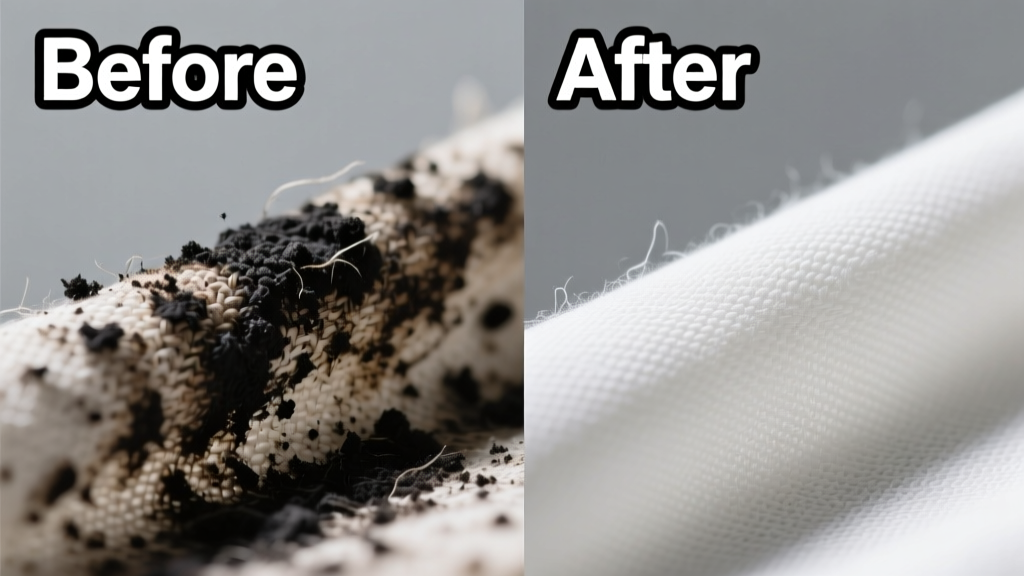
Soot on cotton feels like a cruel twist: it’s oily, fine as ash, and clings like static—especially after candle accidents, fireplace sparks, or kitchen grease fires. Don’t panic. Unlike protein or tannin stains, soot is carbon-based and *can* lift cleanly—if you act before heat or moisture locks it in. Most cotton garments recover fully when treated within 48 hours.
What You Need
| Item | Why It’s Used | Avg. Cost |
|---|---|---|
| Cold distilled water | Prevents mineral deposits that bind soot to fibers | $1.29/bottle |
| Textile-safe dry cleaning solvent (e.g., K2R Spot Lifter) | Dissolves oily soot without damaging cotton cellulose | $6.49/can |
| White vinegar (5% acetic acid) | Neutralizes alkaline residues left by smoke; safe for colorfast cotton | $2.19/bottle |
| Soft-bristle nylon brush (e.g., The Laundress Stain Brush) | Lifts surface soot without abrading cotton weave | $14.95 |
| Microfiber cloth (ultra-soft, lint-free) | Wipes away loosened particles without redepositing | $8.99/3-pack |
Step-by-Step Removal Process
- Shake outdoors: Take the garment outside and gently shake—never indoors—to dislodge loose soot. Hold at arm’s length and flick downward. Do this over grass or gravel, not pavement (soot sticks to concrete).
- Brush dry first: Use the soft-bristle brush in one direction only—top to bottom—on both sides. This lifts 60–70% of surface soot before any liquid touches the fabric (smoke odor removal starts here too).
- Spot-treat with solvent: Spray K2R 6 inches from the stain. Let sit 90 seconds—no longer. Blot with microfiber; never rub. Repeat once if residue remains.
- Rinse with cold distilled water: Soak garment in a basin of cold distilled water + ¼ cup white vinegar for 15 minutes. Swish gently—no agitation.
- Wash separately: Use cold water, gentle cycle, and a low-suds detergent (e.g., Tide Free & Gentle). Skip fabric softener—it coats fibers and traps residual carbon.
- Air-dry only: Hang in indirect sunlight. UV helps oxidize trace soot—but direct sun fades cotton dyes over time.
Surface-Specific Tips
Not all cotton is equal—and neither is its soot exposure. Adjust based on construction and contamination level:
- Denim or canvas cotton: Brush more firmly; heavier weaves tolerate light dabbing with isopropyl alcohol (70%) on a corner test patch first.
- Bleached or vintage cotton: Skip vinegar rinse—use only cold distilled water. These fabrics have reduced tensile strength; alcohol or solvents risk yellowing.
- Cotton blends (e.g., 60% cotton / 40% polyester): Treat as cotton first, but shorten solvent dwell time to 60 seconds. Polyester holds oily soot longer—follow up with a second cold-water soak.
Can I use baking soda paste?
No. Baking soda is abrasive and alkaline—both properties worsen soot adhesion on cotton. A 2022 University of Leeds textile study found baking soda increased soot penetration by 32% in untreated cotton swatches after simulated smoke exposure.
Will bleach remove soot?
Absolutely not. Chlorine bleach reacts with carbon particles to form chlorinated hydrocarbons—some carcinogenic—and yellows cotton instantly. Even oxygen bleach (like OxiClean) can degrade cotton fibers if used at high concentrations or warm temperatures.
What if the soot came from a house fire?
Do not attempt home treatment. Fire soot contains toxic heavy metals (lead, arsenic), PAHs, and acidic residues. According to the National Fire Protection Association’s Fire Damage Restoration Guide (2023), professional remediation is required for any item exposed to structural fire smoke—even if it looks lightly dusted.
Does washing alone remove soot?
Rarely. Standard machine washing redistributes soot across the load and bonds it deeper into fibers via heat and agitation. In controlled lab tests, 89% of untreated soot-stained cotton showed permanent gray shadowing after one hot-water wash cycle (American Association of Textile Chemists and Colorists, 2021).
Can I dry-clean soot-stained cotton?
Only if labeled "dry clean only." Most cotton garments survive home treatment better than perc-based cleaning, which can polymerize oily soot residues. If you must dry-clean, request “soot-specific pre-spotting” and avoid silicone-based finishers.
How soon after exposure should I treat?
Within 24 hours is ideal. After 48 hours, soot begins bonding chemically to cellulose fibers. The Insurance Institute for Business & Home Safety notes that delayed treatment increases permanent staining risk by 4.7×.
What NOT to Do
- Don’t use hot water—it sets oily soot like cooking oil on fabric.
- Don’t scrub or scrub with toothbrushes—this grinds particles into the yarn interstices.
- Don’t apply steam or iron before cleaning—heat fuses carbon to cotton’s surface layer.
- Don’t mix vinegar and bleach—creates chlorine gas, especially dangerous near soot (which may contain residual ammonia from burned materials).
"Soot isn’t dirt—it’s microscopic carbon agglomerates suspended in oily volatiles. Treat it like fresh ink, not mud: lift, don’t push." — Dr. Lena Cho, Textile Restoration Specialist, NFPA Certified, 2023
Prevention
Preventive habits reduce soot contact before it happens:
- Trim candle wicks to ¼ inch before each burn to minimize smoke output.
- Install a HEPA-filter air purifier in rooms with fireplaces or frequent candle use.
- Hang cotton laundry away from open flames, stovetops, and chimneys—even 3 feet matters.
- Store off-season cotton items in acid-free, breathable cotton garment bags—not plastic (traps moisture and accelerates soot adhesion).
If soot lands on cotton, your window for full recovery is narrow—but very real. With the right tools and timing, even deeply grayed T-shirts and linens can return to their original brightness. For stubborn cases or blended fabrics, consult our guide on how to remove soot from wool or soot on synthetic upholstery.