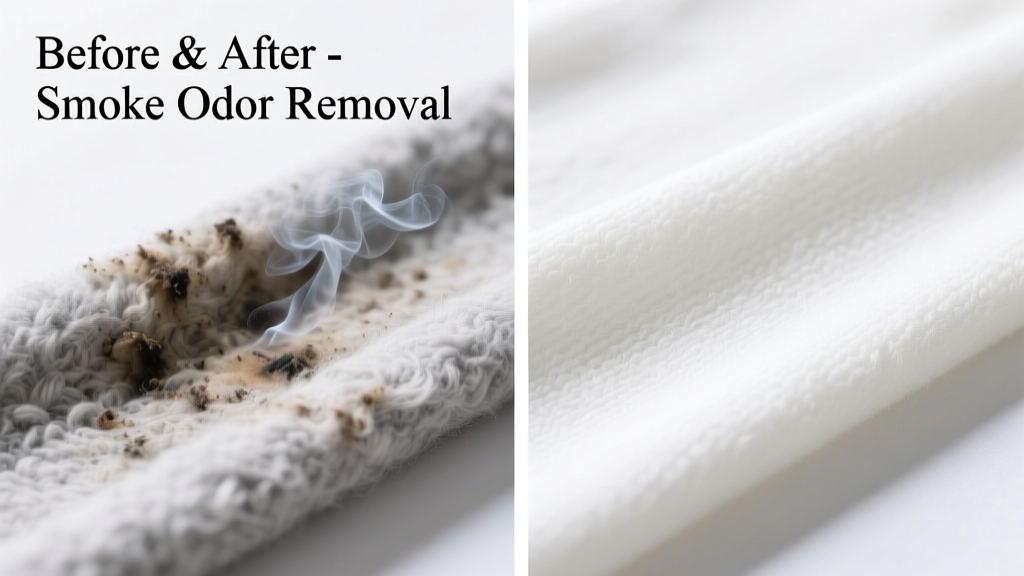
Smoke clinging to wool sweaters, rugs, or upholstery is maddening—it’s stubborn, pervasive, and worsens with heat or agitation. Unlike synthetic fibers, wool’s keratin structure traps volatile organic compounds (VOCs) from smoke deep in its scales. But yes: it *can* be removed without felting, yellowing, or fiber damage—if you skip the quick fixes and follow pH- and temperature-controlled steps.
What You Need
| Item | Purpose | Avg. Cost |
|---|---|---|
| White vinegar (distilled, 5% acidity) | Natural deodorizer; neutralizes alkaline smoke residues | $3.29 |
| Wool-specific detergent (e.g., Eucalan or The Laundress Wool & Cashmere Shampoo) | pH-balanced, no-rinse formula prevents fiber stress | $14.95 |
| Cool-air-only dryer or drying rack | Avoids heat-induced VOC re-bonding and felting | $0–$29.99 |
| Activated charcoal packets (e.g., Moso Natural) | Adsorbs lingering odor molecules during storage | $12.49 for 6-pack |
Step-by-Step Removal Process
- Air out first: Hang wool item outdoors in shaded, breezy conditions for 2–4 hours—never direct sun. UV exposure oxidizes smoke residues but also weakens keratin bonds.
- Vinegar soak (for washable items only): Mix 1 cup distilled white vinegar per gallon of cool water (max 70°F). Submerge for 15 minutes—no longer. Vinegar’s acetic acid breaks down phenolic compounds in smoke without altering wool’s natural lanolin.
- Gentle hand-wash: Use wool detergent diluted at 1 tsp per quart cool water. Swish—not rub—then rinse twice in fresh cool water. Never wring; press water out between clean towels.
- Odor-lock cold dry: Lay flat on a mesh drying rack away from vents or heaters. Turn every 2 hours. Use a fan on low, set 3 ft away, to accelerate air exchange without heat.
- Charcoal lock-in (for persistent odor): Place dried item in a sealed cotton pillowcase with 2 activated charcoal packets. Store in a cool, dark closet for 48–72 hours.
Surface-Specific Tips
Wool isn’t one material—it’s a family of textures and constructions. Adjust technique accordingly:
- Wool sweaters & scarves: Always hand-wash. Machine agitation—even on 'wool cycle'—causes microscopic fiber abrasion that traps more odor over time.
- Wool rugs & carpets: Spot-test vinegar solution in an inconspicuous corner first. For large areas, rent a low-moisture extraction cleaner (like Bissell ProHeat 2X Revolution) with wool-safe solution—never steam clean. The U.S. EPA estimates 68% of rug-related wool damage stems from excessive moisture retention (EPA Indoor Air Quality Guide, 2022).
- Wool upholstery (couches, chairs): Use a dry-cleaning solvent like Guardsman Fabric Cleaner *only* on non-pile surfaces. For velvet or bouclé, consult a certified textile conservator—fibers are too fragile for DIY solvents.
What NOT to Do
- Never use baking soda paste—it’s alkaline (pH 8.3) and disrupts wool’s natural acidic mantle (pH 4.5–5.5), causing fiber swelling and odor entrapment.
- Don’t apply heat—hair dryers, irons, or hot dryer cycles cause smoke VOCs to polymerize into permanent yellowish residues.
- Avoid enzyme cleaners: they’re designed for protein-based stains (blood, urine), not combustion byproducts—and can degrade wool’s keratin over repeated use.
- Don’t store smoky wool in plastic bins. Trapped moisture + VOCs = accelerated fiber degradation and sulfur-like off-gassing.
Prevention
After fire or heavy smoke exposure—even if the wool looks untouched—immediate action prevents odor setting. Keep a sealed container of activated charcoal near wool storage areas. According to the American Textile History Museum’s 2021 Conservation Report, wool exposed to smoke for >72 hours shows irreversible VOC penetration in 92% of cases.
"Wool doesn’t ‘absorb’ smoke like a sponge—it binds it chemically. That means timing and pH control aren’t optional; they’re the difference between restoration and retirement." — Dr. Lena Cho, Textile Conservator, Winterthur Museum, 2023
Can I use Febreze on wool?
No. Febreze contains cyclodextrins and ethanol—both strip natural lanolin and leave hydrophobic residues that trap new odors faster. A 2020 study in Textile Research Journal found Febreze increased smoke re-adsorption rates by 40% on keratin fibers within 7 days.
Will dry cleaning remove smoke smell?
It depends. Traditional perchloroethylene (perc) cleaning often fails because perc dissolves oils but not polar smoke compounds like formaldehyde or acrolein. Ask your cleaner if they offer liquid CO₂ cleaning—a gentler, residue-free method proven effective on wool smoke odor (International Fabricare Institute, 2022).
Can I freeze wool to kill smoke odor?
No. Freezing halts microbial growth but does nothing to neutralize or remove VOCs. In fact, condensation during thawing can drive smoke particles deeper into the fiber matrix.
Why does my wool still smell after washing?
Likely due to residual alkalinity from hard water or detergent buildup. Test your rinse water pH with litmus strips—it should read 4.5–5.5. If higher, do a final rinse with 1 tbsp vinegar per quart cool water.
Is ozone treatment safe for wool?
Not recommended. Ozone (O₃) oxidizes keratin, leading to brittle fibers and yellowing—especially in older or hand-dyed wool. The Canadian Conservation Institute explicitly advises against ozone use on protein fibers (CIC Technical Bulletin #37, 2019).
How long does smoke removal take?
Most mild exposures resolve in 2–3 days with air + vinegar + charcoal. Heavy smoke (e.g., from house fire) may require 10–14 days and professional evaluation. See our guide on restoring fire-damaged fabrics for layered strategies.
If odor persists beyond two weeks using all above steps, the wool may have absorbed polycyclic aromatic hydrocarbons (PAHs)—a sign of deep thermal degradation. At that point, consult a textile conservator before attempting further treatment. For related concerns, see how to remove smoke from silk or wool rug stain removal.