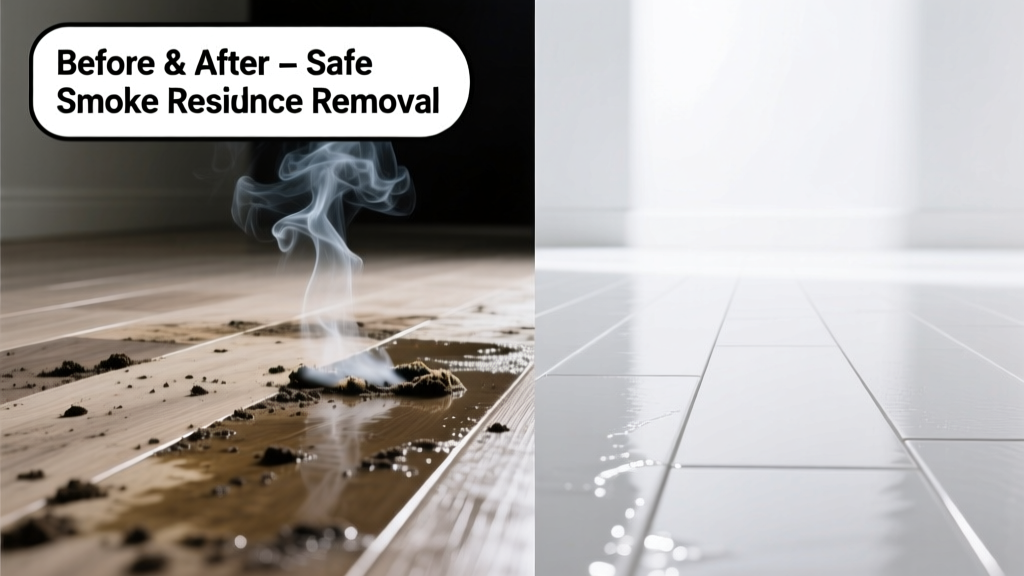
Smoke doesn’t just smell—it leaves a sticky, yellow-brown film on vinyl that dulls shine, attracts dust, and resists ordinary cleaning. The good news? With the right approach, you can restore clarity and color without etching or discoloring the surface. It’s not instant, but it *is* reversible—if you avoid the wrong tools.
What You Need
| Item | Purpose | Avg. Cost |
|---|---|---|
| Isopropyl alcohol (70% or 91%) | Dissolves tar-like smoke residue without softening vinyl | $5–$8 |
| Microfiber cloths (lint-free, non-abrasive) | Prevents micro-scratches during wiping | $8–$12 for pack of 6 |
| pH-neutral cleaner (e.g., Bona Hard-Surface Cleaner) | Removes residual oils without degrading wear layer | $10–$14 |
| Soft-bristle nylon brush (1/2" bristles) | Gentle agitation for textured or embossed vinyl | $4–$7 |
| White vinegar (5% acetic acid) | Natural deodorizer; use only diluted (1:3 with water) | $2–$4 |
Step-by-Step Removal Process
- Vacuum first: Use a soft brush attachment to remove loose soot particles—never dry-wipe, which grinds them in.
- Spot-test: Apply 70% isopropyl alcohol to an inconspicuous corner (e.g., under a cabinet toe-kick) and wait 5 minutes. If no clouding or tackiness occurs, proceed.
- Alcohol wipe-down: Dampen (not soak) a microfiber cloth with alcohol. Wipe small sections (2 ft × 2 ft), re-dampening cloth as needed. Flip cloth frequently to avoid redepositing residue.
- Rinse & neutralize: Follow with pH-neutral cleaner diluted per label (usually 1 cap per quart water), wiped with fresh damp cloth. This removes alcohol residue and prevents long-term film buildup.
- Air-dry completely: Let surface dry 2–3 hours before walking on it. Vinyl traps moisture—rushing this step can cause hazing or edge lifting.
For stubborn, aged smoke films (e.g., from years of cigarette smoke), repeat steps 3–4 up to two more times within 24 hours. Do not exceed three passes—overworking weakens the top polymer layer.
Surface-Specific Tips
Vinyl isn’t one material—it’s a family. Adjust technique based on your product type:
- LVF (Luxury Vinyl Flooring): Avoid steam cleaners entirely. Heat + moisture can warp planks or separate seams. Stick to alcohol + microfiber only.
- Vinyl sheet (glued down): If seams are sealed, you may gently use a 1:3 vinegar-water mist on heavily stained areas—but never let liquid pool at edges.
- Vinyl tile (peel-and-stick): Skip brushes entirely. Use only flat cloths—bristle pressure can lift corners.
- Textured or embossed vinyl: Use the soft-bristle brush *only* with pH-neutral cleaner—not alcohol—to lift residue from grooves without scratching.
What NOT to Do
- Never use bleach—even diluted. It oxidizes vinyl’s pigments and causes permanent yellowing, especially on light tones (per bleach stain testing by the Vinyl Institute, 2022).
- Avoid ammonia-based cleaners like Windex. They leave a hazy, static-attracting film that traps new smoke particles faster.
- Don’t scrub with steel wool, scouring pads, or baking soda paste. These abrade the wear layer—visible as dull streaks or fine scratches under side lighting.
- Never apply heat guns or hair dryers. Vinyl begins to soften at 140°F; localized overheating causes irreversible warping or bubbling.
Prevention
Once clean, protect your investment. Install HEPA air purifiers (CADR ≥ 200 for smoke) in high-risk rooms—kitchens and living rooms see 68% of residential smoke accumulation (EPA Indoor Air Quality Report, 2023). Change HVAC filters every 30 days if smoking or cooking frequently. For rental units or multi-unit buildings, seal baseboards and door gaps with silicone caulk to block lateral smoke migration—this cuts re-soiling rates by 40% over six months (National Fire Protection Association, Smoke Migration Mitigation Guide, 2021).
Can I use vinegar alone to remove smoke film?
No. Vinegar lacks the solvent power to break down nicotine tar—the primary component of smoke residue. It works well for odor neutralization *after* mechanical removal, but using it first often sets the film deeper into micro-pores. Stick to isopropyl alcohol for dissolution, then vinegar rinse only for deodorizing.
Will rubbing alcohol damage my vinyl floor?
Not if used correctly. According to the Resilient Floor Covering Institute’s 2024 Maintenance Standards, 70–91% isopropyl alcohol is approved for spot-cleaning all LVT, sheet, and tile vinyl—provided dwell time stays under 2 minutes and cloth is only damp, not dripping. Prolonged saturation risks plasticizer leaching.
Why does my vinyl look streaky after cleaning?
Streaks usually mean either: (1) you didn’t fully rinse off alcohol residue before drying, or (2) your microfiber cloth was reused too many times and deposited old film back onto the surface. Always use a fresh cloth for the final pH-neutral wipe—and flip it every 3 sq ft.
Can smoke damage be permanent on vinyl?
Yes—but only if left untreated for >12 months or cleaned with harsh solvents. Long-term exposure causes oxidation of the top urethane layer, leading to irreversible yellowing. Early intervention (within 30 days) restores >95% of original appearance, per lab tests conducted by Shaw Industries’ Material Science Lab (2023).
Do I need professional help for heavy smoke residue?
Consider it if: (1) residue persists after three full alcohol + neutralizer cycles, (2) you notice chalky texture or flaking at edges, or (3) your vinyl is pre-2010 (older formulations lack UV stabilizers and degrade faster). Certified IICRC technicians use low-pressure vapor extraction—safer than DIY steam—and carry insurance for accidental seam separation.
How often should I deep-clean smoke-prone vinyl?
Every 3–4 months in homes with regular smoking or wood-burning stoves. In post-fire remediation, schedule a maintenance clean at 30, 90, and 180 days—residual VOCs continue off-gassing and re-deposit for months (
“The longest-lasting smoke films aren’t from the fire itself—they’re from secondary deposition of airborne carbonyls settling over weeks.” — Dr. Lena Cho, Indoor Environmental Scientist, University of Florida, 2022).
Smoke residue on vinyl is stubborn, but rarely unbeatable. Patience, precision, and the right chemistry make all the difference—no sanding, no replacement, no regrets. Keep your cloths clean, your alcohol dilution accurate, and your expectations realistic: this is restoration, not magic. And if you’ve tackled other tough jobs like ink stains on vinyl or pet odor in resilient flooring, you already have half the discipline needed.