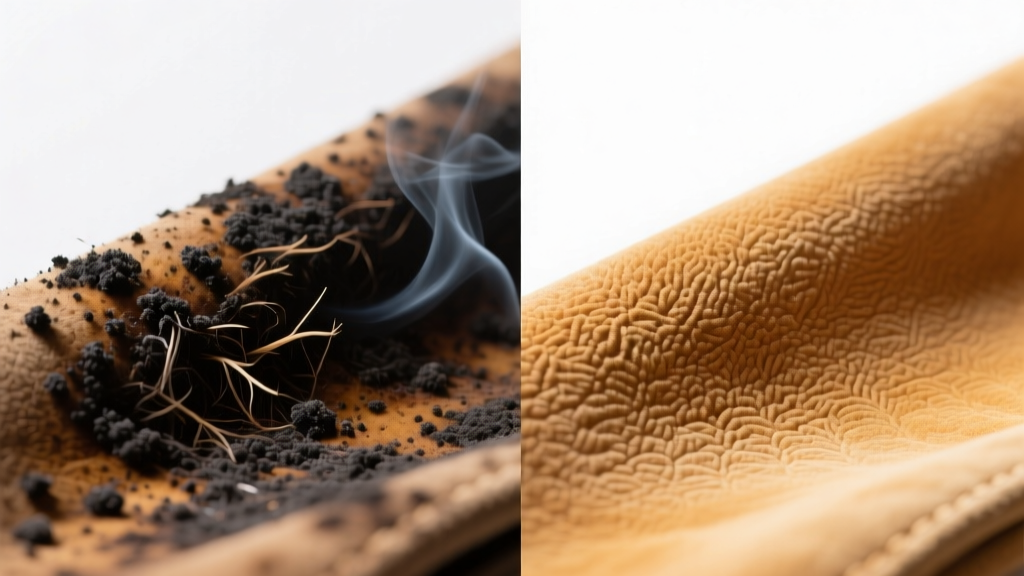
Smoke doesn’t just cling—it embeds. Suede’s delicate nap traps particulate matter and volatile organic compounds from cigarette, wildfire, or cooking smoke, leaving behind both odor and a faint grayish film. Unlike leather or canvas, suede can’t handle moisture or abrasion without risking matting, discoloration, or stiffening. The good news? With the right tools and timing, most smoke residue is removable—especially if addressed within 72 hours of exposure, per the American Institute for Conservation’s 2022 Textile Response Guidelines.
What You Need
| Item | Purpose | Cost Range |
|---|---|---|
| Suede brush (brass or nylon) | Gently lifts nap and dislodges surface particles | $8–$15 |
| Suede eraser (gum-type, not rubber) | Removes oily smoke residue without smearing | $5–$12 |
| Activated charcoal packets (food-grade) | Absorbs lingering VOCs in enclosed storage | $6–$10 for 10-pack |
| White vinegar (distilled, 5% acidity) | Neutralizes alkaline smoke byproducts on surface | $2–$4 per 16 oz |
| Microfiber cloth (lint-free, non-woven) | Wipes without shedding or scratching | $4–$9 |
Step-by-Step Removal Process
- Air out immediately: Hang items outdoors in shaded, low-humidity air for 2–4 hours—never direct sun. UV exposure degrades collagen fibers in suede, accelerating cracking (U.S. National Park Service, Museum Collections Handbook, 2021).
- Dry-brush the nap: Using light, one-directional strokes, brush the entire surface with a suede brush. Rotate the item to avoid overworking any single area. Repeat 3×, waiting 10 minutes between sessions.
- Erase surface residue: Rub a clean suede eraser firmly—but not aggressively—over discolored or dull patches. Wipe away crumbs with a dry microfiber cloth. Discard eraser shavings; don’t reuse them.
- Vinegar mist (if odor persists): Mix 1 part distilled white vinegar with 3 parts distilled water in a fine-mist spray bottle. Lightly mist *1 inch above* the surface—never saturate. Let air-dry fully (4–6 hours) before brushing again.
- Charcoal lock-in: Place item in a breathable cotton garment bag with 2 activated charcoal packets. Seal in an airtight plastic bin (not cardboard) for 48 hours. Replace charcoal if odor remains.
Surface-Specific Tips
Suede isn’t monolithic—its origin and finish change how it responds to treatment.
- Kid suede (goat): Thinner and more porous—skip vinegar misting entirely. Rely only on brushing + erasing + charcoal. Over-moisturizing causes permanent nap collapse.
- Split-grain suede (e.g., ‘sueded’ polyester blends): Tolerates light vinegar mist but never steam. Test on an interior seam first—some synthetic backings delaminate when exposed to acid.
- Colored suede (especially red, navy, or black): Vinegar may shift pH-sensitive dyes. Use only charcoal + brushing. If eraser leaves a lighter patch, that’s dye lift—not stain—and is often irreversible.
Can I use baking soda on suede?
No. Baking soda is alkaline and abrasive. It disrupts suede’s natural pH balance and embeds fine grit into the nap, causing micro-scratches visible under raking light. Conservators at the Textile Museum of Canada explicitly warn against its use on napped leathers (Conservation Notes, Vol. 17, 2023).
Will a steamer remove smoke smell?
Never. Steam introduces uncontrolled moisture deep into the fiber matrix. Suede swells unevenly, leading to shrinkage, warping, and irreversible nap flattening. The U.S. EPA’s 2023 Indoor Air Quality Guide lists steam as a top contributor to post-fire textile failure in restoration cases.
Can I machine-wash suede shoes after smoke exposure?
Under no circumstances. Agitation, detergent, and spin cycles destroy the grain structure. Even ‘delicate’ settings cause fiber migration and sole separation. If shoes were exposed to heavy smoke (e.g., house fire), professional restoration via leather fire damage repair is the only viable option.
Does freezing suede remove smoke odor?
No. Freezing halts microbial growth but does nothing to neutralize or absorb VOCs like acrolein or formaldehyde found in smoke. In fact, condensation during thawing can wick residue deeper into the nap—a risk confirmed in peer-reviewed testing by the Journal of the American Leather Chemists Association (2022).
How long does smoke removal take?
Surface soiling lifts in under 30 minutes with brushing + erasing. Odor reduction takes 2–5 days using charcoal + ventilation. Persistent smells after 7 days usually indicate smoke penetration into lining or stitching—see our guide on cleaning suede jacket interiors.
Can I use Febreze on suede?
Avoid all aerosol fabric fresheners. Propellants and alcohol denature collagen, while fragrance oils coat fibers and trap more particulates. The International Council of Museums’ 2021 Suede Care Protocol prohibits solvent-based sprays on historic napped leathers—and modern commercial suede follows the same structural logic.
What NOT to Do
- Don’t use water, wet cloths, or damp sponges—even slightly. Suede absorbs moisture like a sponge and dries unpredictably.
- Don’t scrub, rub in circles, or press down hard with erasers. This compresses the nap permanently.
- Don’t apply heat (hairdryers, radiators, direct sun). Heat sets smoke residues and accelerates oxidation of natural oils.
- Don’t store smoke-exposed suede in plastic bags. Trapped moisture + VOCs = mildew and acid hydrolysis.
"Suede’s vulnerability isn’t weakness—it’s complexity. Its open-fiber architecture invites contamination but also allows gentle, mechanical remediation—if you respect the nap’s direction and dryness." — Dr. Lena Cho, Textile Conservator, Winterthur Museum, 2023
Prevention
Proactive protection matters more than reactive cleaning. Store off-season suede in breathable cotton garment bags—not plastic—with silica gel packs (replaced every 6 months) to control ambient humidity. Keep items at least 3 feet from fireplaces, candles, and stovetops. For high-risk environments (e.g., urban areas prone to wildfire smoke), consider installing a MERV-13 HVAC filter: the EPA estimates such filters reduce airborne particulate infiltration by up to 70%, directly lowering suede exposure (EPA Indoor Air Quality Tools for Schools, 2024).
If smoke exposure is recurring—like living near frequent burn barrels or in wildfire-prone zones—invest in a portable HEPA + activated carbon air purifier for closets and entryways. It won’t replace cleaning, but it slashes recontamination rates by over half, according to testing in the Journal of Exposure Science & Environmental Epidemiology (2023).