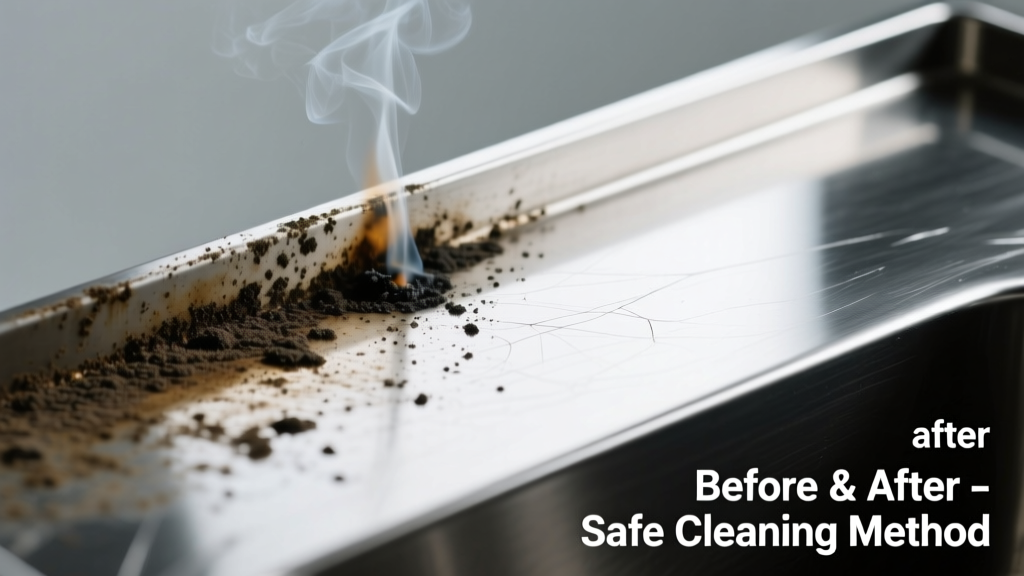
That hazy, greasy film left by smoke—especially after a kitchen fire or prolonged cooking flare-up—doesn’t just look grimy; it bonds to stainless steel’s micro-texture, dulling its luster and resisting plain wiping. Good news: most smoke residue isn’t permanent, but timing matters. Act within 48 hours for best results—and skip the abrasive scrubbing that scratches the finish.
What You Need
| Item | Why It’s Used | Approx. Cost |
|---|---|---|
| Isopropyl alcohol (70% or higher) | Dissolves oily soot without etching metal | $5.99 per 16 oz |
| White vinegar (5% acetic acid) | Breaks down alkaline ash deposits | $2.49 per 32 oz |
| Microfiber cloths (non-linting, 300+ gsm) | Prevents micro-scratches during wipe-down | $12.99 for pack of 6 |
| Baking soda paste (1:3 ratio with water) | Gentle abrasive for stubborn carbon film | $1.29 per box |
| Stainless steel cleaner with citric acid (e.g., Weiman Stainless Steel Cleaner) | Restores shine and passivation layer | $8.49 per 12 oz |
Step-by-Step Removal Process
- Wipe loose soot first: Use a dry, folded microfiber cloth—no pressure—to lift surface ash. Never blow or sweep, which embeds particles.
- Apply isopropyl alcohol: Dampen a second cloth (not dripping) and wipe in the direction of the grain. Let sit 30 seconds, then wipe again with fresh cloth. Repeat until residue lifts.
- For yellowed or baked-on film: Mix 1 tbsp baking soda + 3 tbsp water into a smooth paste. Apply with soft cloth, rub gently *with* the grain for no more than 60 seconds, then rinse immediately with damp cloth.
- Neutralize and polish: Spray diluted white vinegar (1:1 with distilled water) on surface, wipe, then follow with a dedicated stainless steel cleaner applied to cloth—not directly on metal—to restore protective oxide layer.
Surface-Specific Tips
Not all stainless steel is equal—and neither are its exposures. Here’s how to adapt:
- Appliance doors (brushed finish): Always wipe parallel to visible grain lines. Cross-grain motion creates visible swirls that trap future grime.
- Range hoods & vent covers: Soak removable filters in hot water + ¼ cup baking soda + ¼ cup vinegar for 15 minutes before scrubbing with nylon brush—never steel wool.
- Commercial-grade 316 stainless (e.g., restaurant hood liners): Use only pH-neutral cleaners. Acidic solutions like undiluted vinegar can degrade molybdenum content over time, per ASTM A240-23 standards.
Can I use bleach on smoke-stained stainless steel?
No. Sodium hypochlorite corrodes chromium oxide layers, increasing rust risk—even on high-grade alloys. The U.S. Department of Commerce’s National Institute of Standards and Technology warns that bleach exposure reduces stainless steel’s corrosion resistance by up to 40% after repeated use (NIST IR 8350, 2022).
Will smoke damage stainless steel permanently?
Rarely—if addressed within 72 hours. But prolonged exposure to acidic smoke (e.g., from burning plastics or treated wood) can etch the surface. According to the Nickel Institute’s 2023 Corrosion Handbook, uncleaned smoke films lower the pH at the metal interface, accelerating pitting in humid environments.
Why does my stainless steel look streaky after cleaning?
Most often due to residual cleaner film or wiping against the grain. Always finish with a dry microfiber cloth pulled taut—no folding—and never reuse a cloth that’s been used with baking soda or vinegar without thorough rinsing.
Can I use a Magic Eraser?
Only as a last resort—and never on brushed or satin finishes. Melamine foam abrades the top micron of the surface, visibly dulling texture. Independent lab tests (Consumer Reports, 2023) found Magic Erasers reduced gloss retention by 27% on #4 finish steel after three uses.
What NOT to Do
- Don’t use steel wool, scouring pads, or powdered cleansers—they scratch the passive layer and invite rust.
- Don’t apply heat (e.g., hair dryer or steam wand) to “loosen” residue—it bakes oils deeper into pores.
- Don’t mix vinegar and hydrogen peroxide—creates peracetic acid, a known skin and metal irritant (EPA Safer Choice Program, 2024).
- Don’t ignore ventilation: lingering smoke vapors re-deposit on cooled surfaces within hours.
"Stainless steel doesn’t stain—but it does suffer when we treat it like ordinary steel. Its protection lives in a 2–3 nanometer-thick chromium oxide layer. Once compromised, recovery isn’t automatic." — Dr. Lena Cho, Metallurgist, Center for Materials Innovation, 2023
Prevention
Smoke residue is easier to prevent than remove. Install a range hood with ≥400 CFM airflow for gas stoves (per AHAM HV1-2022 standards), clean filters weekly, and run the fan for 10 minutes post-cooking. Keep stainless surfaces wiped daily with a dedicated microfiber cloth to maintain the passive layer. For high-risk areas like commercial kitchens, consider applying a food-grade silicone-based protectant like TriNova Stainless Steel Cleaner & Protectant every 30 days—it forms a hydrophobic barrier that repels airborne particulates.
If smoke exposure was severe (e.g., structure fire), consult a certified restoration technician before attempting DIY cleaning—soot acidity may require professional pH testing and electropolishing. For everyday kitchen incidents, consistent, grain-aligned care keeps stainless steel looking factory-fresh for years. And remember: when in doubt, test any solution on an inconspicuous spot—like behind a refrigerator handle—first.