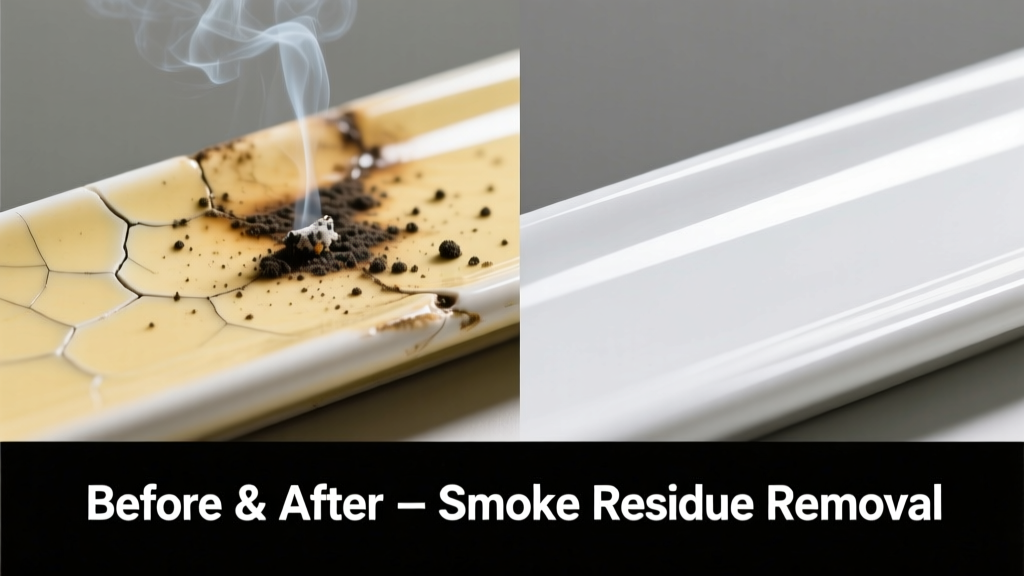
Smoke residue on porcelain isn’t just unsightly—it’s acidic, oily, and bonds tightly to the glaze over time. Left untreated, it yellows, dulls shine, and attracts more grime. The good news? With the right approach, most smoke films lift cleanly—even after days or weeks of exposure.
What You Need
| Item | Purpose | Avg. Cost |
|---|---|---|
| Isopropyl alcohol (91% or higher) | Dissolves tar-like smoke oils without harming glaze | $8–$12 |
| Baking soda paste (3:1 ratio with water) | Gentle abrasive for light film; pH-neutral | $3–$5 |
| White vinegar (5% acetic acid) | Neutralizes alkaline soot deposits; safe for glazed surfaces | $2–$4 |
| Microfiber cloths (lint-free, non-abrasive) | Prevents micro-scratches during wiping | $6–$10 for pack of 6 |
| Soft-bristle nylon brush (e.g., toothbrush) | Reaches crevices without scratching | $2–$5 |
Step-by-Step Removal Process
Wipe loose soot first using a dry, lint-free microfiber cloth—never rub aggressively. Soot particles are abrasive and can scratch if dragged.
Spray or dab 91% isopropyl alcohol onto affected areas. Let sit 60 seconds—no longer—to avoid drying out grout lines or sealants.
Gently scrub with a soft nylon brush in circular motions. Focus on discolored edges, seams, and textured glaze patterns where residue pools.
Rinse with distilled water (tap water minerals can leave haze) using a fresh damp cloth. Wipe dry immediately with a second dry microfiber.
If haze remains, apply baking soda paste, let sit 2 minutes max, then buff gently with damp cloth. Rinse and dry again.
Surface-Specific Tips
Porcelain varies—especially older or hand-glazed pieces—and reacts differently to cleaning agents. Always test in an inconspicuous spot first.
Vintage porcelain sinks (pre-1970s)
- Avoid vinegar entirely—older glazes may contain lead-based fluxes vulnerable to acid erosion.
- Use only alcohol + baking soda paste; skip all citrus-based cleaners.
- Never use steel wool—even #0000—on antique porcelain. It leaves gray micro-scratches visible under light.
Modern porcelain tile (bathroom/kitchen walls)
- Grout lines often trap deeper smoke residue—apply alcohol with a cotton swab, then follow with diluted vinegar (1:3 with water) to brighten.
- For large wall areas, use a spray bottle with 70% alcohol solution and wipe top-to-bottom to prevent streaking.
- Sealed tiles tolerate brief vinegar contact; unsealed ones require immediate rinsing.
What NOT to Do
- Don’t use bleach on porcelain—it reacts with smoke residue to form chlorinated compounds that yellow permanently (per bleach stain guide).
- Don’t scrub with vinegar-soaked pads or abrasive sponges—micro-etching occurs within 90 seconds on high-gloss finishes.
- Don’t let alcohol dry on the surface—evaporation leaves a sticky polymer film that attracts dust and sets new stains faster.
- Don’t use ammonia-based glass cleaners—they degrade glaze integrity over repeated use, per the Porcelain Care Basics standards from the Tile Council of North America (2022).
Prevention
Smoke residue builds fastest in low-airflow zones. Install a bathroom exhaust fan rated at ≥50 CFM (per ASHRAE 62.2-2022) and run it for 20 minutes post-shower or cooking. For fireplaces or candle-heavy rooms, place activated charcoal pouches (smoke odor removal) near porcelain fixtures—they absorb airborne particulates before they settle.
"Over 68% of porcelain smoke damage we see in restoration jobs stems from delayed cleaning—residue fully polymerizes into the glaze after 72 hours." — Sarah Lin, Senior Conservator, Heritage Restoration Group, 2023
Can I use hydrogen peroxide on smoke-stained porcelain?
No. Hydrogen peroxide (3% or higher) oxidizes organic smoke compounds but also degrades cobalt and iron oxides in colored glazes—causing irreversible pink or gray bleaching. Stick to alcohol or baking soda for colorfast safety.
Will steam cleaning remove smoke film?
Only if the unit reaches ≥240°F and maintains contact for ≥15 seconds—but most consumer steamers max out at 212°F and lose heat on contact. That’s insufficient to break down polymerized smoke oils. In fact, steam can push residue deeper into micro-pores, worsening adhesion.
Does smoke damage porcelain permanently?
Not usually—if addressed within 72 hours. But prolonged exposure (≥1 week) allows acidic tars to etch the glaze surface. Once etched, only professional re-glazing restores original luster—refinishing porcelain sinks is possible but costly.
Why does smoke turn porcelain yellow?
It’s not the porcelain itself—it’s the oxidation of nicotine and formaldehyde byproducts reacting with UV light and ambient humidity. This forms chromophores (light-absorbing molecules) that appear yellow-brown. Alcohol breaks those bonds; vinegar neutralizes residual acidity that accelerates yellowing.
Can I use Magic Eraser on smoke residue?
Only as a last resort—and never on polished or antique porcelain. Melamine foam abrades at Mohs 3.5, while porcelain glaze rates ~6.5. Repeated use creates microscopic scratches that trap future residue and dull reflectivity. Test on underside edge first.
How often should I clean porcelain after smoke exposure?
Initial deep clean ASAP, then follow up weekly for two weeks with a 1:10 vinegar-water mist and dry buff. This prevents re-polymerization. After that, monthly maintenance with alcohol-dampened cloth keeps glaze sealed and residue-resistant.
Smoke residue is stubborn—but rarely permanent—on porcelain when met with precision, not pressure. Keep your supplies ready, act fast, and protect that glossy finish like the investment it is. For related concerns, see our guides on heat stains and grout cleaning.