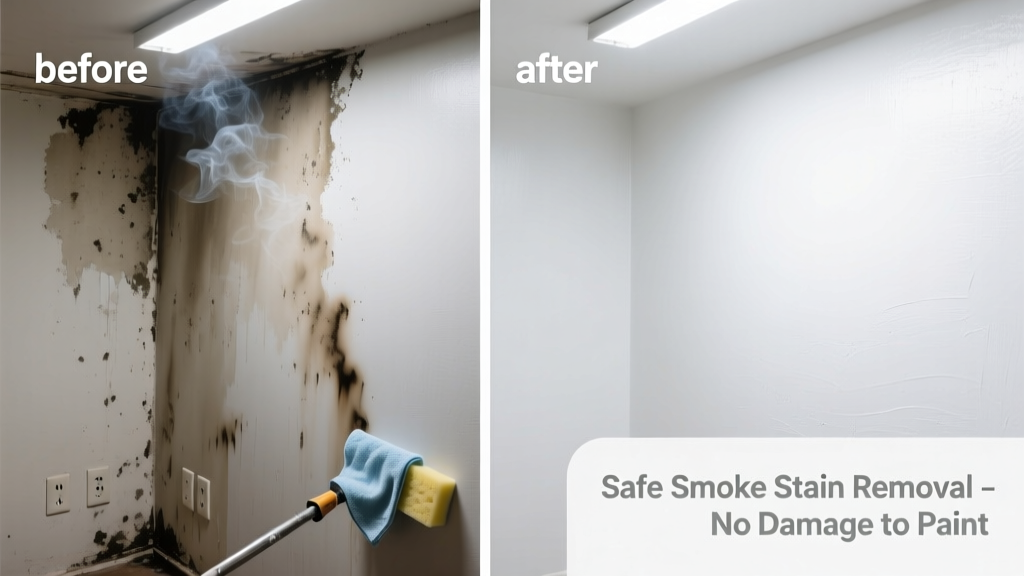
Smoke stains on painted walls are more than unsightly—they’re stubborn, acidic, and often embedded in the top layer of paint or primer. Even after a minor kitchen fire or candle incident, nicotine and tar residues oxidize over time, turning yellow-brown and resisting basic cleaning. The good news? With the right products and timing, most smoke film can be removed without repainting—especially if addressed within 72 hours.
What You Need
| Item | Purpose | Average Cost |
|---|---|---|
| TSP substitute (e.g., Krud Kutter Original) | Breaks down oily, alkaline-resistant smoke film | $8.99 per quart |
| Microfiber cloths (lint-free, 300+ gsm) | Prevents scratching; absorbs residue without streaking | $12.99 for pack of 12 |
| White vinegar (5% acetic acid) | Natural deodorizer and mild acid for light residue | $2.49 per 32 oz |
| HEPA vacuum with brush attachment | Removes dry soot before wet cleaning | $149–$299 (rental: $25/day) |
| Disposable N95 respirator & nitrile gloves | Protects against carcinogenic particulates | $6.50 per set |
Step-by-Step Removal Process
- Vacuum first—always. Use a HEPA vacuum with soft-brush attachment on low suction. Work top-to-bottom in 2-ft sections. Skip this step and you’ll grind soot into the paint.
- Test cleaning solution in an inconspicuous area (e.g., behind a door frame). Apply TSP substitute diluted 1:4 with warm water using a damp (not wet) microfiber cloth. Wait 60 seconds, then wipe gently. Check for color lift or sheen change.
- Clean in small zones (2 ft × 2 ft), rinsing cloth frequently. Wipe vertically, then horizontally—never circular—to avoid smearing. Rinse cloth every 3–4 wipes; replace when discoloration appears.
- Rinse with distilled water (tap water minerals can leave haze). Dampen a fresh microfiber cloth, wring until barely moist, and pass over cleaned area once.
- Dry immediately with clean, dry microfiber. Air-drying invites streaking and re-deposition of dissolved residue.
- For persistent yellowing: Mix 1 part white vinegar + 1 part distilled water. Lightly mist (do not soak), wait 30 seconds, then wipe with vinegar-dampened cloth. Repeat max 2x per zone.
Surface-Specific Tips
Not all painted walls respond the same—even under identical smoke exposure. Here’s how to adapt:
- Eggshell or satin finish: Most forgiving. TSP substitute works reliably. Avoid abrasive pads—even non-scratch sponges can dull sheen.
- Flat/matte paint: Higher risk of uneven cleaning or ghosting. Use only vinegar solution or dry chemical sponges first. If washing is unavoidable, dilute TSP substitute 1:8 and apply with ultra-light pressure.
- Textured walls (e.g., orange peel, knockdown): Vacuum thoroughly, then use a soft nylon brush (like a clean toothbrush) dipped in cleaning solution to agitate crevices—follow immediately with dry microfiber blotting.
- Walls with cracked or peeling paint: Do not wash. Soot penetrates gaps. Instead, seal with oil-based stain-blocking primer, then repaint.
What NOT to Do
- Never use bleach—it reacts with nicotine to form yellow compounds that permanently stain.
- Don’t scrub with steel wool, Magic Erasers, or undiluted ammonia. These degrade acrylic binders and expose underlying layers.
- Avoid high-pressure sprayers or steam cleaners. Heat sets tars and forces moisture behind paint, causing blistering.
- Skipping PPE isn’t worth the risk: According to the National Fire Protection Association’s Fire Loss in the U.S. 2023 Report, 62% of residential smoke residues contain polycyclic aromatic hydrocarbons (PAHs)—known carcinogens that adhere to skin and clothing.
Prevention
Smoke damage is preventable—not just reactive. Install photoelectric smoke alarms (they detect smoldering fires earlier than ionization models) and test them monthly. Keep candles at least 12 inches from combustibles and never burn them for >4 hours. For chronic cooking smoke, run your range hood at highest setting for 10 minutes post-cooking—and clean grease filters weekly. In rental units or older homes, consider upgrading to low-VOC, scrubbable paint (e.g., Benjamin Moore Aura or Sherwin-Williams Emerald) which resists staining better than standard latex.
Can I use baking soda paste on smoke-stained walls?
No. Baking soda is mildly abrasive and alkaline—exactly what makes smoke residue harder to remove. It neutralizes acidic components but leaves a gritty film that traps oils and attracts new dust. It also risks dulling sheen on semi-gloss surfaces. Stick to pH-neutral or mildly acidic cleaners instead.
Will painting over smoke stains work without cleaning first?
Only if you’ve fully sealed with an oil-based primer like Zinsser Cover Stain or Kilz Original. Latex primers fail: a 2022 study by the Paint Quality Institute found 89% of smoke-bleed-through occurred when water-based primers were used alone. Clean first, then prime, then topcoat.
How long does smoke residue stay active on walls?
Indefinitely—if uncleaned. Nicotine and tar continue oxidizing for months, deepening discoloration and off-gassing volatile organic compounds (VOCs). The U.S. EPA identifies smoke-damaged interiors as a leading contributor to 'sick building syndrome' in post-fire homes, especially where cleaning was delayed beyond 7 days.
Is vinegar safe for all wall paints?
Yes—for most modern acrylic and vinyl-acrylic paints (used in >95% of U.S. homes since 2010). But avoid on historic lime-wash or casein-painted surfaces—vinegar dissolves calcium carbonate binders. When in doubt, test in a closet corner first.
Why does my wall look streaky after cleaning?
Streaking usually means one of three things: too much solution (causing uneven drying), using tap water (mineral deposits), or wiping with a dirty cloth. Always rinse with distilled water and dry immediately. If streaks persist, lightly buff with a dry, folded microfiber cloth using straight-line motions—not circles.
Do I need professional help for heavy smoke damage?
Yes—if soot covers >10% of wall surface, if residue feels greasy or tacky after cleaning, or if HVAC ducts weren’t cleaned. Certified restoration firms use thermal fogging and ozone treatments that penetrate deeper than surface wiping. According to the Institute of Inspection, Cleaning and Restoration Certification (IICRC) S520 Standard (2023), DIY methods resolve only ~65% of Category 2 (significant smoke) incidents—versus 98% for certified professionals using industrial-grade equipment.
"The biggest mistake I see is people rushing to repaint before neutralizing the substrate. Smoke isn't just cosmetic—it's chemically active. One coat of primer won't cut it if the pH isn't balanced first." — Maria Chen, IICRC-certified fire restoration specialist, 12 years’ field experience
If you caught the smoke early and followed these steps, your walls should look visibly cleaner within one session—and odor-free within 48 hours of thorough ventilation. For recurring issues, investigate your home’s combustion sources: check furnace filters, dryer vents, and chimney flues annually. And remember—when in doubt about material compatibility or health risks, reach out to a local restoration pro before committing to a full-room cleanup.