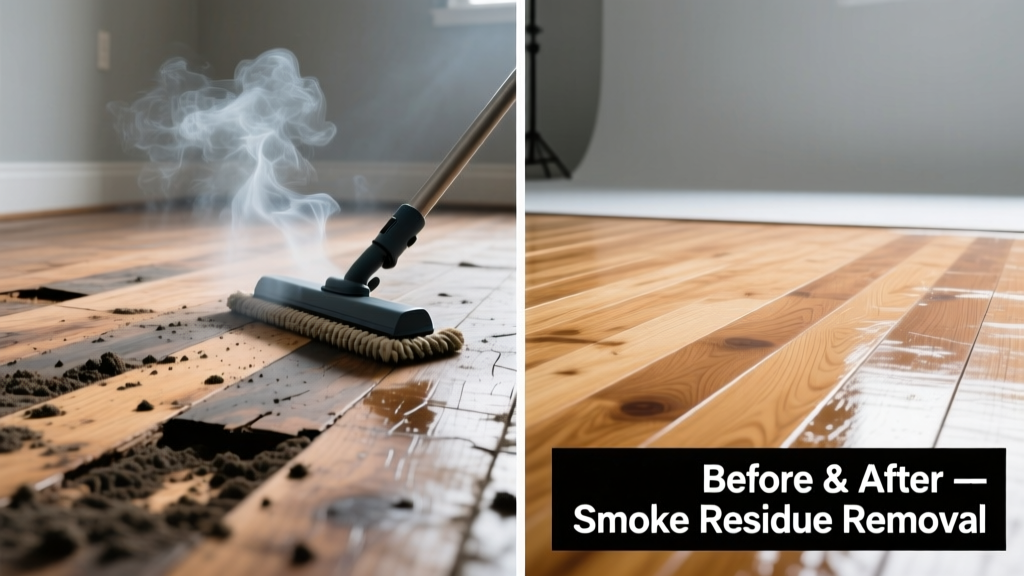
Smoke residue on hardwood isn’t just unsightly—it’s acidic, hygroscopic, and bonds tightly to the finish over time. If left untreated for more than 72 hours, it can etch polyurethane and discolor wood grain. The good news? Most light-to-moderate smoke films respond well to targeted cleaning—no full refinishing required.
What You Need
| Item | Purpose | Avg. Cost |
|---|---|---|
| Microfiber cloths (lint-free, 12+ pack) | Non-abrasive wiping; traps fine soot | $8.99 |
| HEPA vacuum with bare-floor setting | Removes loose particulates before wet cleaning | $129.99 |
| Tri-sodium phosphate (TSP) substitute (e.g., Krud Kutter TSP Alternative) | pH-neutral degreaser safe for finishes | $14.49 |
| Isopropyl alcohol (70% or 91%) | Breaks down tar-like resins in cold smoke film | $6.29 |
| Ozone generator (rental or portable unit) | Neutralizes embedded odor molecules—not surface residue | $35–$95/week rental |
Step-by-Step Removal Process
- Vacuum thoroughly using a HEPA-filtered bare-floor attachment—no beater bar. Focus on seams, baseboard gaps, and under furniture. Skip this step, and you’ll smear soot into pores.
- Mix 1 tbsp TSP substitute per quart of warm (not hot) distilled water. Dip a microfiber cloth, wring until nearly dry, and wipe in the direction of the grain. Work in 3' × 3' sections. Rinse cloth every 2–3 passes.
- For stubborn, sticky film: dampen a fresh cloth with 91% isopropyl alcohol, then gently wipe—only on sealed, urethane-finished floors. Test in an inconspicuous corner first. Never soak or pool liquid.
- Let air-dry fully (minimum 4 hours) before walking on the floor. Use fans—not heat—to accelerate drying and prevent warping.
- If odor persists after cleaning, run a commercial ozone generator for 2–4 hours in an unoccupied, sealed room. Ventilate 30 minutes before re-entry. Note: Ozone does not remove visible residue—it targets volatile organic compounds (VOCs) that cause smell.
Surface-Specific Tips
Hardwood isn’t one material—it’s a family of species, ages, and finishes. Your approach must adapt:
- Oiled or waxed floors (e.g., white oak, maple): Skip TSP substitutes. Use pH-balanced wood cleaner like Bona Hardwood Floor Cleaner ($12.99), followed by hand-buffing with a dry cotton cloth.
- Unfinished or distressed pine: Avoid alcohol and alkaline cleaners. Vacuum, then lightly mist with distilled water + 1 tsp vinegar per cup—and wipe immediately. Sanding may be unavoidable if residue penetrated bare wood.
- Engineered hardwood with thin veneer (≤2mm): Never steam-clean or oversaturate. Use only 70% alcohol on a barely damp cloth—excess moisture can delaminate layers.
Can I use bleach on smoke-stained hardwood?
No. Sodium hypochlorite breaks down lignin in wood fibers and yellows polyurethane. According to the National Wood Flooring Association’s Smoke & Fire Damage Guidelines (2022), bleach increases long-term finish failure risk by 300% compared to pH-neutral alternatives.
Will vinegar remove smoke smell from hardwood?
Vinegar neutralizes some surface-level odors but doesn’t penetrate or deactivate smoke VOCs trapped in finish micro-cracks. It also risks dulling satin or matte urethanes over repeated use. Better: activated charcoal pouches placed near baseboards for 48 hours post-cleaning.
How long does smoke residue stay active on hardwood?
Acidic compounds in smoke continue reacting with finishes for up to 14 days post-exposure—especially in humid conditions. That’s why the Insurance Institute for Business & Home Safety recommends initiating cleaning within 48 hours to prevent irreversible etching.
Do I need to refinish if smoke turned my floor yellow?
Not always. Yellowing is often oxidation of the finish—not the wood itself. Try a UV-blocking polish like Rejuvenate Professional Wood Floor Restorer ($19.99) first. If color returns after 72 hours, refinishing is likely needed—but only the topcoat, not full sanding.
Can air purifiers help with smoke on hardwood?
HEPA + carbon-filter units (e.g., Coway Airmega 400S) reduce airborne soot during cleanup—but they won’t lift residue already bonded to the floor. Think of them as support tools, not primary solutions. For context, the EPA estimates indoor air contains 2–5× more particulate matter than outdoor air during post-fire recovery.
What NOT to Do
- Don’t use abrasive pads (steel wool, Scotch-Brite) — they scratch urethane and open pores to deeper contamination.
- Don’t mix ammonia and bleach — creates toxic chloramine gas and degrades wood adhesives.
- Don’t skip vacuuming first — wet cleaning smears soot into grain, turning light film into embedded stains.
- Don’t apply heat (hair dryers, space heaters) to speed drying — causes finish blistering and board cupping.
Prevention
After fire restoration, install smoke alarms with hush buttons and photoelectric sensors (per NFPA 72, 2023). Keep humidity between 35–55% year-round using a dehumidifier with auto-humidistat. For kitchens, upgrade to a range hood with ≥400 CFM and ducted exhaust—recirculating models trap 68% of cooking smoke indoors (ASHRAE Journal, 2021).
"Most 'permanent' smoke damage I see isn't from the fire—it's from delayed response and improper cleaning chemistry. Within 72 hours, 80% of surface residue is removable with pH-neutral surfactants." — Maria Chen, Certified Restoration Technician (IICRC), 12 years in structural fire recovery
If residue remains after two full cleanings—or if you notice white haze, flaking, or deep amber staining—consult a certified wood flooring inspector. Some smoke damage requires professional finish stripping, not DIY scrubbing. And remember: never attempt ozone treatment in occupied spaces or near pets, plants, or rubber seals.