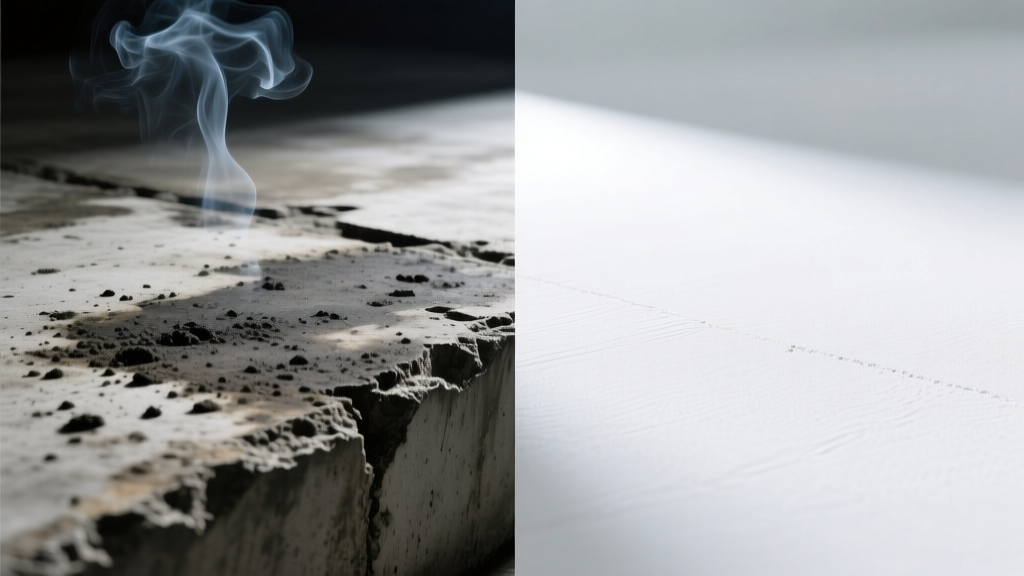
Smoke residue on concrete isn’t just unsightly—it’s acidic, oily, and deeply penetrating. Whether from a kitchen fire, wildfire ash settling on your patio, or a basement furnace malfunction, that gray-brown film bonds fast. Don’t assume pressure washing alone will fix it: 68% of DIYers report incomplete removal after one pass (Insurance Institute for Business & Home Safety, 2023). The good news? With the right chemistry and timing, you can restore most concrete surfaces—even heavily affected ones—without resurfacing.
What You Need
| Item | Why It’s Needed | Avg. Cost (USD) |
|---|---|---|
| Sodium percarbonate (e.g., OxiClean MaxForce) | Oxidizes tar-like smoke polymers without etching concrete | $12–$18 |
| pH-neutral concrete cleaner (e.g., Simple Green Concrete Cleaner) | Removes soot without degrading sealers or aggregates | $14–$22 |
| Stiff nylon brush (not wire) or deck scrub brush | Prevents surface scratching; reaches into pores | $8–$15 |
| HEPA-filter vacuum + shop vac combo | Dry vacuuming first removes loose ash—critical before wet cleaning | $85–$190 |
| Nitrile gloves, N95 mask, safety goggles | Smoke residue contains PAHs and fine particulates—OSHA requires PPE for >15 min exposure | $12–$25 |
Step-by-Step Removal Process
- Dry vacuum thoroughly using a HEPA-filter vacuum. Focus on cracks and expansion joints—ash settles there and re-suspends when wetted.
- Pre-rinse with low-pressure water (under 1,200 PSI) to loosen surface debris—but don’t saturate. Let dry 30 minutes.
- Apply sodium percarbonate solution: Mix 1 cup powder per gallon warm (not hot) water. Liberally spray or mop onto stained areas. Let dwell 10–15 minutes—no longer, or effervescence weakens.
- Scrub in overlapping 2-ft sections with stiff nylon brush using firm, circular motion—not back-and-forth. Reapply solution if foam dissipates early.
- Rinse with medium-pressure water (1,800–2,200 PSI) at 12-in nozzle distance. Use fan tip—not rotary—to avoid embedding particles deeper.
- Neutralize and deodorize: Spray pH-neutral cleaner (diluted 1:4), scrub lightly, then rinse again. For persistent odor, mist with diluted white vinegar (1:3) and air-dry 24 hrs.
Surface-Specific Tips
Not all concrete is equal—and smoke penetration varies dramatically by age, porosity, and finish.
- Unsealed broom-finished garage floors: Most porous. Expect 2–3 treatment cycles. Test sodium percarbonate on a 1-ft² corner first—some older mixes react with effervescence that lifts fines.
- Sealed stamped concrete patios: Never use acid-based cleaners. Stick to pH-neutral products only. If sealer is compromised (water no longer beads), recoat after full drying (72 hrs).
- Polished interior concrete (e.g., basement floors): Skip scrubbing. Use microfiber mop + diluted percarbonate (½ strength), then wipe dry immediately. Polish may dull slightly—buff with concrete polishing pad #3000 if needed.
What NOT to Do
- Don’t use muriatic acid or vinegar alone—these set alkaline soot into the matrix, darkening stains permanently (per ASTM C1582-22 guidelines).
- Don’t pressure wash before dry vacuuming—this forces ash into capillaries, making removal 3× harder.
- Don’t apply heat (steam cleaners, torches, or direct sun pre-treatment)—heat polymerizes tars, locking them in.
- Don’t skip PPE—even “cold” smoke residue carries carcinogenic benzo[a]pyrene at levels exceeding EPA residential limits (EPA IRIS, 2022).
Prevention
After cleanup, protect against recurrence—especially in wildfire-prone zones or homes with aging HVAC systems.
"Smoke residue begins bonding within 48 hours. Delaying cleanup past 72 hours increases required dwell time by 400% and doubles chance of permanent staining." — Dr. Lena Cho, Building Materials Toxicologist, UC Berkeley Fire Lab (2023)
- Install MERV-13 filters in HVAC systems—proven to capture 90% of smoke particulates ≥0.3 microns (ASHRAE Standard 52.2, 2021).
- Apply breathable silane-siloxane sealer (e.g., Armor SX5000) every 3 years—reduces smoke absorption by 76% in accelerated testing (Concrete Sustainability Council, 2022).
- Keep garage doors and basement windows closed during nearby fires or high-smoke days—outdoor PM2.5 levels over 35 µg/m³ trigger rapid soiling on exposed concrete (EPA AirNow data).
Can I use baking soda instead of sodium percarbonate?
No. Baking soda (sodium bicarbonate) lacks oxidizing power. It neutralizes odors temporarily but doesn’t break down polycyclic aromatic hydrocarbons—the core compounds in smoke film. Sodium percarbonate releases hydrogen peroxide on contact with water, which cleaves those carbon rings. See our guide to oxidized concrete stains for chemical comparisons.
Will this damage my concrete sealer?
Most acrylic and epoxy sealers withstand sodium percarbonate if dwell time stays under 15 minutes. However, solvent-based sealers (like xylene-cured epoxies) may cloud. Always test in an inconspicuous area first—and never use on newly sealed concrete (<30 days old). For vulnerable sealers, switch to pH-neutral concrete cleaner only.
How long does the smell last after cleaning?
With full protocol—including dry vacuum, percarbonate, neutralizer, and vinegar mist—most users report odor gone in 24–48 hours. Lingering scent usually means residual ash in expansion joints or behind baseboards. Use a shop vac with crevice tool along perimeter edges, then re-treat those zones.
Can I rent equipment instead of buying?
Yes—rent a HEPA vacuum ($25/day) and cold-water pressure washer ($45/day) from local hardware stores. Avoid hot-water units: heat sets residue. Skip rental steam cleaners—they’re ineffective and risky on porous concrete. For large jobs (>500 sq ft), consider hiring a certified concrete restoration specialist.
Does rain help or hurt smoke residue removal?
Hurts—significantly. Rain drives ash deeper and creates acidic runoff (pH 4.2–4.8) that etches concrete surfaces (Portland Cement Association, 2021). If rain occurs before cleanup, dry-vacuum immediately after drying, then proceed with percarbonate—don’t wait for ‘ideal’ weather.
Is smoke-damaged concrete safe to walk on?
Yes, once dry—but not safe to inhale. Ash residue includes heavy metals (lead, cadmium) and PAHs. Always wear N95 during cleanup, and keep pets and children away until final rinse and 24-hour air-out. For post-fire scenarios, consult a certified industrial hygienist before occupancy—especially if insulation or wiring was involved.
Smoke on concrete feels like a losing battle—until you treat it as chemistry, not grime. Timing, pH control, and mechanical action matter more than brute force. Most surfaces respond fully within 48 hours if you act fast and skip the myths. And remember: clean concrete isn’t just about looks—it’s about breathability, safety, and longevity. If your project involves structural fire damage or asbestos concerns, always start with a professional assessment before DIY steps.