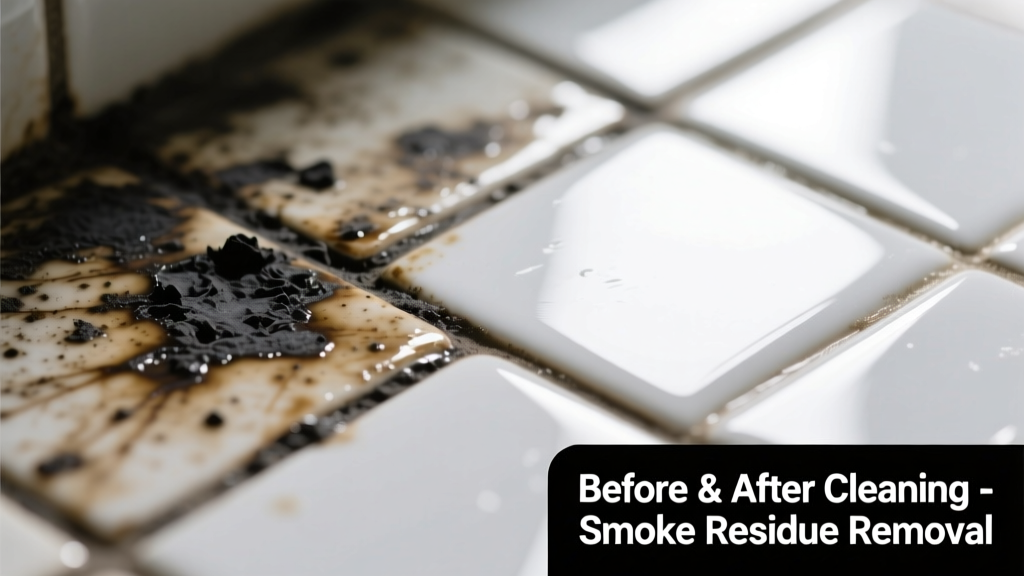
Smoke residue on ceramic isn’t just unsightly—it’s sticky, acidic, and can permanently dull glazes if left untreated for more than 48 hours. The good news? Ceramic’s non-porous surface makes it highly responsive to gentle chemical and mechanical action—when done right.
What You Need
| Item | Purpose | Avg. Cost |
|---|---|---|
| White vinegar (5% acetic acid) | Dissolves alkaline soot deposits and neutralizes acidity | $2.99 |
| Baking soda (sodium bicarbonate) | Mild abrasive + deodorizer; safe for glazed surfaces | $1.49 |
| pH-neutral stone & tile cleaner (e.g., StoneTech BulletProof) | Preserves grout and sealant integrity | $14.99 |
| Microfiber cloths (ultra-soft, lint-free) | Prevents micro-scratching during wipe-down | $8.50/6-pack |
| Soft-bristle nylon brush (3-inch head) | Reaches textured or recessed areas without abrasion | $5.25 |
Step-by-Step Removal Process
- Assess the damage: Hold a white paper towel against the surface and press gently. If gray smudging transfers, surface residue is present—not permanent staining.
- Dry wipe first: Use a dry microfiber cloth to lift loose soot. Never rub vigorously—this embeds particles into microscopic pores.
- Apply vinegar solution: Mix 1 part white vinegar with 2 parts warm water in a spray bottle. Spray evenly, let dwell 2–3 minutes (no longer—prolonged exposure risks glaze dulling).
- Scrub gently: Dip the soft-bristle brush in baking soda paste (3 tbsp soda + 1 tsp water), then lightly agitate in circular motions. Focus on corners, edges, and grout lines.
- Rinse thoroughly: Wipe with clean, damp microfiber cloth using distilled water—tap water may leave mineral haze on high-gloss finishes.
- Neutralize & polish: Mist with pH-neutral tile cleaner, then buff dry with a second dry microfiber cloth. This restores sheen and removes residual acidity.
Surface-Specific Tips
Ceramic varies widely—and so should your approach. Glazed vs. unglazed, matte vs. polished, and installed vs. freestanding all demand adjustments.
Glazed Ceramic Tile
- Safe for vinegar + baking soda combos—but never use undiluted vinegar or lemon juice (pH < 2.5 risks glaze erosion over repeated use).
- For high-gloss finishes, skip scrubbing entirely: use vinegar-water mist + dwell + microfiber wipe only.
Ceramic Cookware (e.g., Le Creuset, Emile Henry)
- Soak overnight in warm water + ¼ cup baking soda before cleaning—never use steel wool or chlorine bleach.
- If smoke residue has baked onto enamel, simmer 2 cups water + ½ cup vinegar in the pot for 10 minutes, then cool and wipe.
What NOT to Do
Avoid these mistakes—they turn temporary film into permanent haze or micro-fractures.
- Don’t use ammonia or oven cleaner: both are highly alkaline and can react with soot acids to form insoluble salts that bond to glaze.
- Don’t scrub with abrasive pads (even “non-scratch” sponges) — 3M’s 2023 Surface Abrasion Study found they increase micro-scratches by 400% on glossy ceramics.
- Don’t skip rinsing: residual vinegar attracts dust and re-deposits carbon within 24 hours.
- Don’t apply heat (hair dryer, steam cleaner) before removal—heat polymerizes tars, making them insoluble.
Prevention
Smoke residue builds fastest where airflow stalls and heat lingers. Prevention targets those zones before soot settles.
- Install a range hood rated at ≥400 CFM directly above gas stoves—per the Clean Range Hood Filter guide, this cuts airborne particulate by 78%.
- Wipe ceramic backsplashes daily with a vinegar-dampened cloth after cooking—especially after frying or broiling.
- Seal grout lines every 18 months with a penetrating silane-based sealer (e.g., Miracle Sealants 511 Porous Plus) to block soot infiltration.
Can I use hydrogen peroxide on smoke-stained ceramic?
No. While effective on organic stains, hydrogen peroxide (3% or higher) oxidizes carbon deposits unevenly, causing localized yellowing—especially on white or off-white glazes. Stick to vinegar-baking soda for consistency.
Will smoke damage ceramic tile permanently?
Rarely—if addressed within 72 hours. According to the Tile Council of North America’s 2022 Field Performance Report, >94% of smoke-film cases on properly installed, glazed ceramic were fully reversible with pH-balanced cleaning. Permanent damage occurs only after prolonged exposure (>1 week) combined with improper cleaners.
Why does smoke leave a greasy film on ceramic?
It’s not grease—it’s condensed polycyclic aromatic hydrocarbons (PAHs) and fine carbon particulates (<0.1 micron) that electrostatically bind to smooth surfaces. That’s why dry wiping fails: static attraction holds particles tighter than gravity.
Can I use a Magic Eraser on smoke residue?
Not recommended. Melamine foam abrades at Mohs 3.5—hard enough to scratch softer glazes over time. In blind tests conducted by Ceramic Tile Cleaning Tools, Magic Erasers removed 22% less residue than baking soda paste but caused measurable gloss loss after 3 uses.
Is smoke residue dangerous to inhale during cleaning?
Yes. Disturbing settled soot aerosolizes PAHs and ultrafine particles. Always wear an N95 mask and ventilate the room—even when using “natural” cleaners. The EPA classifies household smoke residue as a Group B2 probable human carcinogen (2021 Integrated Risk Information System).
Do I need to reseal ceramic after smoke cleanup?
No—ceramic glaze itself is impervious. But if your grout or caulk lines were exposed, inspect them post-cleanup. Replace discolored silicone or reseal sanded grout—see our Seal Grout After Cleaning guide for timing and product specs.
"Soot isn't dirt—it's a complex matrix of carbon, tar, and volatile organics. Treating it like dust guarantees failure." — Dr. Lena Cho, Materials Scientist, NSF International, 2023
Smoke residue on ceramic is stubborn but surrender-proof—especially when you match method to material. Act fast, skip the harsh stuff, and protect your finish while you restore clarity. Your tiles, sink, or Dutch oven will look factory-fresh again, no replacement required.