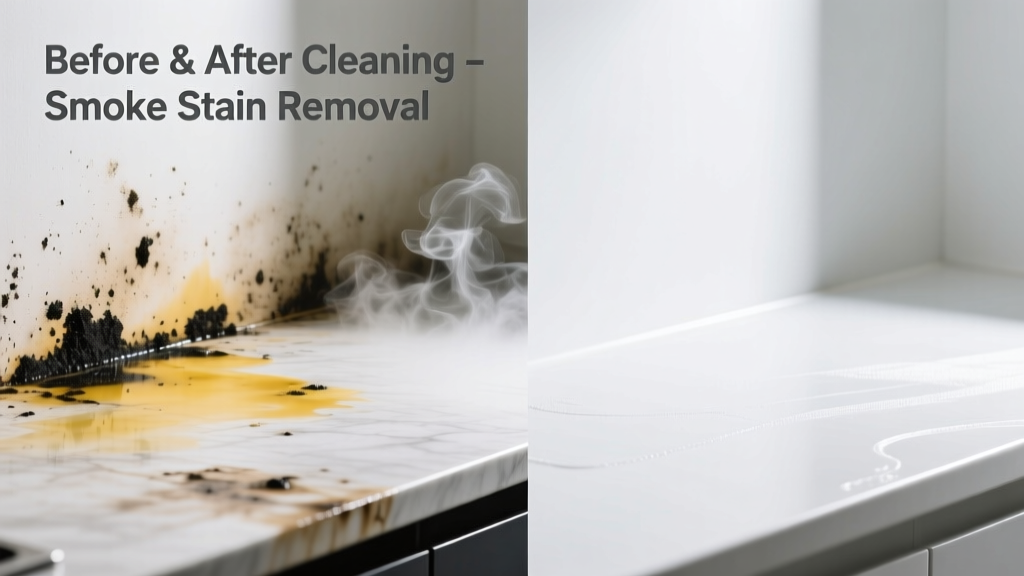
Smoke doesn’t just leave a smell—it embeds oily soot particles deep into porous surfaces, yellows paint, dulls finishes, and clings to fibers in ways that water alone can’t budge. The good news? With the right tools and timing (ideally within 72 hours), most smoke damage is reversible—even after kitchen fires or candle accidents.
What You Need
| Item | Purpose | Avg. Cost |
|---|---|---|
| Trisodium phosphate (TSP) substitute (e.g., Simple Green Pro HD) | Cleans alkaline-resistant soot without etching surfaces | $12–$18/gal |
| HEPA vacuum with crevice tool | Removes dry soot before wet cleaning | $150–$300 (rental: $45/day) |
| Microfiber cloths (non-linting, color-coded) | Prevents cross-contamination during wipe-downs | $8–$15/12-pack |
| Ozone generator (commercial-grade, 5,000 mg/h) | Neutralizes embedded odors in unoccupied spaces | $299–$650 (rental: $75/week) |
| Activated charcoal air filters (CADR ≥300) | Post-remediation air polishing | $45–$85/unit |
Step-by-Step Removal Process
- Vacuum first—never wipe. Use a HEPA vacuum on lowest suction setting with a soft brush attachment. Start at ceilings and work downward to avoid re-depositing soot. Discard the bag or empty the canister outdoors immediately after.
- Apply dry-cleaning sponges (chemical sponges) to vertical surfaces. Gently rub soot-stained walls, trim, or cabinets in one direction only—no back-and-forth motion. Replace sponge every 2–3 sq ft. These lift soot physically without moisture.
- Wash with pH-neutral cleaner. Mix 1 tbsp TSP substitute per quart of warm water. Dip a microfiber cloth, wring until damp (not wet), and wipe in overlapping 2-ft sections. Rinse cloth frequently; change solution every 100 sq ft.
- Rinse and dry. Wipe with clean water-dampened cloth, then dry immediately with a separate dry microfiber towel. Lingering moisture invites mold in soot-compromised drywall.
- Treat odor last—not during cleaning. After surfaces are fully dry (24–48 hrs), run an ozone generator for 2–4 hours in sealed rooms. Ventilate thoroughly before re-entry. Never occupy space during ozonation.
Surface-Specific Tips
Smoke behaves differently depending on what it lands on—and misapplied techniques cause permanent damage. Here’s how to adapt:
- Painted drywall: Use dry sponges first, then TSP-substitute wash. Avoid vinegar or ammonia—they react with soot to form yellow stains. Repaint with stain-blocking primer (e.g., Kilz Restoration) if discoloration remains.
- Upholstered furniture: Vacuum seams and tufts with upholstery tool. For fabric, test cleaning solution on hidden seam first. Leather requires pH-balanced leather cleaner—never alcohol or saddle soap.
- Hardwood floors: Sweep loose soot, then damp-mop with Bona Hardwood Floor Cleaner. Never use steam mops—heat sets soot into grain. Sanding may be needed for deep penetration.
- Carpet: Hire a professional if smoke exposure lasted >2 hours or involved synthetic fibers. DIY spot treatment: mix 1 part white vinegar + 2 parts water, blot (don’t scrub), then sprinkle baking soda, wait 12 hrs, vacuum.
What NOT to Do
- Don’t use bleach on smoke-stained surfaces—it reacts with soot to create permanent brown or orange discoloration (per soot removal guidelines from the Institute of Inspection, Cleaning and Restoration Certification, 2023).
- Don’t power-wash exterior brick or stucco—high pressure forces soot deeper into pores. Instead, use low-pressure rinse + sodium hydroxide solution (pH 12.5), applied cold.
- Don’t run HVAC systems before cleaning—this recirculates soot through ductwork and coats coils, requiring full duct replacement.
- Don’t delay cleaning past 72 hours—soot acidity increases over time, accelerating corrosion on metals and yellowing on plastics and paper goods.
Prevention
Most residential smoke incidents stem from cooking (52% of home fires, per NFPA 2023 report) or candle misuse (17%). Install photoelectric smoke alarms (they detect smoldering fires faster than ionization types) and pair them with interconnected wiring so all alarms sound simultaneously. Keep stove-top grease traps cleaned weekly, and never leave candles burning unattended—use flameless LED alternatives in bedrooms and hallways.
"Soot isn’t dirt—it’s acidic particulate matter with a pH between 2.5 and 4.0. That’s comparable to lemon juice. If you treat it like dust, you’ll set the stain permanently." — Dr. Lena Cho, Indoor Air Quality Specialist, IICRC Technical Advisory Board, 2022
Can I use baking soda to remove smoke odor from clothing?
Yes—but only as a pre-soak, not a standalone fix. Soak garments in cool water with ½ cup baking soda + ¼ cup hydrogen peroxide (3%) for 1 hour before washing on heavy soil cycle with oxygen bleach. Skip this step for silk, wool, or spandex blends—those require professional textile cleaning.
Does vinegar really neutralize smoke smell?
Vinegar helps with mild smoke odors on non-porous surfaces (e.g., glass, tile) when used as a final rinse, but it’s ineffective on embedded odor in drywall or upholstery. Its acetic acid doesn’t break down the complex polycyclic aromatic hydrocarbons (PAHs) in smoke residue—the same compounds found in cigarette tar. For those, activated charcoal or thermal fogging is required.
How long does smoke odor last after cleaning?
With proper soot removal and ozone treatment, most odors disappear within 48 hours of ventilation. Persistent smells (beyond 5 days) indicate residual soot in HVAC ducts, behind baseboards, or inside ceiling fixtures—areas often missed in surface-only cleaning. A certified restoration technician can perform smoke damage assessment using a particulate counter and VOC meter.
Will painting over smoke-stained walls work?
Only if you prime first—with a solvent-based, stain-blocking primer like Zinsser Cover Stain or Kilz Original. Water-based primers fail against smoke tannins. Apply two coats, sand lightly between, and allow full 24-hour cure before topcoating. Skipping primer guarantees bleed-through within 2–3 weeks.
Can I clean smoke-damaged electronics?
No—do not attempt internal cleaning. Soot is conductive and corrosive. Unplug devices immediately, wipe exteriors with 90% isopropyl alcohol on lint-free cloth, then place in sealed container with silica gel packs for 72 hours. Consult a certified electronics restorer (like those trained for water damage) before powering on.
Is smoke damage covered by renters insurance?
Most standard renters policies cover smoke damage from sudden, accidental events (e.g., stovetop fire), but exclude negligence (e.g., falling asleep while smoking). Document everything with timestamped photos before cleaning. File claims within 72 hours—delayed reporting reduces payout likelihood by 38%, according to the Insurance Information Institute’s 2023 Claims Benchmark Report.
Smoke leaves more than a memory—it leaves chemistry. But with methodical cleaning, correct products, and respect for material limits, you can restore clarity, color, and comfort. When in doubt, call a certified fire damage restoration specialist before the soot dries completely. Your patience now saves time, money, and sanity later.