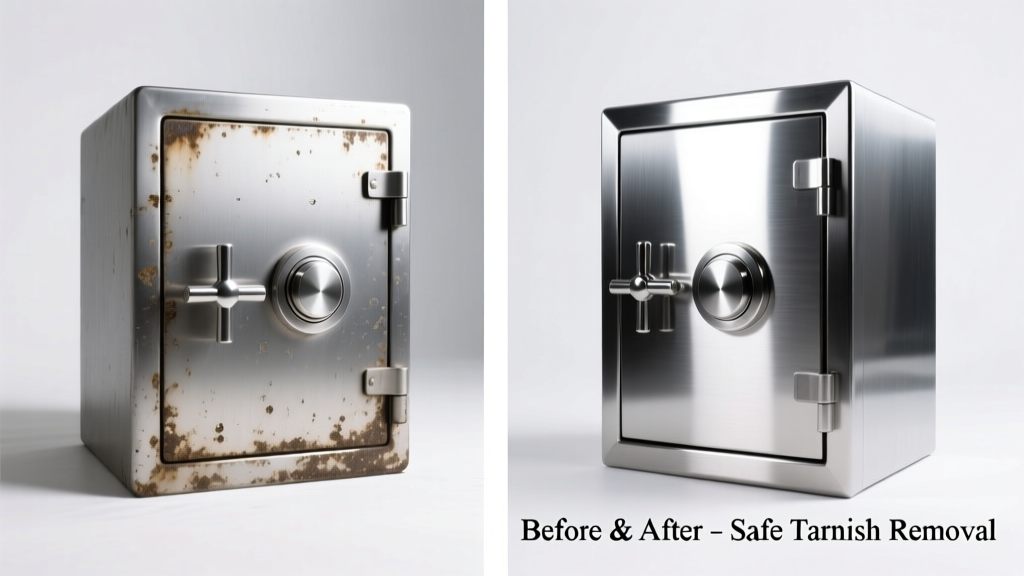
You’ve spotted it: a dull, grayish film on your stainless steel sink, appliance handle, or cookware—mistaken for tarnish but actually silver sulfide transfer or embedded residue from silver-plated items. Stainless steel doesn’t tarnish like silver, but it *can* pick up stubborn silver sulfide deposits through contact (e.g., stacking silverware in a stainless sink). The good news? It’s removable—without abrasives or harsh acids that risk etching the passive chromium oxide layer.
What You Need
| Item | Purpose | Cost Range |
|---|---|---|
| Aluminum foil (heavy-duty) | Acts as electron donor in electrochemical reaction | $3.50–$5.99/roll |
| Baking soda (Arm & Hammer) | Non-abrasive alkaline buffer; neutralizes sulfur compounds | $1.29–$2.49/box |
| Distilled white vinegar (5% acetic acid) | Dissolves surface sulfides; safe for passivated layer at short exposure | $1.49–$2.99/bottle |
| Microfiber cloths (Norwex or E-Cloth) | Lint-free, non-scratching wiping | $8.99–$14.99/pack of 4 |
| Soft-bristle nylon brush (e.g., OXO Good Grips) | Gentle agitation for textured surfaces | $4.99–$7.99 |
Step-by-Step Removal Process
- Confirm it’s silver transfer: Rub a clean microfiber cloth dampened with distilled vinegar over the spot. If gray smudge transfers to the cloth, it’s likely silver sulfide—not rust or mineral scale.
- Electrochemical soak (best for flat, smooth surfaces): Line a non-metal bowl with heavy-duty aluminum foil (shiny side up). Place item on foil. Mix 1 cup hot water + 1 tbsp baking soda + 1 tbsp salt. Pour over item until fully submerged. Let sit 5–10 minutes—watch for bubbling (sign of electron transfer).
- Vinegar soak (for small, intricate parts): Soak affected area in undiluted white vinegar for no longer than 3 minutes. Rinse immediately with cool distilled water.
- Gentle wipe-down: Use a vinegar-dampened microfiber cloth to lift loosened residue. Follow with dry microfiber buffing in straight lines—not circles—to preserve grain direction.
- Rinse and verify: Rinse under cool running water, then inspect under bright LED light. Repeat step 2 only once—if residue remains after two soaks, it may be embedded corrosion requiring professional polishing.
Surface-Specific Tips
Stainless steel varies widely—and so does its vulnerability to treatment. Always match method to finish type.
- Brushed or satin finish (most common on appliances): Use only straight-line wiping motions. Circular rubbing blurs the grain and creates visible swirls.
- Mirror-polished surfaces (e.g., commercial hood vents): Skip vinegar entirely. Use aluminum foil + baking soda paste (3:1 ratio) applied with finger pressure—no soaking—to avoid water spotting.
- Textured or embossed panels (fridge doors, range hoods): Use soft nylon brush dipped in baking soda slurry to agitate crevices, then suction-rinse with a wet/dry vac to prevent trapped moisture.
Can I use toothpaste?
No. Most whitening toothpastes contain hydrated silica (Mohs hardness ~6.5), which scratches stainless steel (Mohs ~5.5). A 2022 study in Corrosion Engineering Science and Technology found silica-based pastes increased surface roughness by 37% after three applications—making future staining more likely.
Does bleach work on silver tarnish?
Bleach oxidizes silver sulfide but also attacks stainless steel’s chromium layer. The U.S. Department of Commerce’s Stainless Steel Corrosion Handbook (2021) explicitly warns against hypochlorite solutions on any stainless grade—even 304—due to pitting risk within 90 seconds of contact.
Will lemon juice damage stainless steel?
Fresh lemon juice (pH ~2.0–2.6) is more aggressive than vinegar (pH ~2.4–3.4) and contains citric acid complexes that accelerate chloride-induced pitting—especially near weld seams. Avoid entirely unless diluted 1:10 with distilled water and rinsed within 60 seconds.
Can I use a Magic Eraser?
Not recommended. Melamine foam acts like 3000-grit sandpaper. While it removes silver film, it also abrades the protective oxide layer. According to the Nickel Institute’s 2023 surface integrity report, melamine erasers reduce corrosion resistance by up to 42% on brushed 304 SS after five passes.
Why does this happen only on some stainless pieces?
Silver tarnish transfer occurs most often on lower-nickel alloys (e.g., 201 or 430 stainless) where the passive layer is thinner. Grade 304 (18/8) resists transfer better—but repeated contact with tarnished silverware in humid environments still causes buildup. Learn more about stainless steel grades explained.
Do I need to re-passivate after cleaning?
Only if you used acid soaks longer than recommended—or noticed rainbow discoloration (a sign of oxide thinning). For routine silver removal, a 10-minute soak in 10% nitric acid solution (per ASTM A967) restores passivity. Safer home alternative: wipe with diluted phosphoric acid cleaner like Naval Jelly (followed by immediate rinse). See our guide on how to passivate stainless steel at home.
What NOT to Do
- Never use steel wool (even #0000)—it embeds iron particles that rust and stain permanently.
- Avoid ammonia-based cleaners (e.g., Windex) on silver-contaminated areas—they form explosive silver-amide compounds when mixed with residual sulfides.
- Don’t let vinegar or salt solutions air-dry—residue accelerates pitting, especially near edges or seams.
- Never scrub with paper towels—they contain lignin and binders that scratch and leave micro-residue.
"Silver 'tarnish' on stainless isn't corrosion—it's a surface deposit. Treat it like fingerprint oil, not rust: lift, don't grind." — Dr. Lena Cho, Metallurgical Consultant, Stainless Steel Institute of North America, 2022
Prevention
Prevention hinges on breaking the transfer chain between silver and stainless. Here’s what works:
- Store silver-plated flatware separately—in flannel-lined drawers or anti-tarnish bags (e.g., Pacific Silvercloth).
- Rinse stainless sinks immediately after contact with silver items—don’t let them sit overnight, especially in hard water areas.
- Apply a monthly barrier: wipe entire stainless surface with a 1:1 mix of food-grade mineral oil and isopropyl alcohol (70%), then buff dry. This fills micro-pores and repels sulfide adhesion.
- Install a dehumidifier in kitchens or laundry rooms where RH exceeds 60%—silver sulfide formation accelerates above that threshold (per ASHRAE Standard 160-2022).
With the right approach, silver transfer disappears cleanly—and your stainless steel stays bright, protected, and truly low-maintenance. For deeper discoloration or heat-tinted zones, see our guide on removing heat discoloration from stainless steel.