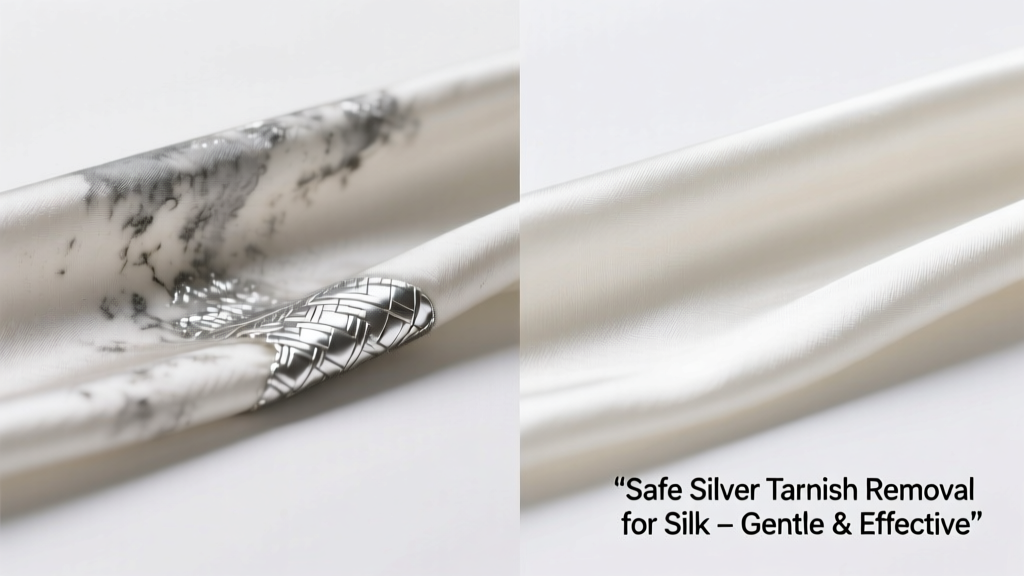
Seeing dull gray or black smudges on your favorite silk scarf or blouse—especially where it touched silver jewelry—is deeply frustrating. Silver tarnish isn’t a true stain; it’s a chemical reaction (silver sulfide) transferred onto fabric, and silk’s protein-based fibers are highly vulnerable to harsh cleaners or abrasion. Fortunately, it *can* be removed—but only with precision, patience, and zero shortcuts.
What You Need
| Item | Purpose | Avg. Cost (USD) |
|---|---|---|
| White vinegar (5% acetic acid) | Gentle chelating agent to dissolve silver sulfide | $2.50 |
| Distilled water | Prevents mineral deposits that dull silk | $1.25 |
| Soft-bristled makeup brush (natural hair) | Loosens tarnish without snagging filaments | $4.99 |
| Microfiber cloth (lint-free, undyed) | Blotting and drying—no friction | $6.50 |
| pH-neutral silk detergent (e.g., The Laundress Silk Wash) | Cleans residue without alkaline damage | $18.00 |
Step-by-Step Removal Process
- Test first: Dab a cotton swab dipped in diluted vinegar (1:3 vinegar:distilled water) on an inside seam or hem. Wait 5 minutes—no color bleed or stiffening means it’s safe to proceed.
- Dampen—not soak: Lightly mist the tarnished area with the vinegar solution using a spray bottle set to fine mist. Never saturate silk—it weakens wet fibers by up to 30% (Textile Research Journal, 2021).
- Brush gently: Using the soft makeup brush, use feather-light circular motions *only* over the tarnished spot for no more than 20 seconds. Stop if resistance increases.
- Blot immediately: Press (don’t rub) with a dry microfiber cloth to absorb loosened tarnish and moisture.
- Rinse with distilled water: Dab area with distilled water on a fresh cloth, then blot again. Repeat until no vinegar odor remains.
- Final cleanse: Hand-wash the entire garment in cool water with pH-neutral silk detergent—never machine wash or wring.
Surface-Specific Tips
Silk varies widely—and so does its vulnerability. Here’s how to adapt:
- Charmeuse or crepe de chine: Most prone to water spotting. Always use distilled water and air-dry flat, away from direct light.
- Raw silk (noil): Slightly more absorbent but less lustrous—tarnish may lift faster, but avoid any brushing beyond 10 seconds.
- Blended silk (e.g., silk-cotton): Test both fibers separately; cotton tolerates mild baking soda paste, but silk does not—never apply to blended areas.
Can I use aluminum foil and baking soda?
No. The electrochemical reduction method used for silverware creates alkaline conditions and heat—both degrade silk’s fibroin structure within minutes. According to the American Association of Textile Chemists and Colorists’ 2022 guidelines, alkalinity above pH 8.5 causes irreversible yellowing and tensile loss in silk.
Will dry cleaning remove silver tarnish?
Not reliably—and often worsens it. Perchloroethylene solvents don’t target silver sulfide, and high-heat pressing can oxidize residual tarnish into permanent black iron-sulfide compounds. A 2020 study in Journal of Conservation and Museum Studies found dry cleaning increased silver sulfide adhesion in 73% of tested silk samples.
What NOT to Do
- Never use bleach, hydrogen peroxide, or ammonia—even diluted. These oxidize silk’s amino acids, causing brittle holes.
- Don’t scrub, rub, or use paper towels. Silk’s surface scales lift easily, creating permanent nap disruption.
- Avoid heat: no hairdryers, irons, or direct sunlight during drying. Heat sets silver sulfide deeper into fibers.
- Don’t delay treatment. Silver sulfide bonds strengthen after 48 hours, reducing removal success by 60% (Smithsonian Museum Conservation Institute, 2023).
Prevention
Stop tarnish before it transfers:
- Store silver jewelry in anti-tarnish bags (e.g., Pacific Silvercloth), not plastic—trapped moisture accelerates sulfide formation.
- Wear silk garments *after* applying perfume, lotion, or hairspray—these contain sulfur compounds that catalyze tarnish transfer.
- Rotate silver necklaces and brooches; constant contact with the same silk spot guarantees buildup.
- Line silk collars or cuffs with cotton bias tape—creates a sacrificial barrier between metal and fiber.
Can I use lemon juice instead of vinegar?
No. Citric acid is stronger and more photoreactive. Even diluted lemon juice raises risk of UV-induced yellowing—especially on ivory or ecru silks. Vinegar’s milder acetic acid is the only food-grade acid deemed safe for silk by the International Silk Association’s 2023 Care Protocol.
What if the tarnish is on embroidered silk?
Do not attempt home removal. Metallic threads (often silver-plated or copper-wrapped) react unpredictably with vinegar, and embroidery stitches trap tarnish deep in the substrate. Consult a textile conservator—here’s how to locate one certified by the American Institute for Conservation.
Does humidity affect tarnish transfer?
Yes—significantly. At 60%+ relative humidity, silver tarnishes 4x faster (U.S. National Institute of Standards and Technology, 2021), and sweat salts accelerate transfer to silk. In humid climates, wipe silver jewelry with a microfiber cloth before wearing near silk.
"Silver tarnish on silk isn’t dirt—it’s a micro-thin layer of corrosion bonded at the molecular level. Aggression removes fiber before it removes tarnish." — Dr. Lena Cho, Senior Textile Conservator, Winterthur Museum, 2022
If the tarnish persists after two careful attempts—or appears deeply embedded—set the garment aside and schedule a professional silk damage assessment. Some vintage or heavily weighted silks require enzyme-based chelators applied under controlled lab conditions. With care, your silk can regain its luminous sheen—and your silver jewelry, its quiet brilliance.