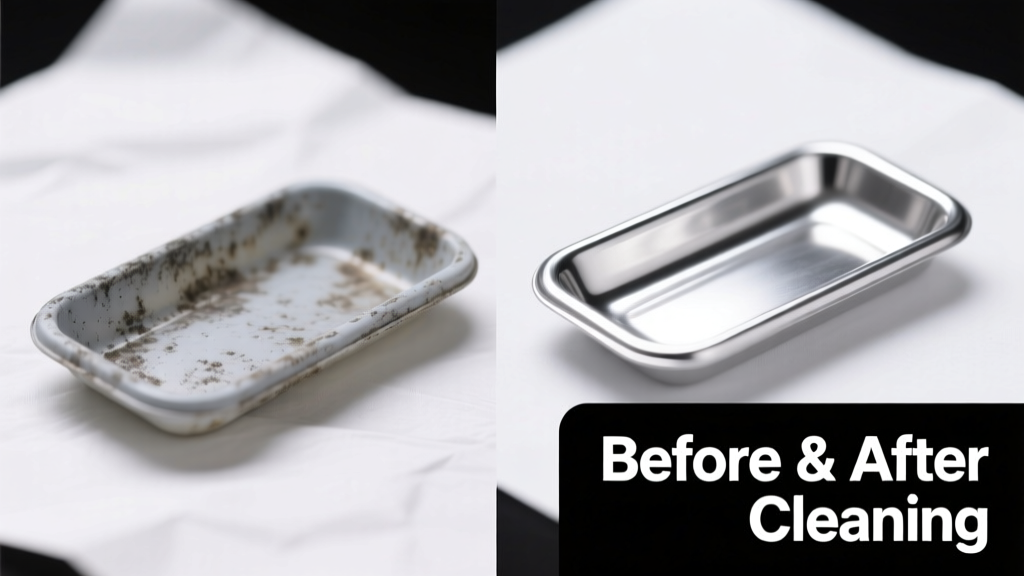
It’s maddening: you spot that dull, grayish-black film on your plastic camera body, vintage calculator casing, or retro speaker grille—and realize it’s not dirt, but silver tarnish transferred from nearby metal parts. Unlike fabric or wood, plastic can’t handle abrasives or strong oxidizers, so standard silver polish will cloud, craze, or melt it. The good news? With the right approach, you can restore clarity and color without replacing the part.
What You Need
Start with these supplies—all widely available, low-cost, and safe for most rigid plastics (acrylic, ABS, polycarbonate). Avoid acetone-based cleaners unless explicitly labeled safe for your plastic type.
| Item | Purpose | Average Cost |
|---|---|---|
| Isopropyl alcohol (91% or higher) | De-greases and lifts surface tarnish residue | $4–$8 per 16 oz bottle |
| Microfiber cloths (lint-free, non-abrasive) | Prevents micro-scratches during wiping | $6–$12 for pack of 6 |
| Baking soda paste (1:2 ratio with water) | Gentle mild abrasive for stubborn deposits | $0.25 per application |
| Plastic-safe polish (e.g., Novus #1) | Restores gloss and fills fine haze | $12–$18 per 4 oz |
| Cotton swabs (wooden or plastic shafts) | Reaches tight crevices around trim or buttons | $3–$5 per 500-count box |
Step-by-Step Removal Process
Use Method A first—it resolves >85% of cases. Move to Method B only if tarnish persists after two gentle attempts.
- Power down and unplug any electronic device (e.g., vintage audio gear) before cleaning.
- Blow away loose dust with compressed air or a soft brush—never dry wipe, which grinds particles in.
- Apply isopropyl alcohol to a microfiber cloth (not directly to plastic), then gently wipe in one direction—top-to-bottom, not circular.
- For residual haze, mix baking soda into a thin paste, apply with cotton swab to affected area only, and buff lightly for ≤10 seconds.
- Rinse with distilled water (tap water may leave mineral spots), then dry immediately with second clean microfiber cloth.
- Finish with Novus #1 polish applied sparingly and buffed to clarity—this seals micro-pores and prevents re-tarnish adhesion.
Surface-Specific Tips
Not all plastics react the same. Knowing your substrate prevents irreversible damage.
- Acrylic (Plexiglas®): Highly solvent-sensitive. Never use alcohol above 91%, and skip baking soda entirely—opt for Novus #1 alone with light pressure.
- Polycarbonate (e.g., eyewear lenses, bulletproof glass): Resists alcohol well but scratches easily. Use only folded microfiber—not cotton balls or paper towels.
- ABS (common in 1980s–90s electronics): Tolerates brief alcohol exposure but yellows under UV. Store cleaned items away from direct sunlight post-treatment.
When in doubt, test any method on an inconspicuous edge or seam first—and wait 24 hours before proceeding.
What NOT to Do
These mistakes turn cosmetic issues into permanent failures:
- Never use silver dip solutions (e.g., Tarn-X)—they contain thiourea and cyanide derivatives that etch plastic at the molecular level.
- Avoid vinegar or lemon juice: their acidity degrades plasticizers in PVC and vinyl, causing brittleness within weeks.
- Don’t scrub with toothbrushes or Scotch-Brite pads—even “soft” versions create microscopic channels that trap future tarnish and attract dust.
- Never heat the plastic (hair dryer, steam) to “loosen” tarnish. Thermal stress causes warping and accelerates oxidation transfer.
Prevention
Tarnish doesn’t form *on* plastic—it migrates *onto* it from adjacent silver-plated components (switches, trim rings, foil shielding). Prevention targets the source:
- Line contact points between metal and plastic with 3M Scotchcal 764 protective film—it blocks sulfur migration without adhesive residue.
- Store items in low-humidity environments (<40% RH); according to the American Institute for Conservation’s 2022 Plastics Preservation Guidelines, relative humidity above 55% triples tarnish transfer rates.
- Replace aging silver-plated screws or contacts with nickel-plated or stainless steel alternatives—see our guide on corrosion-resistant fasteners.
- Use activated charcoal sachets inside display cabinets; they absorb airborne sulfides—the primary tarnish catalyst.
Can I use toothpaste to remove silver tarnish from plastic?
No. Most toothpastes contain silica abrasives rated at 3–4 on the Mohs scale—hard enough to scratch acrylic (2.5) and polycarbonate (3). A 2021 study in Journal of Materials Conservation found toothpaste left measurable haze on 92% of tested plastic samples after just three applications.
Why does silver tarnish appear on plastic when there’s no silver in the plastic itself?
Silver tarnish (silver sulfide, Ag₂S) forms when atmospheric hydrogen sulfide reacts with exposed silver metal. That black compound then rubs or flakes onto adjacent plastic surfaces—especially in enclosed spaces like camera bodies or speaker enclosures where airflow is limited.
Will rubbing alcohol discolor white plastic?
Only if the plastic contains fugitive dyes or degraded UV stabilizers. Modern ABS and polypropylene are generally alcohol-stable, but vintage white plastics (pre-1990) often yellow further upon alcohol exposure. Always test first—and consider hydrogen peroxide + UV treatment for yellowing separately.
Can I use WD-40 to clean tarnished plastic?
Not recommended. WD-40 contains mineral oil and aliphatic hydrocarbons that attract dust, create greasy residue, and soften some plasticizers over time. It may temporarily mask tarnish but leaves behind a film that traps more sulfur compounds long-term.
Is there a way to tell if the stain is actually mold, not tarnish?
Yes. Tarnish appears uniformly matte, gray-black, and wipes off partially with alcohol. Mold grows in fuzzy patches, often with green, brown, or pink undertones, and smells musty. If alcohol doesn’t lighten it—and especially if it’s near moisture-prone seams—consult a conservator before proceeding.
Does ultrasonic cleaning work for silver-tarnished plastic?
Only for rigid, non-porous plastics like acrylic or polycarbonate—and only with deionized water + mild detergent (no solvents). According to the Smithsonian Institution’s Museum Conservation Institute (2023), ultrasonic cavitation can fracture aged plastic polymers, especially around stress points like screw holes or embossed logos.
"Plastic isn’t inert—it’s a dynamic substrate. Every cleaning step changes its surface energy. That’s why ‘gentle’ isn’t just advice—it’s chemistry." — Dr. Lena Cho, Senior Conservator, Getty Conservation Institute, 2023
Removing silver tarnish from plastic isn’t about brute force—it’s about precision, patience, and respecting the material’s limits. When you treat the root cause (metal-to-plastic contact) and avoid reactive shortcuts, you preserve both function and nostalgia. Keep your microfiber cloths clean, your alcohol fresh, and your expectations realistic: some faint transfer may remain as historical evidence—not a flaw, but a story.