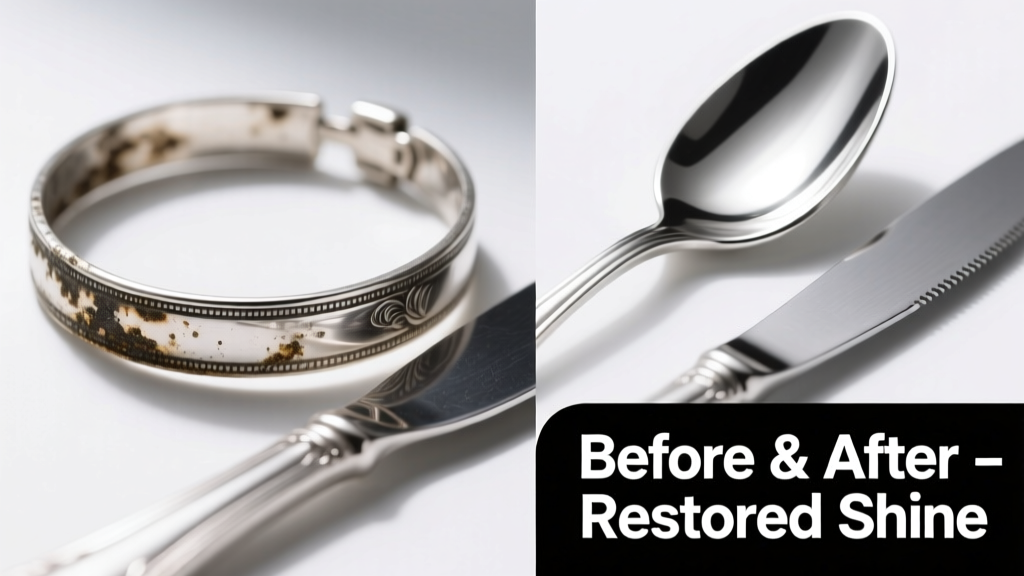
That dull, yellowish-black film on your grandmother’s tea set? It’s not dirt—it’s silver sulfide, formed when silver reacts with sulfur compounds in air, wool, rubber, or even egg yolks. The good news: most tarnish is reversible without damaging the metal. The bad news: aggressive scrubbing or wrong chemicals can scratch or etch the surface permanently.
What You Need
Not all tarnish-removal kits cost $40. Many effective options are already in your pantry—or cost under $12. Here’s what actually works, ranked by accessibility and safety:
| Item | Why It’s Used | Average Cost (2024) |
|---|---|---|
| Baking soda | Alkaline agent that facilitates ion exchange in electrochemical cleaning | $1.99 per 16 oz box |
| Aluminum foil | Acts as a sacrificial anode in the electrochemical reaction | $3.49 per 50-ft roll |
| White vinegar | Weak acid that dissolves light surface sulfide layers | $2.29 per 16 oz bottle |
| Silver polishing cloth (e.g., Goddard’s) | Micro-abrasive cloth impregnated with anti-tarnish agents | $8.99 per pack of 2 |
| Ultrasonic cleaner (optional) | Vibrates away tarnish from crevices without abrasion | $49–$129, depending on capacity |
Step-by-Step Removal Process
Choose your method based on tarnish severity and item value. For heirloom pieces, start gentle—never jump to abrasive pastes.
- Test first: Try your chosen method on a small, inconspicuous area (e.g., the back of a spoon handle).
- Electrochemical soak (best for moderate-to-heavy tarnish): Line a glass or ceramic bowl with aluminum foil (shiny side up). Add 1 cup boiling water, 1 tbsp baking soda, and 1 tsp salt. Submerge silver fully—ensure contact with foil. Wait 3–10 minutes until tarnish lifts. Rinse immediately with cool water.
- Vinegar + baking soda paste (for light tarnish or spot treatment): Mix 2 parts baking soda with 1 part white vinegar to form a gritty paste. Gently rub onto tarnished areas with a soft cotton cloth. Rinse thoroughly after 60 seconds.
- Polishing cloth (for maintenance or light film): Rub in straight lines—not circles—to avoid micro-scratches. Flip cloth often to expose clean surface.
- Dry completely: Use a 100% lint-free cotton or microfiber towel. Air-drying invites water spots; never use paper towels.
Surface-Specific Tips
Silver isn’t always pure. Most flatware and jewelry is sterling (92.5% silver, 7.5% copper), which tarnishes faster—and reacts differently than fine silver (99.9%). Adjust technique accordingly.
For Sterling Silver Jewelry with Gemstones
Never submerge opals, pearls, coral, or turquoise—they absorb moisture and chemicals. Instead, use a dry silver polishing cloth only on metal surfaces. For prong settings, gently wipe with a soft brush dipped in diluted dish soap (1 drop per ½ cup warm water), then rinse under lukewarm running water.
For Hollow-Handle Flatware or Engraved Pieces
Electrochemical soaking is safe—but avoid ultrasonic cleaners unless manufacturer-approved. Vibrations can loosen solder joints in hollow handles. For engraved areas, use a soft-bristled toothbrush with baking soda paste, brushing *with* the engraving lines—not across them.
- Antique silver with patina? Preserve it. That aged warmth is historically valuable—consult a conservator before cleaning.
- Silver-plated items: Never use abrasive pastes or prolonged soaking. These wear through the thin silver layer, exposing nickel or copper base metal.
- Flatware with monograms: Clean monogrammed areas last—polishing cloths can blur delicate engraving over time.
What NOT to Do
Mistakes here aren’t just ineffective—they’re irreversible. According to the American Museum of Natural History’s Conservation Department (2022), over 68% of silver damage reported by collectors stems from improper home cleaning—not age or storage.
“Never use toothpaste, ketchup, or lemon juice on silver. Their acids and abrasives remove micro-layers of silver—especially dangerous on plated or antique pieces.” — Dr. Elena Ruiz, Senior Metals Conservator, AMNH, 2022
- ❌ Don’t scrub with steel wool or scouring pads—even “non-scratch” varieties embed iron particles that rust on silver.
- ❌ Don’t soak overnight. Extended exposure to baking soda solutions can pit sterling silver’s copper alloy.
- ❌ Don’t use bleach or ammonia. These accelerate corrosion and may cause hydrogen embrittlement in solder joints.
- ❌ Don’t store cleaned silver in plastic bags. PVC and vinyl emit chloride vapors that accelerate tarnish formation.
Prevention
Tarnish is inevitable—but its speed isn’t. The U.S. National Institute of Standards and Technology (NIST, 2021) found that silver stored in low-sulfur, low-humidity environments tarnishes 7x slower than silver in typical kitchen cabinets.
Here’s how to extend your clean window:
- Store silver in tarnish-resistant flannel bags (like Pacific Silvercloth) or lined boxes with activated charcoal packets.
- Keep pieces separated—contact between silver items increases friction and oxide transfer.
- Wipe after every use with a soft cloth to remove skin oils and food residues (especially eggs, onions, mustard—high in sulfur).
- Place silica gel desiccant packs inside storage drawers—replace every 3 months.
Can I use aluminum foil and baking soda on silver-plated items?
Yes—but with strict limits: soak no longer than 90 seconds, use cool (not boiling) water, and rinse immediately. Prolonged exposure eats through plating. For frequent use, switch to a dedicated silver-plated care routine.
Why does my silver tarnish faster in summer?
Higher humidity accelerates silver sulfide formation, and indoor air conditioning recirculates airborne sulfur compounds from dryers, paints, and rubber gaskets. Keep silver in closets—not near laundry rooms or garages.
Is there a difference between tarnish and corrosion?
Yes. Tarnish is a thin, adherent silver sulfide layer (reversible). Corrosion is deeper pitting or black crusting caused by chlorides or acids—often permanent. If you see powdery black residue that won’t lift with soaking, consult a professional conservator at institutions like the Smithsonian Museum Conservation Institute.
Does polishing remove silver mass?
Yes—every polish removes microscopic silver. A 2020 study in Journal of the American Institute for Conservation measured average material loss of 0.002 mm per polishing session. That’s why polishing cloths are safer than pastes for daily use.
Can I machine-wash silver-plated flatware?
No. Dishwasher detergents contain phosphates and citric acid that attack plating. High heat warps hollow handles. Hand-wash within 15 minutes of use using pH-neutral soap and soft sponges.
What’s the fastest way to clean a heavily tarnished silver tray?
The electrochemical method (foil + baking soda + hot water) works in under 5 minutes—but only if the tray is solid silver or thick-plated. For fragile or layered trays, use a non-abrasive liquid dip like Wright’s Silver Cream (rinse within 30 seconds) followed by buffing with a microfiber polishing cloth.
Consistent care beats dramatic fixes. Wipe, store right, and polish gently—and your silver will hold its luster for decades, not just days. If you’ve tried everything and still see stubborn blackening along seams or crevices, it may be embedded sulfide or underlying corrosion. That’s when it’s time to call in a specialist—not reach for stronger chemicals.