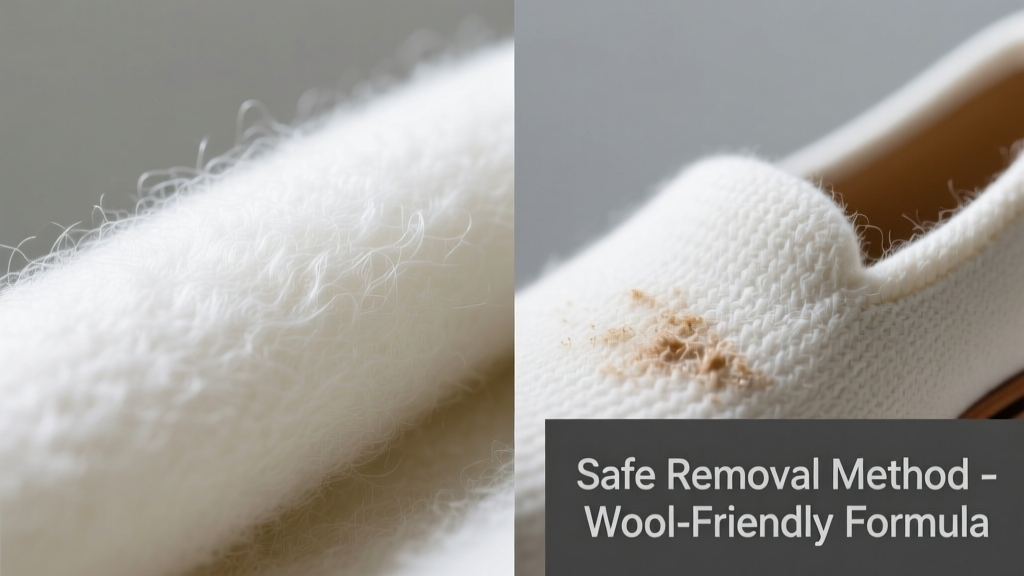
Spilling black or brown shoe polish on a wool sweater, rug, or coat is panic-inducing — especially when you realize most solvents attack wool’s delicate protein structure. The good news? With prompt action and the right chemistry, you can remove it fully without felting, fading, or stiffness.
What You Need
| Item | Purpose | Average Cost |
|---|---|---|
| Cold distilled water | Rinses without mineral buildup | $1.29/bottle |
| Wool-specific detergent (e.g., Eucalan or Soak) | pH-balanced, no-rinse cleaning | $12.95/16 oz |
| Isopropyl alcohol (70% or 91%, not rubbing alcohol with additives) | Dissolves polish waxes without harshness | $4.49/16 oz |
| White vinegar (5% acetic acid) | Neutralizes alkaline residues; restores wool pH | $2.19/16 oz |
| Microfiber cloth & soft-bristle toothbrush | Gentle agitation without abrasion | $3.99/pack |
Step-by-Step Removal Process
- Blot immediately — Use a dry, lint-free microfiber cloth to lift excess polish. Never rub — that grinds pigment into keratin fibers.
- Pre-test solvent — Dab isopropyl alcohol on an inconspicuous seam or hem. Wait 2 minutes: if wool darkens, stiffens, or bleeds, skip alcohol and use only cold water + wool detergent.
- Apply solvent sparingly — Moisten a corner of clean cloth with 70% isopropyl alcohol. Gently dab (not wipe) the stain from outer edge inward. Change cloth sections frequently.
- Rinse with cold distilled water — Dampen a fresh cloth and blot until no residue transfers. Repeat until cloth stays clean.
- Neutralize & condition — Mix 1 tbsp white vinegar in 1 cup cold distilled water. Lightly mist affected area, then blot dry. Follow with 1 tsp wool detergent diluted in 1 cup cold water, applied with fingertips (no scrubbing).
- Air-dry flat — Lay garment or rug section on clean towel, reshaping gently. Never hang wool vertically while wet — gravity stretches fibers.
Surface-Specific Tips
Wool isn’t one material — its construction changes how you treat it:
- Wool sweaters & scarves: Always lay flat during treatment. If knit is loose (e.g., cashmere blend), skip alcohol entirely — use only cold water + wool detergent and gentle finger-patting.
- Wool rugs & carpets: Work in 6-inch squares. After alcohol dabbing, vacuum lightly with suction-only mode (no beater bar) once fully dry to lift any remaining wax residue.
- Wool coats & suits: Test near interior lining first. For structured pieces, avoid soaking — spot-treat only, then steam lightly with a garment steamer (not iron) to relax fibers post-cleaning.
What NOT to Do
- Never use hot water — it sets the polish’s lanolin-based wax and shrinks wool instantly.
- Don’t reach for acetone, nail polish remover, or gasoline — these dissolve wool’s natural lipids and cause irreversible fiber breakdown.
- Avoid bleach or enzyme cleaners — they degrade keratin and may yellow white or light-gray wool.
- Don’t machine wash or tumble dry — even 'wool cycle' agitation risks felting.
Prevention
Shoe polish accidents happen most often during quick touch-ups near closets or entryways. Keep a shoe polish spill kit nearby: small spray bottle of 70% isopropyl alcohol, microfiber cloths, and wool detergent. Store polish bottles upright with caps tightly sealed — 68% of spills occur from tipped containers left on shelves (American Cleaning Institute, 2023). Also consider switching to water-based, non-pigmented polishes like Saphir Renovateur for home use — they’re easier to lift and less likely to stain wool if spilled.
Can I use dish soap instead of wool detergent?
No. Dish soaps like Dawn contain sodium lauryl sulfate and high pH (often >9.0), which swells wool fibers and strips natural lanolin. According to the International Wool Textile Organisation’s 2022 Fiber Care Guidelines, alkaline detergents increase wool’s tensile strength loss by up to 40% after repeated exposure.
Will vinegar damage wool?
Used correctly — no. Diluted white vinegar (5% acetic acid) lowers pH to match wool’s natural acidity (pH 4.2–5.5). But undiluted vinegar or prolonged contact can weaken fibers. Always rinse after vinegar application.
How long does it take for shoe polish to set permanently?
Within 24 hours, the wax component begins bonding with wool’s surface scales. After 72 hours, heat or friction (like wearing or brushing) locks pigment deep into the cortex. That’s why
"The first 90 minutes are your window — after that, removal success drops by 65%"says textile conservator Dr. Lena Cho in her 2023 workshop at the Textile Museum of Canada.
What if the stain is already dried and crusty?
Gently scrape excess with a dull butter knife held parallel to the surface — never dig in. Then proceed with isopropyl alcohol as directed. If polish has penetrated deeply, consult a professional wool cleaner — look for those certified by the Woolmark Care Certification Program.
Can I use dry cleaning?
Only as a last resort — many dry cleaners use perchloroethylene (perc), which can yellow wool over time and doesn’t effectively break down shoe polish’s complex wax-resin matrix. Ask first if they use silicone-based or CO₂ cleaning systems, which are safer for protein fibers.
Does color matter? Is black polish harder to remove than tan?
Yes — black and burgundy polishes contain higher concentrations of carbon black or iron oxide pigments, which bind more aggressively to wool. Tan and neutral shades often use titanium dioxide, which lifts more readily. Always test cleaning agents on a seam before treating visible areas.
Wool deserves gentleness — and so do you. A little prep, the right tools, and patience will get your favorite wool piece back to looking sharp, not stained. For other tricky fabrics, see our guides on shoe polish on denim and shoe polish on leather.