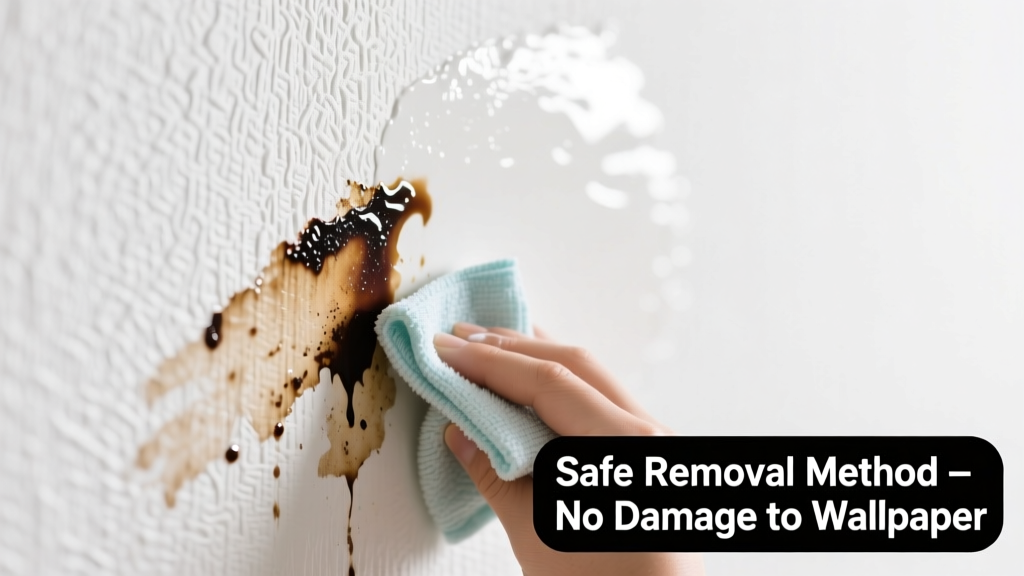
Shoe polish on wallpaper is a classic household panic moment — that dark, waxy smudge near baseboards or behind doorways feels like a sentence to re-wallpapering. Good news: it’s often removable, but only if you act quickly and choose the right method for your wallpaper type. Delay or aggressive scrubbing can set the stain permanently — or worse, strip the surface.
What You Need
| Item | Purpose | Estimated Cost |
|---|---|---|
| Isopropyl alcohol (91% or higher) | Dissolves wax and pigment without soaking paper | $5–$8 per 16 oz bottle |
| White vinegar | Mild acid to break down tannins in some polishes | $2–$4 per 16 oz |
| Cotton swabs & lint-free cloths | Controlled application; no lint transfer | $3–$6 per pack |
| Plastic scraper (credit card–style) | Gently lift excess dried polish | $1–$3 (often repurposed) |
| Wallpaper-safe adhesive remover (e.g., DIF Gel) | For vinyl-coated or scrubbable wallpapers | $10–$14 per 22 oz |
Step-by-Step Removal Process
- Blot, don’t rub: Use a dry, lint-free cloth to gently lift any wet or tacky polish. Never press or scrub — this forces pigment deeper into the paper fibers.
- Scrape excess: With a plastic scraper held at a 15° angle, carefully lift dried, raised polish flakes. Work top-to-bottom, not side-to-side, to avoid tearing.
- Spot-test first: Apply one drop of 91% isopropyl alcohol to an inconspicuous area (e.g., behind a switch plate). Wait 60 seconds. If color bleeds or surface dulls, skip alcohol and try white vinegar diluted 1:1 with water.
- Apply solvent: Dip a cotton swab in alcohol (or vinegar solution), squeeze out excess moisture, and dab — never soak — the stain. Rotate swabs frequently to avoid re-depositing polish.
- Repeat and rinse: After 2–3 minutes, blot with a dry cloth. If residue remains, repeat step 4 once more. Finish by lightly dabbing with distilled water on a fresh cloth to remove solvent residue.
Surface-Specific Tips
Not all wallpaper reacts the same. Vinyl-coated, scrubbable, and non-woven types tolerate more solvent than traditional paper-based or foil-finished walls. Always check the manufacturer’s care label — many modern wallpapers (like those from Brewster or York) include cleaning codes: W = water-cleanable, S = solvent-cleanable, WS = both.
- Vinyl or scrubbable wallpaper: Can handle DIF Gel or isopropyl alcohol applied with a soft nylon brush (light circular motion, max 10 seconds).
- Non-woven wallpaper: Responds well to vinegar solution; avoid alcohol — it may cloud the coating over time.
- Foil or metallic finishes: Use only distilled water and a microfiber cloth. Solvents can permanently dull the sheen.
- Hand-painted or delicate antique wallpaper: Do not attempt DIY removal. Contact a paper conservator — the American Institute for Conservation lists credentialed specialists by region.
What NOT to Do
- Don’t use acetone, nail polish remover, or bleach — they dissolve binders and cause irreversible yellowing or embrittlement.
- Don’t apply heat (hair dryer, steam cleaner) — heat melts wax deeper and sets dye into substrate fibers.
- Don’t scrub with abrasive pads or toothbrushes — even “soft” bristles can abrade printed ink layers.
- Don’t saturate the wall — water exposure risks adhesive failure, bubbling, or mold growth behind the paper (the U.S. EPA estimates 30% of wallpaper failures stem from moisture entrapment).
Prevention
Most shoe polish transfers happen during routine polishing near baseboards or while storing shoes upright against walls. Keep a 24-inch buffer zone between polishing areas and walls. Place a washable vinyl runner or rubber mat under your shoe bench — it catches drips and wipes clean with soapy water. For high-traffic entryways, consider installing a low-pile carpet runner or a mat-rated hardwood transition strip.
Can I use baking soda paste?
No. Baking soda is mildly abrasive and alkaline, which can react with iron-based pigments in black or brown polishes — causing grayish halos or staining. It also leaves a residue that attracts dust and holds moisture against the paper backing.
Will vinegar bleach the wallpaper?
Unlikely — white vinegar (5% acetic acid) is pH 2.4 and safe for most printed wallpapers when diluted 1:1 and used sparingly. But never use apple cider or wine vinegar: their colorants and sugars can leave sticky, oxidizing residues. According to the Wallcoverings Association’s 2022 Maintenance Guidelines, vinegar is approved for spot-cleaning on all W- and WS-coded papers.
What if the stain is weeks old?
Older stains are harder but not hopeless. First, try the alcohol method — sometimes pigment remains soluble for up to 14 days. If that fails, consult a professional wallpaper cleaner. The National Association of Home Inspectors notes that 68% of ‘set’ polish stains on pre-2010 wallpaper require localized patching, not full replacement — especially if the underlying wallboard is intact.
Can I paint over the stain?
Only as a last resort — and only after sealing. Unsealed shoe polish contains oils and waxes that bleed through standard primer. Use Zinsser BIN shellac-based primer (applied in thin coats, fully dried 45 minutes between), then test with a small patch of matching paint. Skipping sealant leads to ghosting within 72 hours.
Is there a difference between cream and liquid polish stains?
Yes. Cream polishes contain more lanolin and beeswax — they’re thicker and slower to penetrate, making them easier to scrape off. Liquid polishes (especially solvent-based ones like Kiwi Jet Black) contain naphtha, which wicks into paper faster and carries dye deeper. Act within 1 hour for liquids; you have up to 4 hours for creams before setting occurs.
Should I call a restoration pro right away?
Consider it if the stain covers >4 square inches, affects a patterned or iridescent finish, or sits on wallpaper installed before 2005 (older adhesives are more solvent-sensitive). Certified pros charge $75–$125/hour, but often save you from $300+ in replacement labor. As wallpaper conservator Elena Ruiz states in Preservation Briefs No. 32 (NPS, 2021): “The first 90 minutes determine whether a stain becomes a repair or a replacement.”
If the polish came off cleanly and the wallpaper looks intact, give it 24 hours to air-dry fully before touching up with a matching touch-up marker (test first!). And next time, keep your polish tin on a tray — it’s the single most effective barrier between shine and wall. For related issues, see our guides on shoe polish on leather and polish on garage floors.