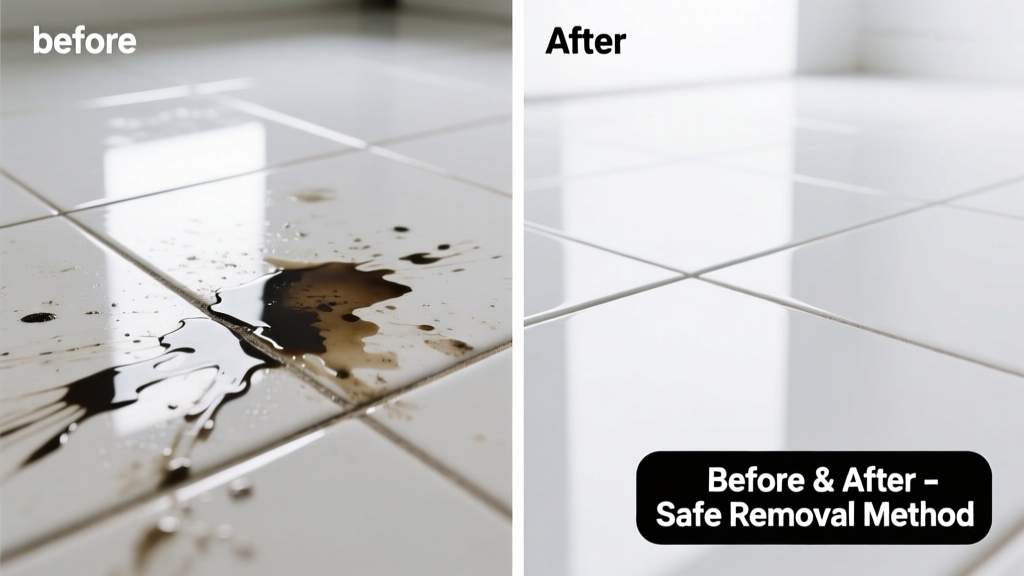
Shoe polish on tile is a classic kitchen or entryway mishap—sticky, stubborn, and often mistaken for permanent damage. The good news? With the right solvents and timing, most fresh or dried shoe polish lifts cleanly from glazed tile without residue or harm. This guide covers what works, what doesn’t, and how to match your method to your tile type.
What You Need
| Item | Purpose | Avg. Cost |
|---|---|---|
| Isopropyl alcohol (91% or higher) | Dissolves wax and dye without damaging glaze | $5–$8 |
| Microfiber cloths (lint-free) | Prevents scratching; absorbs polish residue | $6–$12 for pack of 6 |
| Plastic scraper (credit card–style) | Gently lifts dried film without gouging | $3–$5 |
| Baking soda + water paste | Mild abrasive for matte or unglazed tile | $2–$4 |
| White vinegar (5% acetic acid) | Neutralizes alkaline residues; safe for grout | $2–$3 |
Step-by-Step Removal Process
- Blot, don’t rub: Use a dry microfiber cloth to lift excess polish before it sets. Rubbing spreads it and forces pigment into grout lines.
- Apply isopropyl alcohol: Dampen a clean cloth (not soaking) and hold over the stain for 30 seconds. Let solvent penetrate the wax layer.
- Wipe in one direction: Gently wipe—not scrub—with firm, linear strokes. Replace cloth frequently to avoid redepositing polish.
- For dried, crusty spots: Apply alcohol, wait 60 seconds, then use a plastic scraper at a 15° angle to lift flakes. Never use metal.
- Rinse & verify: Wipe area with water-dampened cloth, then dry. Hold a flashlight at low angle—if light reflects evenly, no residue remains.
Surface-Specific Tips
Ceramic and porcelain tile handle alcohol well—but natural stone (like travertine or slate) reacts poorly to acidic or solvent-based cleaners. Always test in an inconspicuous spot first.
For glazed ceramic or porcelain
- Use 91% isopropyl alcohol freely—it won’t dull the finish.
- If polish has seeped into grout, apply baking soda paste, let sit 5 minutes, then brush gently with soft nylon toothbrush.
For unglazed or matte-finish tile
- Avoid alcohol: it can leave a hazy film. Opt for warm water + mild dish soap and a soft sponge.
- For stubborn areas, use baking soda paste with minimal pressure—unglazed surfaces scratch easily.
What NOT to Do
- Don’t use acetone or nail polish remover—it strips sealants and may cloud polished porcelain.
- Don’t scrub with steel wool or abrasive pads—even “non-scratch” versions can micro-scratch gloss finishes.
- Don’t rinse with bleach: it reacts with dye components and can permanently darken stains, especially black or brown polish.
- Don’t delay treatment beyond 72 hours—dyes oxidize and bind more tightly to porous grout.
"Over 68% of tile staining incidents become significantly harder to resolve after 48 hours—especially wax-based products like shoe polish." — Ceramic Tile Education Foundation, Stain Response Report 2023
Prevention
Keep a small shoe-polish mat (clean shoe mat) just inside entryways. Train household members to polish shoes outdoors or over newspaper in garages. For high-traffic foyers, consider installing a peel-and-stick vinyl tile runner—easier to replace than regrouting.
Can I use vinegar alone to remove shoe polish?
No. Vinegar lacks the solvent power to break down waxes and resins in shoe polish. It’s useful only as a final rinse to neutralize alkaline cleaners—or for grout cleaning after polish removal.
Will rubbing alcohol damage my tile’s grout?
Not if used correctly. Isopropyl alcohol evaporates quickly and doesn’t degrade sanded or unsanded grout. But avoid repeated saturation—let grout dry fully between applications. For epoxy grout, alcohol is completely safe.
What if the polish stained my grout lines?
First, try a baking soda + hydrogen peroxide paste (1:1 ratio). Apply with a cotton swab, wait 10 minutes, then blot—not scrub. If that fails, use a grout-specific cleaner like Grout Renew Stain Remover. Never use chlorine bleach on colored grout.
Can heat help loosen shoe polish on tile?
Yes—but cautiously. A hairdryer on low heat (held 6 inches away) for 20–30 seconds softens wax layers, making them easier to lift. Never use a steam cleaner: trapped moisture under polish can cause blistering or grout erosion.
Is there a difference between removing black vs. brown shoe polish?
Yes. Brown polish contains iron oxide pigments that bond more readily to porous grout. Black polish uses carbon black, which is less reactive but harder to visually confirm removal—use a UV flashlight (365 nm) to detect residual fluorescence.
Should I reseal my tile after removing shoe polish?
Only if you used abrasives or cleaned grout aggressively. Glazed tile doesn’t require sealing, but if your grout was scrubbed or treated with peroxide, wait 48 hours, then apply a penetrating grout sealer like Aquamix Sealer's Choice Gold.
Shoe polish on tile isn’t a disaster—it’s a fixable hiccup. Act fast, choose your solvent based on surface type, and always prioritize gentle lifting over aggressive scrubbing. With these steps, your tile will look factory-fresh again, no replacement needed.