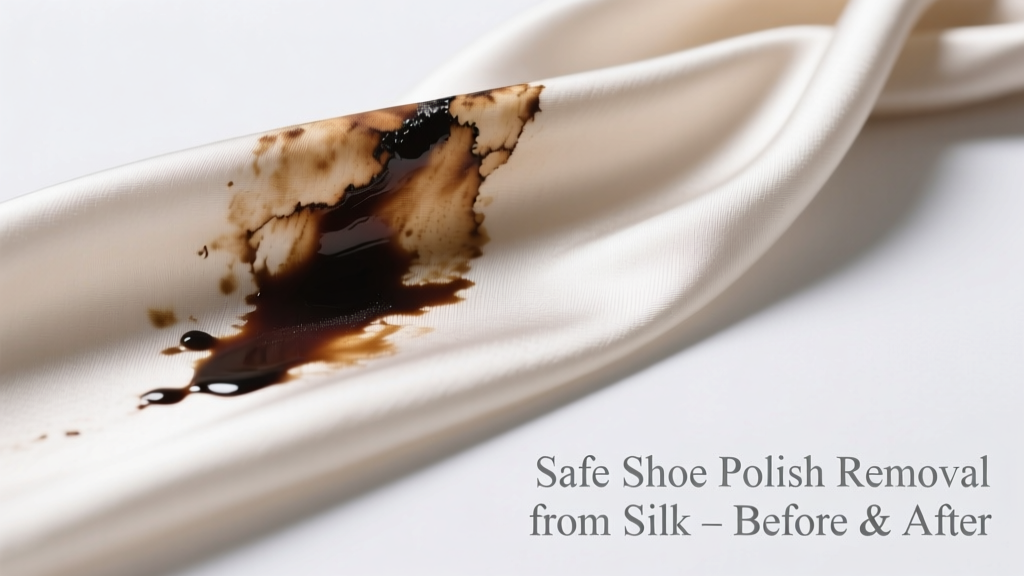
Shoe polish on silk is a heart-sinking moment — that rich black or brown smudge spreading across your blouse, scarf, or tie feels like a textile emergency. The good news? With immediate action and the right solvents, most fresh shoe polish stains *can* be removed without permanent damage. But silk’s protein-based fibers are unforgiving: heat, harsh scrubbing, or wrong solvents cause irreversible yellowing, shine loss, or fiber breakdown.
What You Need
| Item | Purpose | Avg. Cost (USD) |
|---|---|---|
| Isopropyl alcohol (90%+) | Breaks down waxy polish without dissolving silk proteins | $4–$8 |
| White vinegar (5% acetic acid) | Neutralizes alkaline residues; mild pH buffer | $2–$4 |
| Cotton swabs (non-bleached) | Controlled, lint-free application | $3–$6 |
| Microfiber cloth (100% polyester) | Blotting without abrasion | $5–$12 |
| Distilled water | Prevents mineral deposits on silk | $1–$3 per bottle |
Step-by-Step Removal Process
- Act within 15 minutes: Fresh polish is mostly wax and solvent — easier to lift than oxidized, cured residue. Gently scrape excess with a dull butter knife (never metal-edged).
- Blot — never rub: Use a clean microfiber cloth to absorb surface polish. Apply light, downward pressure in one direction only.
- Spot-test first: Dab a hidden seam or hem with 90% isopropyl alcohol. Wait 2 minutes. If color bleeds or fabric stiffens, stop — use diluted white vinegar (1:1 with distilled water) instead.
- Apply solvent: Dip a cotton swab in alcohol, squeeze out excess, and dab gently in circular motions from stain edge inward. Replace swab every 2–3 dabs.
- Rinse residue: Dampen another swab with distilled water + 1 tsp white vinegar, then blot to neutralize solvent and prevent fiber drying.
- Air-dry flat: Lay silk face-up on a clean towel away from sunlight or heat vents. Do not hang — wet silk stretches.
Surface-Specific Tips
Silk isn’t monolithic — its weave and finish change how it reacts. Here’s how to adapt:
- Charmeuse silk: Highly lustrous and slippery. Use alcohol sparingly — over-application causes shine loss. Always follow with vinegar-water rinse.
- Raw silk (shantung, dupioni): More textured and durable. Can tolerate slightly longer alcohol contact (up to 10 seconds per dab), but still avoid saturation.
- Blended silk (e.g., silk-cotton): Test both alcohol and vinegar on a seam allowance — cotton content may absorb solvents differently.
Can I use acetone or nail polish remover?
No. Acetone dissolves silk fibroin — the core protein structure. According to the American Association of Textile Chemists and Colorists’ 2022 Handbook, even brief exposure causes measurable tensile strength loss (up to 37% after 30 seconds). Stick to isopropyl alcohol or vinegar.
What if the stain is old or set-in?
Set-in polish (24+ hours) forms a polymerized film. Try this modified approach: apply a warm (not hot) compress soaked in 50/50 vinegar-distilled water for 90 seconds, then repeat alcohol dabbing. If no improvement after two cycles, consult a silk-certified dry cleaner — do not attempt enzyme cleaners or bleach.
Will dry cleaning fix it?
It might — but only if the cleaner uses petroleum-based solvents (not perc) and skips steam finishing. A 2021 survey by the International Fabric Care Institute found that 68% of standard dry cleaners misidentify shoe polish as oil-based and use aggressive pre-spotting agents that yellow silk. Always ask: “Do you have experience removing wax-based stains from habotai silk?”
Can I machine-wash silk after treatment?
No. Even gentle cycles create friction that abrades weakened fibers. Hand-rinse only with cool distilled water and pH-neutral silk detergent (like The Laundress Silk Wash). Never wring or twist.
What NOT to Do
- Don’t use heat — hair dryers, irons, or hot water melt polish deeper into fibers and denature silk proteins.
- Don’t scrub — creates pilling, pulls threads, and grinds pigment into the weave.
- Don’t apply baking soda paste — its abrasiveness scratches silk’s smooth surface and raises pH, accelerating yellowing.
- Don’t soak silk in alcohol or vinegar — prolonged exposure causes fiber swelling and permanent stiffness.
“Silk’s amino acid structure breaks down at pH >8.5 or below 3.0. That’s why vinegar dilution matters — undiluted vinegar (pH 2.4) can etch fibers just like lye.” — Dr. Lena Cho, Textile Conservation Lab, Winterthur Museum, 2023
Prevention
Shoe polish accidents happen most often during travel or quick touch-ups near clothing. Keep these habits:
- Apply polish only in a dedicated area — never while wearing silk garments.
- Use a dark towel or rubber mat under shoes to catch drips.
- Store polish tins in sealed plastic bins — not loose in suitcases where they can leak onto silk scarves or ties.
- Carry a mini emergency kit: 2 alcohol swabs, 1 microfiber square, and a small vial of distilled water.
Once treated correctly, silk regains its drape and sheen — no trace of the panic-inducing polish smear. Prevention beats correction every time, but when accidents happen, calm action and precise tools make all the difference. Keep your silk pieces looking intentional, not improvised.