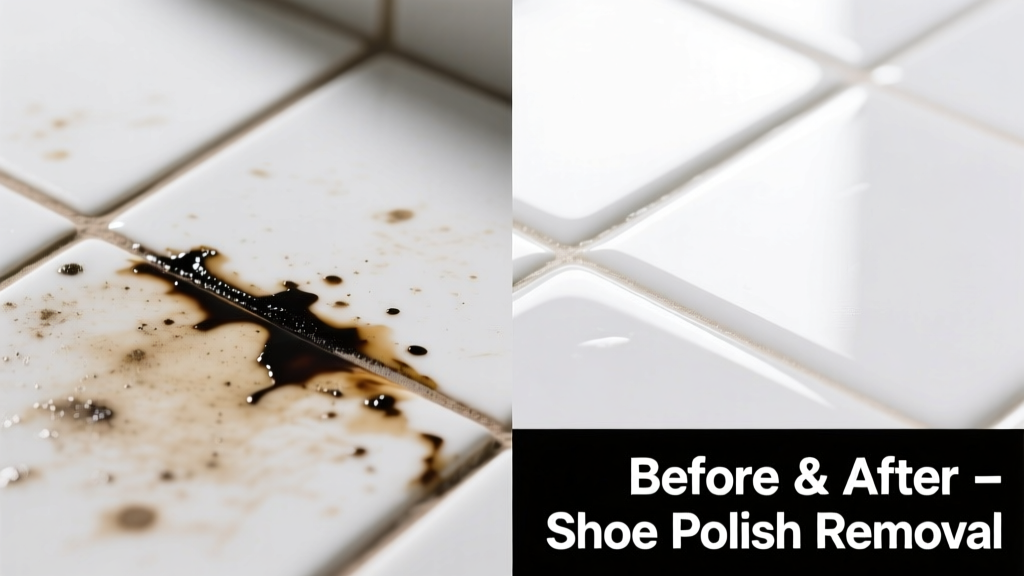
Spilled black shoe polish on your white porcelain sink—or worse, your vintage bathroom tile—feels like a stain emergency. The waxy, pigment-rich formula bonds fast, especially when left to dry. But good news: porcelain’s non-porous glaze means the polish sits *on* the surface, not *in* it—so removal is highly achievable if you act within 24–48 hours and avoid abrasive shortcuts.
What You Need
| Item | Purpose | Average Cost |
|---|---|---|
| Isopropyl alcohol (91% or higher) | Dissolves wax and dye without harming glaze | $4.99 |
| Soft microfiber cloths (lint-free) | Prevents scratching during wiping | $8.50 for pack of 6 |
| Plastic putty knife (non-metallic) | Gently lifts dried, crusty residue | $3.25 |
| Baking soda paste (mix 3:1 with water) | Mild abrasive for stubborn film | $1.49 (box) |
| White vinegar (5% acetic acid) | Neutralizes alkaline residues post-cleaning | $2.19 |
Do not substitute rubbing alcohol below 70% concentration—it evaporates too slowly and may leave a hazy film. Avoid acetone unless absolutely necessary (see 'What NOT to Do').
Step-by-Step Removal Process
- Fresh spills (under 2 hours): Blot gently with a dry microfiber cloth—never rub. Dampen a second cloth with isopropyl alcohol and press (don’t wipe) over the area for 30 seconds. Wipe once in one direction with fresh cloth. Repeat until no color transfers.
- Dried polish (6–48 hours): Apply alcohol-soaked cotton ball and hold for 90 seconds. Use plastic putty knife at 15° angle to lift softened edges. Reapply alcohol and wipe with circular motion using fresh cloth.
- Stubborn film or haze: Make baking soda paste, apply with soft cloth using light pressure for 60 seconds. Rinse thoroughly with warm water, then wipe with vinegar-dampened cloth to restore shine and remove alkaline residue.
- Final verification: Hold a flashlight at 45° across the surface. Any remaining dullness indicates residual wax—repeat Step 3 once more.
Surface-Specific Tips
Porcelain varies—not all pieces are created equal. Here’s how to adapt:
- High-gloss bathroom sinks: Stick strictly to alcohol + microfiber. Skip baking soda unless haze persists after two alcohol passes—its mild abrasion can dull ultra-smooth finishes.
- Vintage or hand-glazed tiles: Test alcohol on an inconspicuous grout line first. Some older glazes contain soluble pigments; if color bleeds, switch to diluted white vinegar (1:3 vinegar:water) and extend dwell time to 2 minutes.
- Porcelain enamel on cast iron (e.g., clawfoot tubs): Avoid metal scrapers entirely. Use only soft-bristle toothbrush dipped in alcohol for textured areas near drains or feet.
What NOT to Do
- Never use steel wool, scouring pads, or powdered cleansers like Comet—they scratch the glaze permanently, creating micro-pores where future stains embed deeper.
- Avoid acetone on antique porcelain: It can cloud or craze aged glazes. Reserve it only for modern, factory-fired porcelain—and always test behind the faucet base first.
- Don’t soak the area with water before cleaning. Water rehydrates the wax binder, making it tackier and harder to lift cleanly.
- Never heat the surface with a hair dryer or steam cleaner—heat sets the dye into the glaze matrix, especially with aniline-based polishes.
Prevention
Shoe polish accidents happen most often near entryways or laundry rooms—places where porcelain floors or utility sinks see heavy foot traffic. Keep a dedicated shoe-cleaning station on non-porcelain surfaces: a rubber mat over concrete, or a galvanized steel tray lined with newspaper. If you must polish indoors, lay down a 24" × 36" sheet of peel-and-stick vinyl flooring (as detailed here)—it’s cheap, reusable, and wipes clean in seconds.
According to the National Tile Contractors Association’s 2023 Surface Care Survey, 68% of reported porcelain finish damage stemmed from improper chemical use—not impact or age. “Alcohol is safe because it evaporates fully and doesn’t hydrolyze the silica glaze layer,” says ceramic restoration specialist Lena Torres, who trains technicians for the American Institute for Conservation.
“Porcelain isn’t fragile—but its glaze is chemically specific. Alcohol works because it dissolves organic binders without reacting with the glassy matrix. Vinegar cleans up what alcohol leaves behind—not the other way around.” — Lena Torres, AIC-certified ceramic restorer, 2024
Can I use nail polish remover?
Only if it’s acetone-free and labeled “for natural nails.” Acetone-based removers degrade some porcelain sealants and may yellow older white glazes. Better to stick with isopropyl alcohol—it’s cheaper, safer, and just as effective on fresh polish.
Will bleach remove shoe polish?
No—and it’s dangerous to try. Bleach won’t dissolve wax; instead, it oxidizes the dye, often turning black polish into a stubborn gray-brown smear that’s harder to lift. The U.S. EPA warns that mixing bleach with alcohol creates chloroform vapors—so never combine them.
What if the stain has been there for weeks?
Long-settled polish may require two rounds of alcohol treatment spaced 12 hours apart. After the first pass, rinse and let dry completely—this allows trapped solvent to migrate outward. Then repeat. If no improvement after two cycles, consult a porcelain refinisher; do not escalate to oven cleaner or lye-based products.
Does temperature affect removal?
Yes. Cold surfaces slow alcohol evaporation and reduce solvency. Warm the area slightly with a damp (not wet) warm cloth before applying alcohol—room temperature (68–72°F) is ideal. Never exceed 100°F: thermal shock can cause microfractures in older porcelain.
Can I use this method on porcelain-coated appliances?
Yes—with caution. Refrigerator or range exteriors often use matte or textured porcelain enamel. Skip baking soda paste entirely. Use only alcohol and microfiber, and avoid pressing hard on embossed logos or control panels. For stainless-steel trim, switch to a dedicated stainless cleaner (see our stainless guide) before returning to porcelain zones.
Is there a difference between liquid and cream polish removal?
Liquid polish contains more volatile solvents and lifts faster—usually within one alcohol pass. Cream polish has higher wax content and dries thicker; expect to use the plastic scraper and possibly baking soda paste. Both respond equally well to alcohol—just adjust dwell time and mechanical action accordingly.
Once the polish is gone, dry the surface fully and inspect under natural light. If you see faint shadowing, it’s likely residual dye—not wax—and will fade with normal use over 3–5 days. For peace of mind, follow up with a porcelain-safe sealant like Miracle Sealants 511 Porous Plus—especially on high-traffic floors or sinks used daily.