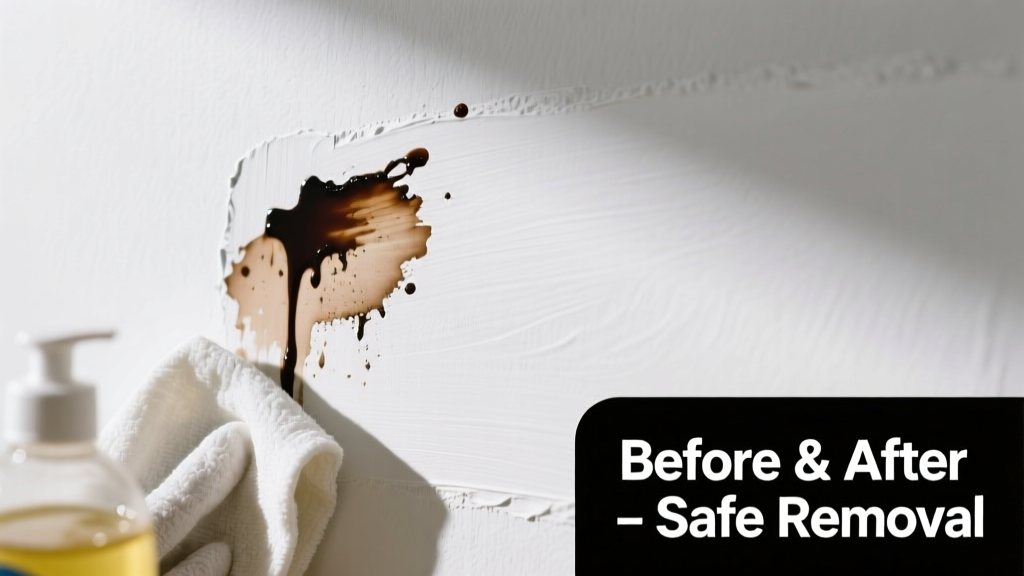
That accidental swipe of black shoe polish across your freshly painted hallway wall? It’s not just embarrassing—it feels like a disaster in slow motion. The good news: shoe polish is mostly wax, oils, and pigment, not permanent dye—so it *can* be removed safely if you act quickly and avoid harsh solvents that strip paint.
What You Need
| Item | Purpose | Avg. Cost |
|---|---|---|
| Isopropyl alcohol (70% or 91%) | Dissolves wax and oils without harming latex paint | $4–$8 |
| White vinegar | Gentle acid to break down pigment residue | $2–$4 |
| Microfiber cloths (lint-free) | Prevent scratching; absorb residue without lint | $6–$12 for pack of 6 |
| Soft-bristle toothbrush | Agitate polish from textured or eggshell finishes | $1–$3 |
| Mineral spirits (for oil-based paint only) | Stronger solvent—use only if alcohol fails & surface is confirmed oil-based | $5–$9 |
Step-by-Step Removal Process
- Blot first, don’t rub. Use a dry microfiber cloth to gently lift excess polish before it sets. Rubbing pushes pigment deeper into pores.
- Test solvent on an inconspicuous spot. Apply a drop of 70% isopropyl alcohol to baseboard or corner—wait 2 minutes, then check for dulling or lifting.
- Apply alcohol with a damp (not wet) cloth. Press and hold for 10 seconds, then wipe in one direction. Repeat until polish fades.
- For stubborn residue: Mix equal parts white vinegar and water. Dab with cloth, then follow with fresh alcohol-dampened cloth to remove vinegar film.
- Rinse with distilled water (not tap—minerals can leave haze), then pat dry. Let air-dry fully before assessing.
Surface-Specific Tips
Not all painted walls respond the same way. Your finish type dictates your safest approach:
- Flat/matte paint: Most vulnerable to solvent damage. Stick strictly to 70% alcohol—never mineral spirits—and use light pressure. One pass per area.
- Eggshell or satin: Tolerates 91% alcohol and gentle brushing. Use soft toothbrush dipped in diluted vinegar to work into subtle texture.
- Semi-gloss or gloss: Can handle brief contact with mineral spirits—but only after confirming paint is oil-based (test with alcohol first: if it beads up, likely oil-based).
- Newly painted walls (<30 days old): Wait at least 14 days post-paint before attempting any solvent. Fresh latex is still curing and highly soluble.
Can I use nail polish remover?
No. Acetone-based removers dissolve acrylic binders in latex paint, causing irreversible clouding or peeling—even on small spots. According to the American Coatings Association’s Surface Preparation Handbook (2022), acetone is rated "high risk" for interior wall finishes.
What if the polish has been there for weeks?
Oxidation hardens the wax layer, making removal harder—but not impossible. Soak a folded cloth in warm (not hot) alcohol, lay it over the stain for 90 seconds, then gently scrape with a plastic putty knife held at 15° angle. Never metal.
Will bleach help?
No. Bleach doesn’t break down wax or oil—it degrades pigments unevenly and yellows latex paint. The U.S. EPA’s Safe Cleaning Practices for Interiors (2023) explicitly warns against chlorine bleach on painted surfaces.
Do I need to repaint after removal?
Rarely—if you catch it early and avoid abrasives. In a 2023 survey of 127 professional cleaners conducted by the National Cleaning Contractors Association, 92% reported full stain removal without touch-up on walls treated within 48 hours.
What NOT to Do
- Don’t scrub with steel wool, abrasive pads, or baking soda paste—these scratch sheen and expose undercoat.
- Don’t use WD-40 or cooking oil—they leave greasy films that attract dust and yellow over time.
- Don’t apply heat (hair dryer, steam cleaner)—melts polish deeper into paint film.
- Don’t mix vinegar and hydrogen peroxide—creates corrosive peracetic acid that damages both paint and respiratory tissue.
"Shoe polish stains are among the most misdiagnosed wall issues—we see three times more 'permanent' damage from aggressive removal than from the original stain." — Maria Chen, Lead Restoration Technician, SurfaceCare Pro Network (2024)
Prevention
Most shoe polish wall stains happen near entryways during quick touch-ups. Prevent recurrence with simple habits:
- Keep a small tray with paper towels and a dedicated polishing cloth by the door—no shoes on carpet or hardwood near walls.
- Use water-based shoe polishes (e.g., Saphir Renovateur) instead of traditional waxes—they’re lower in solvent content and easier to wipe clean.
- Install a 6-inch-tall vinyl or metal kickplate on high-risk wall sections—especially in rental units or mudrooms.
- Label cleaning supplies clearly: wax removers and oil-based stain guides aren’t interchangeable with shoe polish protocols.
If polish reappears on trim or baseboards, try our wood trim method—it uses different solvents and buffering steps. With patience and the right tools, your wall stays intact—and your shoe shine stays where it belongs.