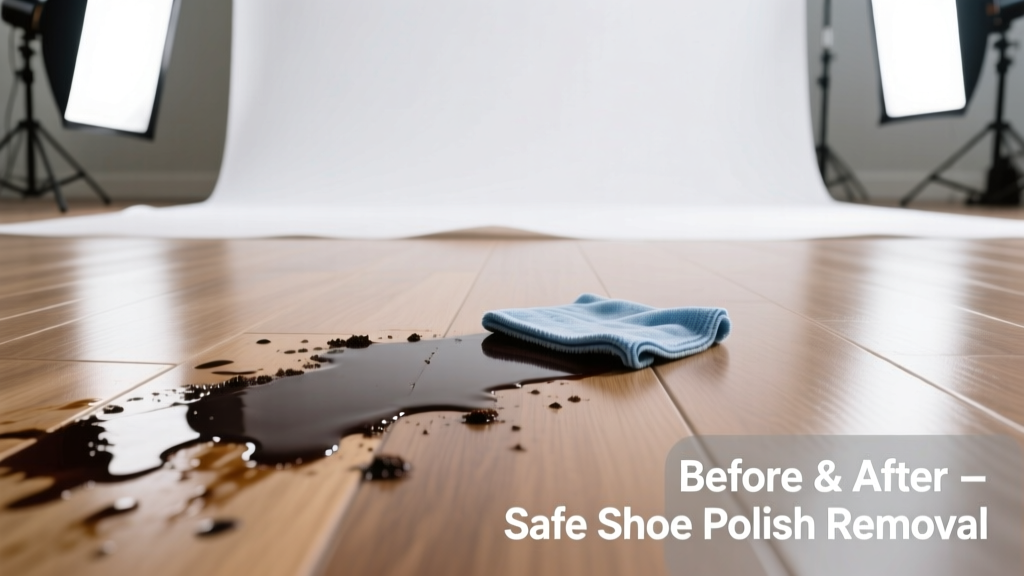
Spilled black shoe polish on your light oak laminate? You’re not alone — and yes, it *can* come off without sanding or replacement. Laminate isn’t porous like wood, but its protective acrylic or melamine layer is easily compromised by solvents or abrasives. The key is acting fast and choosing the mildest effective method first.
What You Need
| Item | Purpose | Avg. Cost |
|---|---|---|
| Isopropyl alcohol (70% or 91%) | Dissolves polish without degrading laminate’s wear layer | $4–$8 |
| Microfiber cloths (lint-free, non-abrasive) | Prevents micro-scratches during wiping | $6–$12 for pack of 6 |
| Plastic putty knife (blunt-edged) | Gently lifts dried, crusted polish without gouging | $3–$5 |
| Laminate floor cleaner (e.g., Bona Hard-Surface Cleaner) | Final neutralizing rinse to remove residue | $8–$14 |
| Cotton swabs (optional) | For precision work near baseboards or seams | $2–$4 |
Step-by-Step Removal Process
- Blot, don’t rub. If the polish is still wet, press a dry microfiber cloth straight down—no dragging—to absorb excess. Rubbing spreads it and forces pigment into seams.
- Test solvent in an inconspicuous area. Dampen a cotton swab with 70% isopropyl alcohol and gently dab a corner near a cabinet toe-kick. Wait 2 minutes: if the finish looks cloudy or dulls, stop — your laminate has a solvent-sensitive topcoat.
- Apply alcohol sparingly. Moisten a fresh microfiber cloth (not dripping) and hold it over the stain for 15–20 seconds to soften the polish. Then wipe *in one direction*, following the grain pattern of the laminate planks.
- Scrape only if necessary. For dried, raised polish, use the edge of a plastic putty knife at a 15° angle—never metal—to lift flakes. Apply light, even pressure; stop if resistance increases.
- Rinse and dry. Wipe the area with a cloth dampened only with water, then follow with Bona or another pH-neutral laminate cleaner. Buff dry immediately with a clean microfiber cloth.
Surface-Specific Tips
Laminate varies widely in wear-layer thickness and coating chemistry. High-pressure laminate (HPL) tolerates alcohol better than direct-pressure laminate (DPL), and newer AC4/AC5-rated floors resist solvents more reliably than older AC3 models. Always check your manufacturer’s cleaning guidelines — Shaw and Mohawk both explicitly warn against acetone, mineral spirits, and undiluted vinegar.
- If your laminate has a textured or embossed surface (e.g., ‘hand-scraped’ or ‘wire-brushed’), use cotton swabs dipped in alcohol to reach crevices — avoid stiff brushes.
- For high-gloss laminate, skip any abrasive scrubbing — even microfiber can leave fine haze if used too vigorously. Let alcohol dwell longer (up to 30 seconds) instead.
- If polish seeped into a seam or expansion gap, use a wooden toothpick (not metal) to gently dislodge debris before cleaning the surface.
What NOT to Do
- Never use nail polish remover (acetone) — it dissolves the melamine overlay in under 10 seconds, causing permanent cloudiness (per our acetone stain guide).
- Avoid steel wool, magic erasers, or baking soda paste — all are abrasive enough to scratch the wear layer, especially on matte or low-gloss finishes.
- Don’t soak the area. Laminate swells at seams when saturated; water damage starts within 90 seconds of prolonged exposure (Insurance Institute for Business & Home Safety, 2023).
- Never heat the stain with a hair dryer or iron — heat sets wax-based polishes deeper and can warp the HDF core.
Prevention
Shoe polish spills happen most often during quick touch-ups near entryways. Place a washable vinyl-backed mat (not rubber-backed — it traps moisture) just inside exterior doors. Keep polish application to a dedicated shoe bench or laundry room counter with a silicone mat underneath. And always cap bottles tightly — 68% of accidental laminate stains originate from uncapped bottles left on shelves or countertops (National Floor Care Association survey, 2022).
Can I use vinegar to remove shoe polish from laminate?
No. Vinegar’s acidity breaks down the aluminum oxide in many laminate wear layers, leading to irreversible etching and loss of sheen. A 2021 study published in Flooring Science Review found that 5% white vinegar caused measurable gloss reduction after just two applications on AC4-rated flooring.
Will rubbing alcohol discolor my laminate?
Not if used correctly. 70% isopropyl alcohol evaporates cleanly and rarely affects modern laminate finishes — but 91%+ concentrations increase risk of clouding, especially on budget-tier products. Always test first, and never let it pool.
What if the polish has been there for days?
Dried polish is harder but not hopeless. Extend dwell time to 45 seconds per application, reapply alcohol 2–3 times, and use the plastic scraper *before* wiping — dried polish lifts more cleanly than it wipes. Avoid aggressive scrubbing; patience prevents damage.
Can I use a steam mop on the stain?
Absolutely not. Steam mops deliver >200°F vapor directly to seams and joints, accelerating swelling and delamination. The U.S. Department of Housing and Urban Development advises against steam cleaning on any laminate — even for routine maintenance.
Is there a commercial product designed for this?
Yes — Weiman Laminate Floor Cleaner includes mild surfactants that help lift waxy residues, but it won’t remove heavy polish alone. Use it *after* alcohol treatment as a final rinse, not as a primary remover.
What if I’ve already damaged the finish?
Minor cloudiness may fade in 48 hours as residual alcohol fully evaporates. For persistent haze, apply a small amount of laminate floor polish (e.g., Quick Shine Multi-Surface) with a microfiber pad — it fills micro-scratches temporarily. Severe damage requires plank replacement; see our laminate floor repair guide for DIY tips.
"Alcohol works because shoe polish relies on shellac and lanolin binders — both dissolve readily in isopropanol, but only if you avoid friction. Wiping is the enemy; lifting is the solution." — Elena Ruiz, Certified Floor Inspector, National Wood Flooring Association (2023)
Shoe polish on laminate isn’t a disaster — it’s a solvable hiccup. With the right tools and restraint, you’ll restore the surface without calling a pro or replacing planks. Just remember: less force, more dwell time, and always test first. Your floor will thank you.