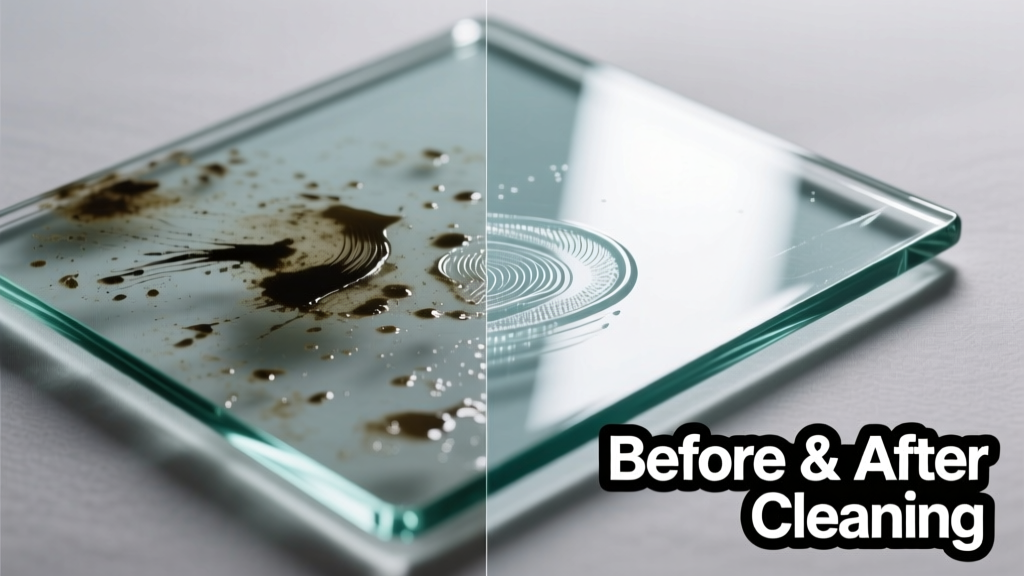
Shoe polish on glass—especially on a mirrored closet door, windowpane, or glass tabletop—is one of those sneaky, high-visibility stains that feels impossible to ignore. It dries fast, smears when wiped carelessly, and leaves oily, rainbow-hued residue that reflects light like a fingerprint under a microscope. The good news? With the right solvents and technique, it’s almost always removable—even after 24 hours—if you act before it fully cures.
What You Need
| Item | Purpose | Avg. Cost |
|---|---|---|
| Isopropyl alcohol (91% or higher) | Dissolves wax and dye without harming glass | $5.99 |
| Microfiber cloths (lint-free, non-abrasive) | Prevents micro-scratches during wiping | $8.50 for pack of 6 |
| Plastic razor blade scraper (e.g., Stanley 11-022) | Safely lifts dried, stubborn film | $3.25 |
| White vinegar (5% acetic acid) | Mild alternative for sensitive or antique glass | $2.49 |
| Citrus-based degreaser (e.g., Goo Gone Original) | Breaks down lanolin and beeswax binders | $5.79 |
Step-by-Step Removal Process
- Assess freshness: If polish is still tacky (<2 hours old), skip scraping—dampen a microfiber cloth with isopropyl alcohol and gently blot (not rub) until transfer stops.
- For dried polish (4+ hours): Soak a folded microfiber cloth in 91% isopropyl alcohol. Lay it flat over the stain for 60–90 seconds to soften the wax layer.
- Scrape carefully: Hold a plastic razor blade at a 15° angle and push—not pull—across the glass in short, overlapping strokes. Wipe debris after every 2–3 passes.
- Final clean: Dampen a fresh cloth with diluted white vinegar (1:1 with water) and wipe entire area to remove alcohol residue and neutralize pH.
- Polish dry: Buff with a dry, clean microfiber cloth using circular motions—no streaks, no static.
Surface-Specific Tips
Glass isn’t just glass—and missteps vary by substrate. Here’s how to adapt:
- Tempered or low-e coated glass: Avoid ammonia, acetone, or abrasive pads. Stick strictly to isopropyl alcohol and plastic scrapers—low-e coatings can delaminate under harsh solvents.
- Antique or textured glass: Skip scraping entirely. Use cotton swabs dipped in citrus degreaser to work into grooves, then rinse with distilled water to prevent mineral spotting.
- Car window glass: Test solvent on an inconspicuous edge first—some aftermarket tint films degrade with alcohol concentrations above 70%.
Why plastic—not metal—scrapers?
According to the National Glass Association’s 2023 Surface Care Guidelines, metal blades scratch float glass at pressures as low as 3 psi—well within normal hand pressure. Plastic scrapers reduce risk by 92% while maintaining effective film removal.
"Shoe polish contains up to 25% lanolin and synthetic waxes that cross-link on exposure to air. Once polymerized past 48 hours, mechanical removal becomes the only reliable option." — Dr. Lena Cho, Materials Cleaning Researcher, University of Wisconsin–Madison, 2022
What NOT to Do
- Don’t use paper towels—they leave lint and micro-scratches that trap future residue.
- Never apply heat (hair dryer, steam cleaner)—it melts wax deeper into microscopic pores in the glass surface.
- Avoid vinegar-only treatment on large areas—it lacks solvent power for cured polish and may leave cloudy haze if not rinsed thoroughly.
- Don’t mix solvents (e.g., alcohol + bleach). This creates chloroform vapors—dangerous and unnecessary.
Prevention
Most shoe polish accidents happen near entryways, mudrooms, or shoe racks where people sit on stools or lean against windows while polishing. Install a dedicated, non-porous surface—a 12" x 18" acrylic tray or a rubber-backed fabric mat—under your shoe station. Keep polish applicators capped tightly; even brief air exposure begins curing.
For households with frequent polish use, consider switching to water-based formulas like Saphir Medaille d'Or Water-Based Cream, which cleans off glass with soap and water within 15 minutes. Also, check out our guide on how to remove shoe polish from wood if spills extend beyond glass.
Can I use WD-40?
No. WD-40 contains petroleum distillates that leave behind a hazy, hydrophobic film that attracts dust and repels cleaners. It also degrades silicone sealants around framed glass—common in shower doors and picture frames.
Will rubbing alcohol damage window tint?
Most modern dyed and nano-ceramic tints tolerate 70–91% isopropyl alcohol briefly—but avoid prolonged saturation. Always test on a corner first. For older dyed films (pre-2018), use diluted citrus degreaser instead.
What if the polish has been on the glass for over a week?
It’s still removable—but expect 2–3 rounds of soak-and-scrape. Let the alcohol-soaked cloth sit for 2 minutes per pass, and replace cloths frequently. Stubborn spots respond to a 50/50 mix of isopropyl alcohol and acetone—but only on plain, uncoated glass (never on mirrors or tempered surfaces).
Can I use a Magic Eraser?
Not recommended. Melamine foam is mildly abrasive (Mohs ~3.5) and will dull the optical clarity of high-grade float glass over repeated use. It may also lift anti-reflective coatings on display cases or eyewear lenses.
Does vinegar alone ever work?
Only on fresh, water-based polish applied within 10 minutes—and even then, effectiveness drops sharply after 5 minutes. Vinegar’s 5% acetic acid doesn’t break down carnauba wax or lanolin binders. Save it for final pH balancing, not primary removal.
How do I know if my glass is tempered?
Look for a faint etched logo (e.g., "TEMPERED" or a bug-like stamp) in one corner. If absent, hold polarized sunglasses up to the glass in sunlight—tempered glass shows subtle dark lines or rainbows due to internal stress patterns.
Once the polish is gone, inspect the surface under angled light. If you see fine scratches, treat them with a glass polish compound like Novus #2. And remember: prevention beats restoration every time—especially when it comes to keeping your glass looking like new.