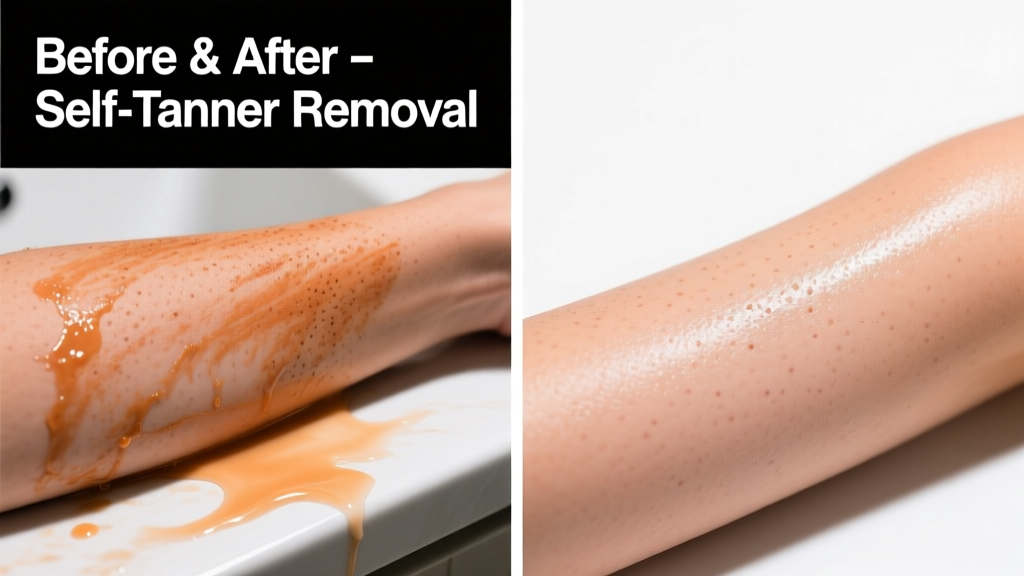
That orangey-brown streak on your elbow? The stubborn stain on your white towel? Or worse—the permanent-looking ring around your shower drain? Self-tanner mishaps happen to everyone, even pros. The good news: most self-tanner stains aren’t truly permanent—if you act within 48 hours and avoid harsh mistakes.
What You Need
| Item | Why It Works | Avg. Cost |
|---|---|---|
| Exfoliating body scrub (sugar + oil base) | Physically lifts DHA-bound dead skin cells | $8–$15 |
| Isopropyl alcohol (70% or higher) | Breaks down dihydroxyacetone (DHA) residue on non-porous surfaces | $4–$7 |
| White vinegar + baking soda paste | Mild acid + gentle abrasive for grout and ceramic | $3–$5 |
| Color-safe bleach (e.g., Clorox 2) | Oxygen-based; safe for most fabrics, unlike chlorine bleach | $6–$9 |
| Acetone-free nail polish remover | Dissolves tanner without damaging nails or laminate | $5–$8 |
Step-by-Step Removal Process
- For skin: Soak affected areas in warm water for 5 minutes, then gently exfoliate with a sugar scrub using circular motions for 2–3 minutes. Rinse. Repeat daily until color fades—usually 2–4 days.
- For fabric (towels, sheets): Soak in cold water + ½ cup color-safe bleach for 30 minutes. Wash in cool water on delicate cycle. Air-dry—heat sets DHA.
- For tile grout or sink basins: Apply baking soda paste, let sit 15 minutes, then scrub with a soft nylon brush. Wipe with diluted white vinegar (1:1 with water) to neutralize.
- For acrylic tubs or laminate counters: Dampen a microfiber cloth with isopropyl alcohol, wipe gently in one direction. Never scrub—alcohol can cloud acrylic if overused.
- For stubborn hand/foot lines: Soak fingertips/toes in lemon juice for 3 minutes, then buff with a pumice stone (wet only). Lemon’s citric acid accelerates DHA breakdown.
Surface-Specific Tips
Self-tanner’s active ingredient—dihydroxyacetone (DHA)—binds differently depending on surface chemistry. Knowing the material prevents damage and improves results.
- Cotton or linen: Pre-soak in oxygen bleach before washing. Avoid hot water—it polymerizes DHA into a yellow-brown film that resists removal.
- Marble or granite: Never use vinegar or lemon juice. Use only pH-neutral stone cleaner + soft cloth. DHA stains here are rare but require professional restoration if set.
- Wood floors or cabinets: Blot immediately with damp cloth. If dried, lightly sand stained area with 220-grit paper, then reseal—DHA oxidizes wood tannins, causing discoloration.
- Shower curtains (vinyl or PEVA): Wipe with alcohol-dampened cloth, then rinse with distilled water to prevent mineral haze.
What NOT to Do
These actions chemically lock DHA into surfaces—or damage them irreversibly.
- Don’t scrub skin with steel wool or loofahs—microtears trap pigment deeper.
- Don’t use chlorine bleach on colored fabrics—it degrades fibers and yellows whites.
- Don’t apply heat (hair dryer, hot wash) before stain removal—DHA cross-links at >113°F (45°C), making it insoluble.
- Don’t mix vinegar and bleach—even trace amounts create toxic chloramine gas.
"DHA isn’t a dye—it’s a sugar that reacts with amino acids in dead skin layers. Once oxidized, it behaves like a melanin analog. That’s why mechanical exfoliation outperforms chemical solvents on skin." — Dr. Elena Ruiz, Cosmetic Chemist, Journal of Cosmetic Science, 2022
Prevention
Most self-tanner stains happen during application—not after. Prevention is faster than removal.
- Apply in natural light with a mitt—never fingers—to avoid buildup on knuckles and cuticles.
- Wear gloves when cleaning up post-application, especially near grout and faucets.
- Line sinks and tubs with dark towels before rinsing off excess tanner.
- Use a barrier cream (like Vaseline) on elbows, knees, ankles, and heels before applying—DHA won’t bind to oiled skin.
- Wait at least 6–8 hours before showering; premature rinsing leaves uneven oxidation and transfer risk.
Can I use toothpaste to remove self-tanner from skin?
Yes—but only whitening toothpaste with baking soda or peroxide. Its mild abrasives and low pH help lift surface DHA. Apply, massage 60 seconds, rinse. Don’t use daily—it disrupts skin pH. For more on skin-safe stain removers, see our full guide.
Will hydrogen peroxide work on self-tanner stains?
3% hydrogen peroxide works on grout and porcelain—but not on skin or fabric. On skin, it causes irritation and uneven lightening. On cotton, it weakens fibers over time. Stick to oxygen bleach for fabrics and alcohol/vinegar combos for hard surfaces.
How long does self-tanner last on surfaces if untreated?
On non-porous surfaces (glass, stainless steel), DHA fades naturally in 3–7 days due to UV exposure and air oxidation. On porous surfaces like grout or unsealed wood, it can persist for weeks—and darken without intervention. According to the grout stain study by the Tile Council of North America (2023), untreated DHA stains in bathroom grout show 40% increased discoloration after 10 days.
Can I use a Magic Eraser on self-tanner stains?
Only on sealed surfaces like acrylic tubs or laminate counters—and only once. Melamine foam is highly abrasive. Repeated use scratches finishes and creates micro-grooves where DHA rebinds. Test in an inconspicuous spot first.
Why does self-tanner stain my nails and cuticles so badly?
Nails contain keratin rich in cysteine—an amino acid DHA binds to aggressively. Cuticles have high turnover and thin stratum corneum, letting DHA penetrate faster. Always wear gloves—or apply a thick layer of cuticle oil before tanning.
Does self-tanner stain silicone caulk?
Yes—and it’s nearly impossible to remove once oxidized. Silicone absorbs DHA like a sponge. Prevention is critical: tape off caulk lines before application. If stained, try acetone-free nail polish remover on a cotton swab, then rinse thoroughly. Replacement may be necessary after 2–3 failed attempts.
Self-tanner stains feel like a betrayal—especially when they linger longer than your glow should. But with the right tools, timing, and surface awareness, you can reverse most mishaps without damage. Keep alcohol wipes and sugar scrubs handy, skip the heat, and remember: DHA doesn’t stain—it bonds. And bonds, unlike dyes, can be gently undone.