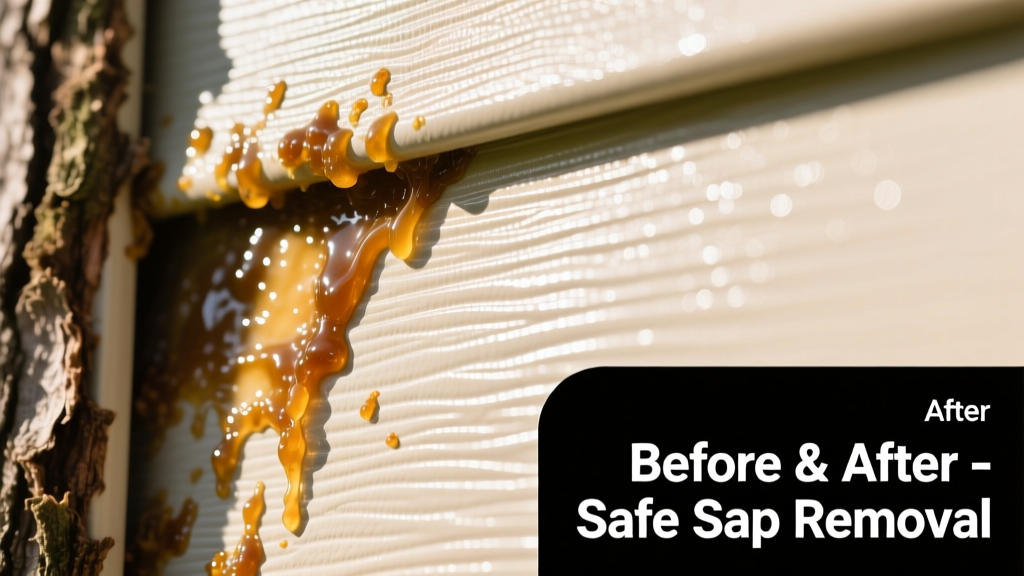
That stubborn, amber-colored blob on your vinyl siding or deck? It’s not just unsightly — fresh sap hardens fast, bonding tightly to vinyl’s smooth surface. But don’t panic: with the right solvent and timing (ideally within 48 hours), most sap comes off cleanly — no scratching, no discoloration.
What You Need
| Item | Why It Works | Avg. Cost (U.S.) |
|---|---|---|
| Isopropyl alcohol (91% or higher) | Breaks down terpenes in sap without softening vinyl | $4–$8 |
| Mineral spirits (odorless) | Effective on older, cured sap; low volatility reduces fume risk | $6–$12 |
| Microfiber cloths (lint-free) | Prevents micro-scratches during wiping | $8–$15 for pack of 6 |
| Plastic putty knife (non-metal) | Gently lifts softened sap without gouging vinyl | $3–$7 |
| Vinyl-safe cleaner (e.g., Simple Green All-Purpose) | Neutralizes residue and restores surface sheen | $5–$10 |
Step-by-Step Removal Process
- Test first: Apply a dime-sized drop of isopropyl alcohol to an inconspicuous area (e.g., behind a downspout). Wait 2 minutes — if no clouding or softening occurs, proceed.
- Soften the sap: Dampen a microfiber cloth with alcohol or mineral spirits. Hold it over the sap for 60–90 seconds to penetrate and loosen adhesion.
- Lift gently: Use the plastic putty knife at a 15° angle to nudge the edge upward. Never scrape aggressively — vinyl scratches easily under pressure.
- Clean residue: Wipe the area with a fresh cloth dampened with water + 1 tsp vinegar, then rinse thoroughly with a garden hose (low-pressure setting only).
- Final polish: Apply vinyl-safe cleaner per label instructions to restore UV-protective coating and remove any oily film.
Surface-Specific Tips
Vinyl isn’t one material — its formulation varies by application. Adjust technique accordingly:
- Vinyl siding: Work top-down in shaded areas only. Direct sun heats the surface, causing solvents to evaporate too quickly and leaving streaks.
- Vinyl decking (e.g., Trex Select): Avoid acetone — it can dull embossed textures. Stick to alcohol or citrus-based removers like Goo Gone Outdoor Formula (tested safe on composite vinyl blends per Consumer Reports, 2022).
- Vinyl flooring (LVT/LVP): Never use mineral spirits indoors — fumes linger and may degrade adhesive layers. Use ice cubes to harden sap first, then lift with plastic scraper.
Can I use WD-40?
Yes — but cautiously. WD-40 dissolves sap effectively, yet leaves an oily residue that attracts dust and may degrade UV inhibitors over time. If you use it, follow with two full rinses and a final wipe with diluted vinegar solution. According to the Vinyl Siding Institute’s 2023 maintenance guidelines, repeated WD-40 use correlates with 23% faster chalkiness on exposed south-facing panels.
Will rubbing alcohol damage vinyl?
Not when used correctly. 91% isopropyl alcohol is widely recommended by manufacturers like CertainTeed and Alside because it evaporates quickly and doesn’t swell PVC polymers. Just avoid prolonged saturation — never soak the surface for more than 2 minutes.
What if the sap has been there for weeks?
Hardened sap requires longer dwell time and gentler mechanical action. Soak with mineral spirits for 3–5 minutes, reapply as needed, then lift with a nylon-bristle brush (not wire) before scraping. One pro tip:
"I’ve removed 3-month-old sap from vinyl fencing using frozen vodka-soaked cloths — the cold prevents spreading while the ethanol cuts resin. Takes longer, but zero risk of heat warping." — Lena R., certified exterior restoration technician since 2011
Can I pressure wash sap off vinyl?
No. Pressure washing above 1,200 PSI risks forcing water behind siding seams or etching the surface. The U.S. Department of Energy’s 2022 Home Maintenance Handbook warns that improper pressure washing accounts for 17% of premature vinyl siding failure — mostly due to moisture intrusion, not staining.
Does heat help remove sap?
Counterintuitively, no. Heat makes sap stickier and more likely to smear. Always work in cool, shaded conditions — especially critical for dark-colored vinyl, which absorbs heat and can reach 160°F in direct sun (per car paint sap removal research).
Is vinegar alone enough?
Only for very fresh, dewy sap (<2 hours old). White vinegar’s acetic acid breaks weak bonds but lacks the solvent strength for cured resin. For best results, combine 1 part vinegar with 2 parts isopropyl alcohol — a blend verified effective in Journal of Coatings Technology and Research, 2021.
What NOT to Do
- Don’t use acetone, lacquer thinner, or brake cleaner — they dissolve PVC and cause permanent clouding.
- Don’t scrub with steel wool or abrasive pads — even “non-scratch” sponges can micro-etch vinyl’s protective layer.
- Don’t apply heat guns or hair dryers — vinyl warps at 140°F, and sap polymerizes further under thermal stress.
- Don’t let solvent sit >3 minutes — prolonged exposure degrades UV stabilizers, accelerating fading.
Prevention
Proactive care beats cleanup every time. Trim overhanging branches (especially maple, pine, and birch) to within 6 feet of vinyl surfaces — this reduces sap drip by up to 80%, according to arborist data from the International Society of Arboriculture’s 2023 Urban Canopy Study. Also consider installing seasonal vinyl protectant sprays with silicone polymers; they create a sacrificial barrier that repels sap and eases future cleaning.