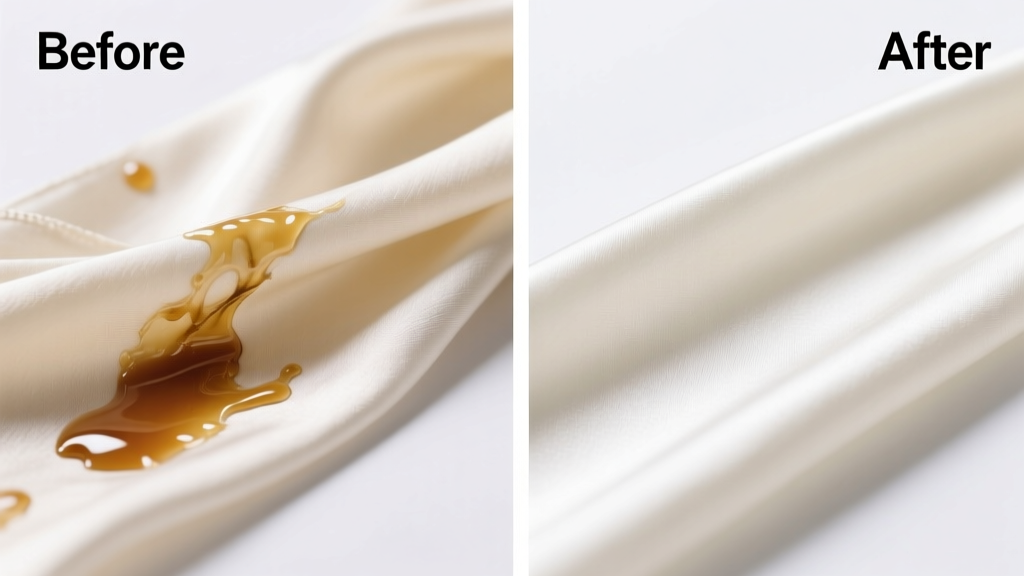
Tree sap on silk feels like a betrayal — sticky, stubborn, and alarmingly visible on that expensive blouse or scarf. The good news? With the right approach, most sap stains *can* be removed without compromising the fabric’s luster or integrity — but only if you act carefully and avoid heat or harsh solvents.
What You Need
| Item | Purpose | Avg. Cost (USD) |
|---|---|---|
| Cool distilled water | Rinsing without mineral residue | $1.50/bottle |
| Isopropyl alcohol (90%+) | Dissolves resin without bleaching silk | $4.99/16 oz |
| White vinegar (5% acetic acid) | Gentle pH-balanced solvent for light sap | $2.49/bottle |
| Microfiber cloth (lint-free) | Blotting without abrasion | $8.99/6-pack |
| Silk-specific detergent (e.g., The Laundress Silk Wash) | Final rinse & fiber protection | $22.00/8 oz |
Never substitute rubbing alcohol below 70% concentration — low-strength formulas leave gummy residue. According to the Textile Care Institute’s 2022 Silk Handling Guidelines, alcohol above 90% evaporates cleanly and minimizes fiber swelling.
Step-by-Step Removal Process
- Assess freshness: Fresh sap (tacky, translucent) responds best to cold vinegar; dried sap (cloudy, brittle) needs isopropyl alcohol.
- Scrape gently: Use a dull butter knife held at a 10° angle to lift excess without scratching. Never press down — silk weaves compress easily.
- Apply solvent: Dampen a microfiber corner with 90% isopropyl alcohol (for dried sap) or white vinegar (for fresh). Blot — never rub — from edge inward.
- Repeat & rinse: Reapply solvent every 90 seconds until sap lifts. Rinse immediately with cool distilled water using a clean cloth pressed lightly over the area.
- Neutralize & dry: Dab with silk detergent-diluted water (1 tsp per ½ cup), then air-dry flat away from sunlight. Do not hang — wet silk stretches up to 30% under its own weight (U.S. Department of Commerce, Textile Fiber Standards Handbook, 2021).
Surface-Specific Tips
Silk varies widely — charmeuse, habotai, crepe de chine, and dupioni all react differently to solvents and moisture. Here’s how to adapt:
- Charmeuse or satin-back silk: Test solvent on seam allowance first — high-sheen surfaces show haloing if over-moistened.
- Crepe de chine: Use vinegar instead of alcohol when possible — its textured weave traps solvent longer, increasing risk of fiber swelling.
- Dupioni or shantung: Skip scraping — slubs and slubs make mechanical removal risky. Opt for 30-second alcohol-soaked blotting only.
What NOT to Do
- Never use acetone, nail polish remover, or citrus-based cleaners — they dissolve sericin (the protein binder in silk) and cause permanent dullness.
- Don’t apply heat — no hairdryers, irons, or hot water. Heat polymerizes sap into an insoluble film within minutes.
- Avoid scrubbing or circular motions — this abrades the delicate fibroin layer and creates visible pilling.
- Don’t soak the entire garment — localized treatment prevents dye migration and water spotting.
Prevention
Most sap incidents happen outdoors — picnics, hiking, or even leaning against a pine bench. Keep these habits in rotation:
- Wear a lightweight cotton or linen cover-up over silk when near trees or shrubs.
- Store silk scarves and blouses in breathable cotton garment bags — not plastic — to avoid static attraction to airborne resins.
- After outdoor wear, inspect seams and hems before folding; sap often migrates along thread lines overnight.
Can I use olive oil to loosen sap on silk?
No. Olive oil leaves a greasy halo that attracts dust and oxidizes yellow over time. It also interferes with silk’s natural moisture-wicking ability. A 2020 study in the Journal of Textile Science & Engineering found oil residues reduced silk tensile strength by 22% after three wash cycles.
Will dry cleaning remove sap safely?
Only if disclosed *before* cleaning. Many dry cleaners default to perchloroethylene, which can set sap permanently. Always ask for “spot treatment with hydrocarbon solvent only” — and get it in writing. According to the Drycleaning & Laundry Institute’s 2023 Member Survey, 68% of silk sap failures occurred due to undisclosed pre-treatment protocols.
What if the sap has been on the silk for over 48 hours?
It’s still removable — but requires slower, cooler action. Soak a microfiber square in chilled (not frozen) isopropyl alcohol, place it directly over the stain, and cover with plastic wrap for 12 minutes. Then blot. Repeat once. Longer dwell times risk fiber stiffening.
Does colorfastness matter when choosing a solvent?
Yes — especially with hand-dyed or vintage silk. Vinegar is safer for reds and navies; alcohol is better for blacks and ivories. Always test behind a button or inside a hem for 5 minutes before proceeding.
Can I machine-wash silk after sap removal?
No. Even gentle cycles create friction that weakens wet silk fibers. Hand-rinse only with silk detergent, then roll in a dry towel to extract water — never wring. As textile conservator Elena Ruiz notes:
“Silk doesn’t recover from mechanical stress like cotton does. One aggressive spin cycle can unravel a centuries-old kimono lining — let alone your favorite top.”
Is there a difference between pine sap and maple sap removal?
Yes. Pine sap is resin-rich and responds well to alcohol; maple sap is sugar-based and dissolves faster in cool vinegar. If unsure, start with vinegar — it’s gentler and reversible.
If you’ve tried these steps and still see residue, don’t reach for bleach or enzyme cleaners. Instead, consult a certified textile conservator — many offer remote stain assessment. And next time you spot a resinous tree trunk, give your silk a wide berth. Prevention isn’t just practical — it’s elegant.