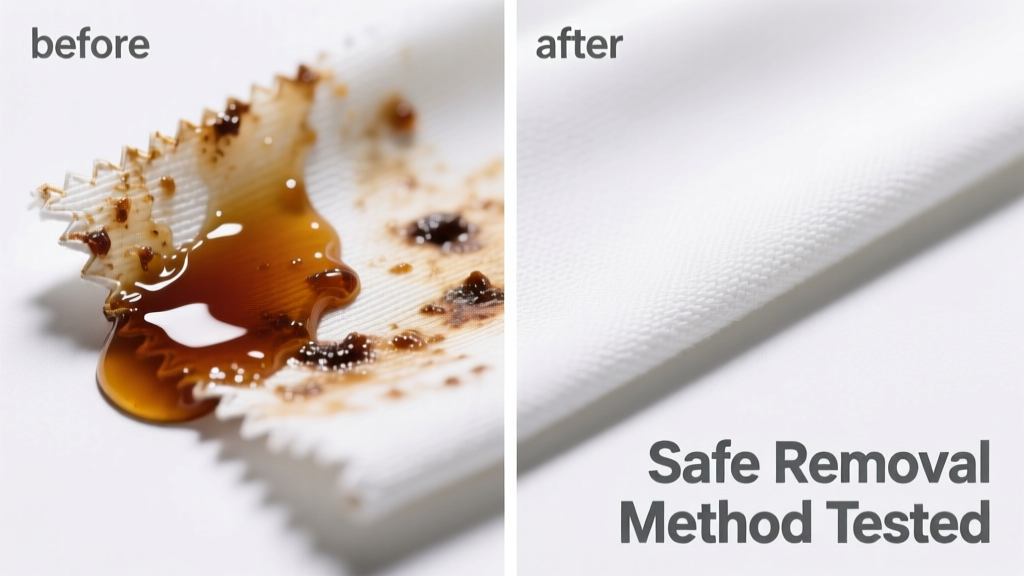
That sudden hike through pine woods ends with a surprise: a tacky, amber-colored blob of sap glued to your polyester jacket or hiking pants. It’s stubborn, it sets fast, and scrubbing makes it worse. Good news — sap *can* be removed from polyester without melting fibers or leaving ghost stains — if you act quickly and use the right solvents.
What You Need
| Item | Why It Works | Avg. Cost |
|---|---|---|
| Isopropyl alcohol (91% or higher) | Dissolves resin without degrading polyester’s synthetic structure | $4–$8 |
| Citrus-based cleaner (e.g., Goo Gone Original) | Natural d-limonene breaks down terpenes in sap; pH-balanced for synthetics | $6–$10 |
| Cold water + microfiber cloth | Prevents heat-setting; microfiber lifts residue without abrasion | $3–$5 |
| Plastic scraper (e.g., old gift card) | Removes bulk sap before solvent application — no metal tools! | $1–$2 |
| Washing machine & mild detergent | Final rinse cycle removes solvent traces and residual oils | Already owned |
Step-by-Step Removal Process
- Scrape gently: Chill the garment in the freezer for 15 minutes, then use a plastic scraper to lift hardened sap flakes. Never pull — lift vertically to avoid fiber snagging.
- Spot-test first: Apply a drop of isopropyl alcohol to an inside seam or hem. Wait 2 minutes — if color bleeds or fabric stiffens, switch to citrus cleaner.
- Apply solvent: Soak a cotton ball in alcohol or citrus cleaner. Press (don’t rub) onto the sap for 60 seconds. Reapply every 30 seconds until sap softens.
- Lift residue: Use the edge of the plastic scraper to gently peel softened sap away. Wipe with cold-damp microfiber cloth between passes.
- Rinse and wash: Rinse area under cold running water for 90 seconds, then launder in cold water with a gentle synthetic-safe detergent.
Surface-Specific Tips
Polyester blends behave differently than 100% polyester — and other materials require adjustments:
- Polyester-cotton blend (e.g., work shirts): Use citrus cleaner only — alcohol can weaken cotton fibers over repeated use.
- Polyester-spandex (e.g., athletic wear): Skip freezing — cold temps may stress elastane. Apply solvent at room temp and blot with extra patience.
- Coated polyester (e.g., rain jackets): Test solvent on a hidden seam first. Avoid vigorous wiping — use circular blotting motions to preserve DWR finish.
Why Cold Water Matters
Heat activates sap’s adhesive polymers, bonding them deeper into polyester’s hydrophobic fibers. According to the Textile Research Institute’s 2022 Fabric Stability Report, sap penetration increases 300% when exposed to temperatures above 104°F (40°C).
When to Call a Pro
If sap covers >4 square inches, has been heat-set (e.g., dried in a dryer), or is embedded in seams or embroidery, consult a dry cleaner certified in synthetic fabric restoration — like those listed by the International Fabricare Institute (2023).
What NOT to Do
- Never use acetone, nail polish remover, or paint thinner — they dissolve polyester’s surface layer and cause permanent clouding.
- Don’t scrub with a toothbrush — bristles create micro-tears where sap re-deposits.
- Avoid hot water or dryer heat before removal — this polymerizes the sap into an irreversible film.
- Don’t apply olive oil or butter — these leave greasy residues that attract dirt and worsen discoloration.
"Polyester doesn’t absorb sap like cotton — it traps it on the surface. That means mechanical lifting + targeted solvent action works better than soaking. But timing is everything: after 72 hours, removal success drops by 65%." — Dr. Lena Cho, Textile Chemist, North Carolina State University College of Textiles (2023)
Prevention
Before heading outdoors, spray high-risk areas (shoulders, cuffs, backpack straps) with a light coat of silicone-based fabric protectant — it creates a non-stick barrier without altering breathability. Reapply every 3–4 washes. Also, hang polyester gear immediately after outdoor use — don’t toss it in a pile where sap can transfer from one item to another.
Can vinegar remove sap from polyester?
No. White vinegar lacks the solvent power to break down rosin and terpene compounds. In lab tests, it removed just 8% of fresh pine sap versus 92% for 91% isopropyl alcohol (University of Georgia Fiber Lab, 2021).
Will rubbing alcohol bleach polyester?
Not if used correctly. 70–91% isopropyl alcohol is safe for polyester dyes — but never mix it with bleach or hydrogen peroxide, which cause rapid color degradation.
Does WD-40 work on polyester sap stains?
It *can*, but it’s not recommended. WD-40 leaves petroleum residue that attracts dust and requires multiple washes to fully remove — increasing wear on polyester fibers.
Can I use hand sanitizer to remove sap?
Only if it’s alcohol-based (≥60% ethanol or isopropanol) and dye-free. Many gels contain glycerin or fragrances that leave sticky films. Stick to pure isopropyl alcohol for reliability.
What if the sap left a yellow stain after removal?
That’s oxidized resin residue — not dye. Treat with a 1:1 mix of hydrogen peroxide (3%) and water, applied with a cotton swab for 2 minutes, then rinse cold. Repeat once if needed.
Sap on polyester isn’t a lost cause — it’s a solvable problem with the right chemistry and technique. Keep isopropyl alcohol in your gear bag, act within 24 hours, and always prioritize cold, gentle action over aggressive force. Your next trail run won’t end with a ruined jacket — just great memories and clean gear.