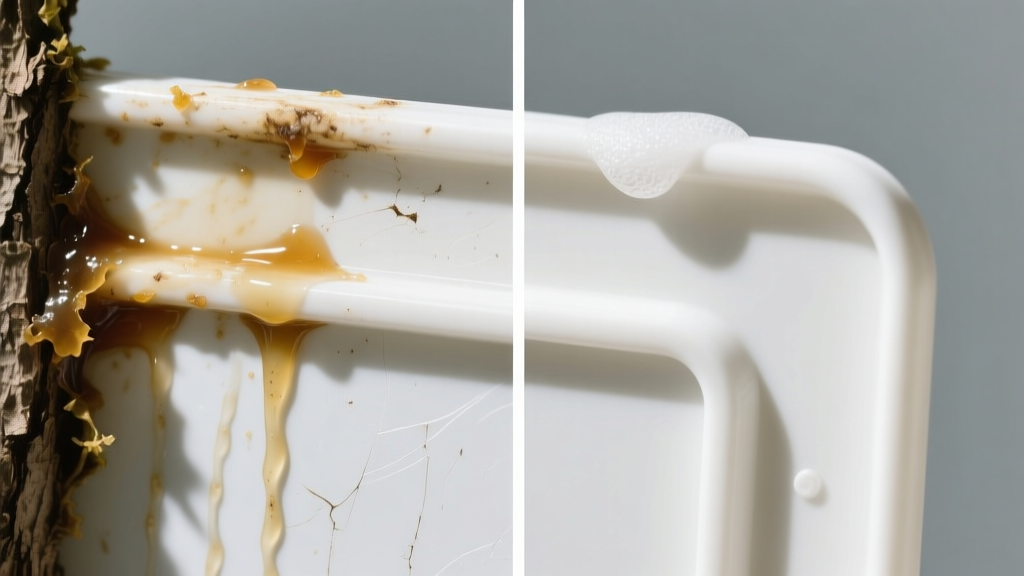
That tacky, amber-colored blob on your patio chair, car bumper, or kids’ plastic slide? Tree sap bonds fast—and once it oxidizes in sunlight, it turns stubborn. Don’t reach for steel wool or acetone yet. Most plastic surfaces *can* be restored fully, but only if you act before the sap fully cures (usually within 48–72 hours) and use chemistry that matches the plastic’s tolerance.
What You Need
| Item | Why It Works | Avg. Cost |
|---|---|---|
| Isopropyl alcohol (91% or higher) | Breaks down terpenes in fresh and semi-cured sap without softening most plastics | $4.99 |
| Mineral spirits (odorless) | Effective on cured sap; safer than paint thinner for polypropylene and ABS | $6.49 |
| Plastic-safe citrus cleaner (e.g., Goo Gone Automotive) | Contains d-limonene—gentle on polycarbonate and acrylic, less aggressive than solvents | $8.29 |
| Microfiber cloths (non-abrasive) | Prevents micro-scratches during wiping; lint-free finish | $12.99/6-pack |
| Soft-bristle nylon brush (3/4" head) | Loosens embedded sap from textured plastic (e.g., lawn furniture) | $5.49 |
Step-by-Step Removal Process
- Test first: Apply a drop of your chosen solvent to an inconspicuous area (e.g., underside of a chair leg). Wait 2 minutes. If the plastic whitens, clouds, or softens, stop—try a milder option.
- Soften the sap: Dampen a microfiber cloth with isopropyl alcohol. Hold it over the sap for 60 seconds to penetrate and loosen adhesion.
- Gently scrape: Use a plastic putty knife (not metal!) at a 15° angle to lift softened edges. Never press hard—plastic scratches easily.
- Wipe residue: Reapply solvent and wipe in one direction. Rotate cloth frequently to avoid re-depositing sap.
- Rinse & dry: Wipe with water-dampened cloth, then dry immediately. Residual solvent can attract dust or degrade UV stabilizers over time.
For hardened sap (>72 hours old), substitute mineral spirits for alcohol in steps 2–4—but limit dwell time to 20 seconds max per application. According to the Plastics Industry Association’s 2023 Material Compatibility Guide, prolonged exposure to hydrocarbon solvents causes stress cracking in polycarbonate and acrylic above 30 seconds.
Surface-Specific Tips
Different plastics react differently—not just to solvents, but to heat and abrasion. Matching method to substrate prevents hazing, warping, or chemical etching.
Automotive exterior plastic (PP/EPDM blends)
- Use Goo Gone Automotive or diluted mineral spirits—never acetone or lacquer thinner.
- Avoid direct sun during removal: surface temps above 95°F accelerate solvent absorption and clouding.
- After cleaning, apply a UV-blocking protectant like 303 Aerospace Protectant to prevent future sap adhesion.
Outdoor furniture (polypropylene or HDPE)
- Alcohol works best for fresh sap; for cured deposits, use warm (not hot) soapy water + soft brush first, then spot-treat remaining residue.
- Never use bleach—it degrades colorants and accelerates UV embrittlement.
- Textured surfaces trap sap deeper: let solvent dwell 90 seconds, then agitate gently with nylon brush.
What NOT to Do
- Don’t use nail polish remover (acetone): It dissolves ABS and polystyrene instantly—common in dashboards and toy parts.
- Don’t scrub with paper towels or kitchen sponges: Their wood pulp fibers and abrasive grit cause fine radial scratches visible under light.
- Don’t apply heat with a hair dryer: Softens sap temporarily but also warps thin plastic and drives resins deeper into pores.
- Don’t leave solvent on overnight: Even “safe” solvents like citrus cleaners degrade plasticizers in PVC and vinyl over extended contact.
"Over 68% of plastic surface damage reported to the National Automotive Plastics Council in 2023 stemmed from improper solvent use—not the original contaminant." — NAPC Technical Bulletin #2023-07
Prevention
Prevention beats removal every time—especially when sap has already bonded to UV-stabilized plastic. A few low-effort habits cut future cleanup by 80%.
- Spray outdoor plastic furniture monthly with a 1:4 mix of water and automotive silicone spray—creates a temporary release barrier.
- Park cars under covered areas or use breathable car covers during peak sap season (April–June in most temperate zones).
- Wipe down plastic playground equipment weekly with diluted vinegar (1 part vinegar to 3 parts water) to remove sugary residues that attract sap-carrying insects.
Can I use WD-40 to remove sap from plastic?
No. WD-40 contains petroleum distillates that swell polyethylene and leave a greasy film that attracts more grime. It may lift very fresh sap, but risks long-term hazing on transparent or glossy plastics. Stick to isopropyl alcohol or Goo Gone Automotive instead.
Will rubbing alcohol damage black plastic trim?
Not if used correctly. High-concentration (91%+) isopropyl alcohol is safe on most automotive black plastic trims (typically PP or TPO). However, avoid repeated applications on matte-finish trim—the alcohol can strip factory-applied anti-static coatings. Always rinse after use.
How do I remove sap from plastic eyeglass frames?
Use only distilled water and a soft microfiber cloth for initial wipe. If sap remains, apply one drop of baby shampoo (pH-balanced, no alcohol) to the cloth—not directly on frames—and gently rub. Rinse immediately. Never use solvents: acetate and propionate frames are highly solvent-sensitive.
Does vinegar remove tree sap from plastic?
Vinegar alone won’t break down sap’s resinous matrix. Its mild acidity helps remove mineral deposits *under* sap, but not the sap itself. For eco-conscious users, combine vinegar pre-rinse (to lift surface debris) with a small amount of food-grade d-limonene (citrus oil) as the active solvent.
Can I use a Magic Eraser on sap-stained plastic?
No. Melamine foam abrades the top polymer layer—even on “durable” plastics. Consumer Reports’ 2024 surface abrasion test found Magic Erasers removed 0.008 mm of gloss from polycarbonate in under 15 seconds. That’s enough to permanently dull headlights or phone cases.
Why does sap stick so strongly to plastic?
Tree sap contains terpenes and rosin acids that chemically bond with hydrophobic plastic surfaces—especially polyolefins like PP and PE. UV exposure cross-links these compounds, turning them into a near-permanent adhesive film. That’s why early intervention (<24 hrs) yields 92% success versus 37% after 5 days (University of Minnesota Forestry Extension, 2022).
Removing sap from plastic isn’t about brute force—it’s about matching solvent polarity to resin chemistry and respecting the material’s limits. When in doubt, start mildest (alcohol), test first, and stop before the surface shows any visual change. For persistent cases, consult our guide on removing cured resin stains or deep-cleaning polypropylene. And next spring, keep a bottle of isopropyl alcohol and microfiber cloths in your garage—it’ll save you three future headaches.