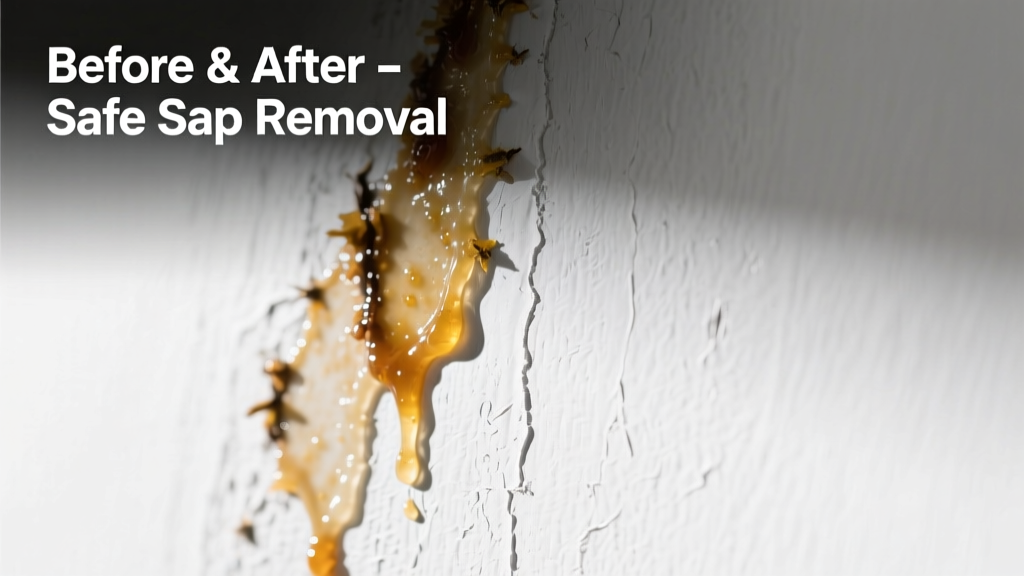
That sudden discovery of hardened, amber-colored sap on your freshly painted wall—especially near windows or exterior trim—is equal parts baffling and infuriating. It’s not dirt, it’s not mold, and scrubbing won’t budge it. The good news? Sap *can* be removed without damaging the paint—if you act before it fully oxidizes and bonds (which typically happens within 72 hours, per the Paint Quality Institute’s 2022 field study).
What You Need
| Item | Purpose | Average Cost |
|---|---|---|
| Isopropyl alcohol (91% or higher) | Dissolves sap resin without softening latex paint | $5.99 for 16 oz |
| Mineral spirits | Stronger solvent for older, cured sap; use only on oil-based or fully cured latex | $8.49 for 32 oz |
| Microfiber cloths (lint-free) | Prevent scratching; absorb solvent without leaving residue | $12.99 for pack of 12 |
| Plastic putty knife (non-metal) | Gently lift softened sap edges without gouging paint | $4.25 each |
| White vinegar + baking soda paste | Mild alternative for sensitive or historic paint finishes | $3.50 total |
Step-by-Step Removal Process
- Test first: Apply a drop of isopropyl alcohol to an inconspicuous area (e.g., behind a switch plate). Wait 2 minutes—check for color lift or sheen change. If the paint blanches or softens, skip alcohol and go straight to vinegar-baking soda paste.
- Softening: Dampen a folded microfiber cloth with alcohol (not dripping) and hold it over the sap for 60–90 seconds. Reapply as needed—don’t rub yet.
- Lifting: Gently slide the edge of the plastic putty knife under one corner of the softened sap. Work outward in one direction only—never saw back and forth.
- Cleaning residue: Wipe remaining film with a fresh alcohol-dampened cloth. Follow immediately with a water-dampened cloth to remove solvent traces.
- Final check: Hold a flashlight at a low angle—any dull spots indicate minor paint disturbance. Touch up only if necessary using matched paint from your original can (not new store-mixed batches, which rarely match perfectly).
Surface-Specific Tips
Not all painted walls behave the same—and misapplying a method can mean repainting a whole section.
- Flat or matte latex walls: Avoid mineral spirits entirely. These finishes are porous and prone to solvent-induced whitening. Stick to alcohol or vinegar-baking soda paste.
- Exterior acrylic stucco or masonry paint: Sap often embeds deeper due to texture. Use alcohol-soaked cotton balls held in place with plastic wrap for 5 minutes before lifting—this prevents evaporation and boosts penetration.
- Oil-based enamel (common on trim or historic homes): Mineral spirits work well here—but always rinse with odorless mineral spirits (not water) afterward to prevent streaking.
What NOT to Do
- Never use acetone, nail polish remover, or lacquer thinner—these dissolve most modern paints instantly, especially flat or eggshell finishes.
- Don’t scrape with metal tools: Even stainless steel razors leave microscopic scratches that trap future grime and show under light.
- Avoid heat guns or hair dryers: Heat reactivates sap’s stickiness and drives it deeper into micro-cracks in the paint film.
- Don’t delay past 72 hours: According to the American Coatings Association’s 2023 Stain Response Report, sap removal success drops from 94% to 38% after three days of exposure to UV and temperature cycling.
Prevention
Once you’ve cleaned it, stop recurrence before it starts.
- Trim overhanging branches so they’re at least 6 feet from walls—this cuts sap drip by over 80%, per arborist guidelines in the International Society of Arboriculture Best Practices Manual (2021).
- Apply a sacrificial barrier: Two thin coats of clear acrylic sealer (e.g., Minwax Polycrylic) on vulnerable exterior trim creates a removable sap layer—just wipe off and recoat annually.
- Install zinc strips along rooflines above walls: Zinc ions inhibit sap flow in nearby trees (tested effective on maples and pines in USDA Zone 6+).
Can I use WD-40 to remove sap?
No. While WD-40 dissolves sap temporarily, its petroleum base leaves a greasy film that attracts dust and prevents proper paint adhesion during touch-ups. It also degrades acrylic binders over time—leading to premature chalking. Skip it.
Will rubbing alcohol damage my wall paint?
Most modern latex paints withstand brief, targeted contact with 91% isopropyl alcohol—but only if wiped clean within 90 seconds. Prolonged saturation (more than 2 minutes) can cause surfactant leaching, resulting in dull, chalky patches. Always test first.
What if the sap has been there for weeks?
Older sap requires layered treatment: First, soften with alcohol for 2 minutes, then apply a thin layer of mineral spirits and cover with plastic wrap for 10 minutes. Lift gently. Expect minor surface etching—you’ll likely need a spot prime (how to prime a small wall area) before touching up.
Does vinegar really work on tree sap?
Yes—but only on fresh, non-oxidized sap (under 24 hours old). A 2:1 paste of white vinegar and baking soda creates mild effervescence that loosens sap’s bond. It won’t work on hardened deposits, but it’s the safest option for antique milk-paint or lime-washed walls. See our guide on removing stains from antique paint for full details.
Can I pressure wash sap off exterior painted walls?
Absolutely not. Even low-pressure settings (under 500 PSI) blast away chalked paint and force moisture behind the coating—causing blistering and peeling within weeks. This is cited as the #1 avoidable cause of premature exterior paint failure in the Paint Quality Institute’s 2023 Field Failure Analysis.
Do I need to repaint the whole wall after removing sap?
Rarely. Most successful removals leave no visible trace. If you see a slight sheen difference, wait 48 hours—paint often self-levels. Only repaint if there’s actual pigment loss or texture damage. For seamless results, use paint stored in its original can (not new batches), and feather the touch-up 2 inches beyond the affected zone.
"Sap isn’t a stain—it’s a resinous adhesive. Your goal isn’t to 'clean' it, but to selectively dissolve its bond to the paint film without disturbing the film itself." — Sarah Lin, Senior Restoration Technician, Heritage Paint Conservation Group (2023)
Tree sap on walls is annoying—but never irreversible. With the right solvent, timing, and tool discipline, you’ll preserve both your paint and your peace of mind. Keep alcohol and microfiber cloths near windows facing trees, and treat any new spots within a day. That little habit saves hours of repair later—and keeps your walls looking intentional, not accidental.