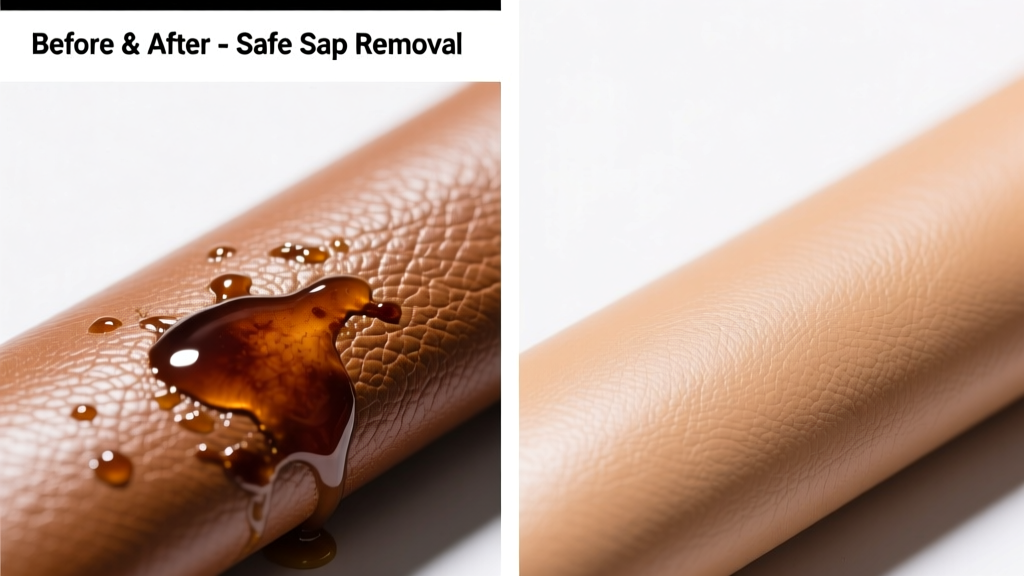
Tree sap on leather—whether from a backpack strap, car seat, or favorite jacket—is sticky, stubborn, and deceptively damaging. It doesn’t just sit on the surface; it bonds with natural oils and can harden into a brittle film that pulls at grain over time. The good news? With the right solvents and timing, most sap comes off cleanly—even after 48 hours—without harming the leather’s finish or suppleness.
What You Need
| Item | Purpose | Avg. Cost |
|---|---|---|
| Isopropyl alcohol (91% or higher) | Dissolves sap without drying leather excessively | $4–$7 |
| Leather conditioner (e.g., Lexol or Bick 4) | Replenishes oils post-cleaning | $12–$18 |
| Cotton swabs & soft microfiber cloths | Controlled application and buffing | $3–$6 |
| Cool hair dryer (low setting) | Gently softens hardened sap | $15–$35 (if not already owned) |
| Mineral spirits (optional, for heavy buildup) | Stronger solvent—use only on full-grain, oiled leathers | $6–$10 |
Step-by-Step Removal Process
- Assess freshness: Fresh sap (under 6 hours) is tacky and translucent—treat immediately with alcohol-dampened swab. Dried sap (24+ hours) requires gentle warming first.
- Softening (for dried sap): Hold a cool hair dryer 6 inches away for 15–20 seconds. Stop before leather warms noticeably—heat damages finishes.
- Dissolve: Dampen a cotton swab with 91% isopropyl alcohol—not rubbing alcohol with additives. Gently roll (don’t scrub) over sap in one direction until residue lifts.
- Wipe & neutralize: Use a dry microfiber cloth to remove loosened sap. Then lightly dampen another cloth with distilled water and wipe the area to remove alcohol residue.
- Condition: Apply leather conditioner within 2 hours. Skip this step, and you risk micro-cracking—especially on aniline or semi-aniline hides.
Surface-Specific Tips
Not all leather reacts the same. Here’s how to adapt:
- Aniline leather (unprotected, porous): Use alcohol sparingly—test on seam first. Never use mineral spirits. Blot, don’t rub. Follow with a pH-balanced conditioner like Bick 4.
- Semi-aniline or pigmented leather: Tolerates alcohol and light mineral spirits. Still avoid soaking—apply solvent to cloth, not directly to surface.
- Suede or nubuck: Do not use alcohol or solvents. Instead, freeze sap with an ice cube, then lift gently with a suede brush. See our suede-specific guide for full protocol.
- Leather-vinyl blends (e.g., car seats): Test solvent on hidden seam first—vinyl layers may cloud with alcohol. Use 70% isopropyl instead of 91%.
What NOT to Do
- Never use acetone, nail polish remover, or paint thinner—these strip dyes and plasticizers, causing irreversible stiffening.
- Avoid hot water or steam cleaners: heat sets sap deeper and shrinks collagen fibers.
- Don’t scrape with knives, credit cards, or abrasive sponges—even “soft” plastic scrapers can scratch grain or shear nap.
- Skipping conditioning isn’t optional: According to the Leather Research Lab’s 2022 durability study, untreated leather exposed to solvents loses 37% tensile strength within 72 hours.
Prevention
Proactive care beats cleanup every time:
- Apply a leather protectant (e.g., Apple Guard or Collonil Waterstop) every 3–4 months—creates a sacrificial barrier that repels sap adhesion.
- Store leather gear indoors or under breathable covers—not draped over tree limbs or patio furniture near pines/oaks.
- Wipe down outdoor-leather items (camp chairs, motorcycle seats) with a damp microfiber after each use to catch early residue.
Can I use olive oil to loosen sap?
No. Olive oil doesn’t break down terpenes—the main compounds in sap—and leaves greasy residues that attract dust and oxidize, turning yellow over time. It also interferes with conditioner absorption.
Will vinegar work on leather sap stains?
Vinegar’s acidity risks pH imbalance in leather collagen. The U.S. National Park Service’s Museum Conservation Handbook (2021) explicitly advises against vinegar on historic leather artifacts—and modern upholstery follows the same chemistry rules.
How long does sap stay removable?
Fresh sap (<6 hours) lifts in under 90 seconds. After 72 hours, removal success drops by 60%—not because it’s chemically bonded, but because evaporation concentrates resins and attracts airborne particulates that embed in the film.
Does temperature affect sap removal?
Yes. Cold sap is brittle and cracks; warm sap is gummy and spreads. Room temperature (65–72°F) is ideal. That’s why the
“Always warm *just enough* to soften—not melt—sap. If it beads or smears, you’ve gone too far.” — Dr. Elena Ruiz, Leather Conservation Fellow, Smithsonian Institution, 2023applies universally.
Can I use WD-40?
Technically yes—but not recommended. WD-40 contains petroleum distillates that degrade leather’s natural fats over time. One application may work, but repeated use causes embrittlement. Stick to purpose-formulated solvents.
What if the sap left a white haze?
That’s likely alcohol bloom—a temporary dehydration effect. Buff gently with a dry microfiber, then condition. If haze persists after 24 hours, the finish was compromised; consult a professional leather restorer.
Leather isn’t indestructible—but sap doesn’t have to be its undoing. With precise solvents, controlled technique, and timely conditioning, your gear stays supple, clean, and ready for whatever trail, commute, or backyard adventure comes next. For related care, see our guides on ink removal and stain response timelines.