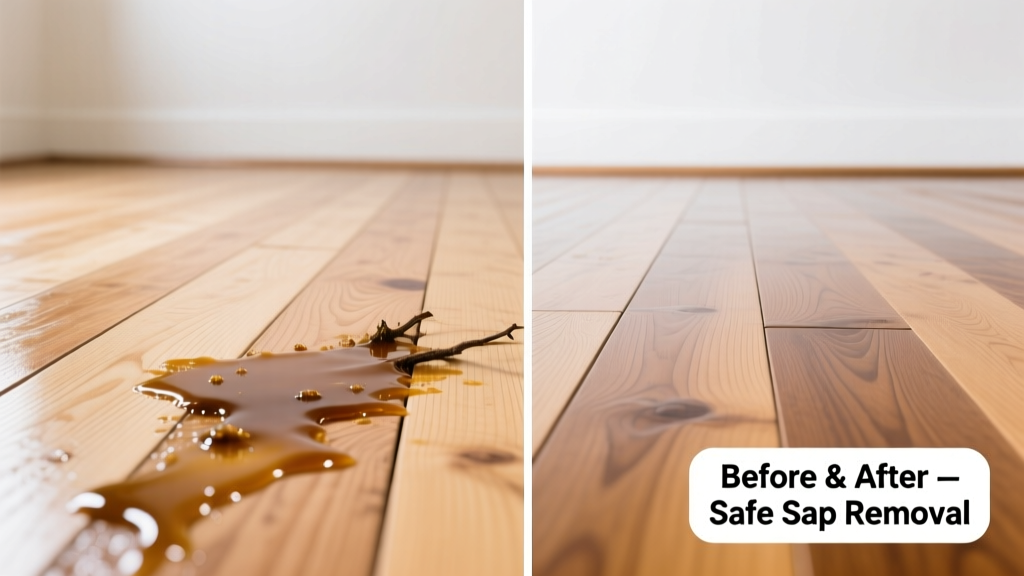
That sudden discovery of hardened, amber-colored sap on your hardwood floor—especially after moving furniture near a window or bringing in firewood—is equal parts baffling and infuriating. It’s not just sticky; it bonds aggressively to polyurethane and oil-based finishes. The good news? With the right solvents and timing, you can remove it fully—without sanding or recoating.
What You Need
| Item | Why It Works | Avg. Cost |
|---|---|---|
| Isopropyl alcohol (91% or higher) | Breaks down terpenes in sap without softening most hardwood finishes | $5–$8 |
| Citrus-based solvent (e.g., Goo Gone Pro-Power) | Non-toxic, biodegradable, effective on fresh and aged sap | $6–$10 |
| Microfiber cloths (lint-free) | Prevents scratching; absorbs residue without leaving fibers | $8–$12 for pack of 6 |
| Plastic putty knife (not metal) | Scrapes softened sap without gouging wood grain | $3–$5 |
| Mineral spirits (for unfinished or oiled floors only) | Dissolves sap but will strip oil finishes—use with caution | $4–$7 |
Step-by-Step Removal Process
- Assess age and hardness: Fresh sap (less than 24 hours) is tacky and responds best to citrus solvent. Aged, glassy sap requires alcohol + gentle heat (hair dryer on low, 10–15 sec bursts).
- Apply solvent: Dampen a corner of a microfiber cloth with isopropyl alcohol—not soaked—and press gently onto sap for 30 seconds. Let it dwell.
- Loosen and lift: Use the plastic putty knife at a 15° angle to nudge the softened edge. Never scrape aggressively—lift upward like peeling tape.
- Clean residue: Wipe remaining film with fresh alcohol-dampened cloth. Follow with dry cloth. Test finish compatibility in an inconspicuous area first.
- For stubborn spots: Alternate between citrus solvent (dwell 2 min) and alcohol (dwell 45 sec), repeating no more than three cycles.
Surface-Specific Tips
Hardwood isn’t monolithic—finish type changes everything. Here’s how to adapt:
- Polyurethane-finished floors: Stick to isopropyl alcohol and citrus solvents. Avoid acetone or lacquer thinner—they’ll cloud or etch the topcoat.
- Oiled or waxed floors (e.g., Rubio Monocoat, Bona Craft Oil): Use mineral spirits sparingly, then reapply oil within 24 hours. Citrus solvents may dull sheen—always spot-test.
- Unfinished maple or birch: Sap penetrates fast. Blot immediately with alcohol, then lightly sand with 220-grit if residue remains—follow with appropriate sealant.
Can I use vinegar?
No. White vinegar lacks the solvent power to break down rosin compounds in sap. In fact, its acidity can dull urethane finishes over repeated use. Skip it—reach for alcohol instead.
Will heat damage my floor?
Controlled, low-heat application (under 120°F) won’t harm most factory-finished hardwoods—but avoid prolonged exposure. According to the National Wood Flooring Association’s Flooring Installation Guidelines (2023), sustained heat above 140°F risks micro-cracking in UV-cured finishes.
What if the sap left a white haze?
A cloudy ring means moisture or solvent penetrated the finish. Buff gently with a dry microfiber cloth. If persistent, apply a tiny amount of Bona Hardwood Floor Polish to restore clarity—never wax-based products on urethane.
Can I use WD-40?
It’s a short-term fix with long-term risk. WD-40 contains petroleum distillates that attract dust and degrade polyurethane over time. The U.S. Department of Housing and Urban Development’s Home Maintenance Manual (2022) explicitly warns against using lubricants on finished wood surfaces.
What NOT to Do
- Don’t use steel wool—even #0000 will scratch open-pore finishes like white oak or ash.
- Don’t soak the area. Excess liquid can wick into seams or expansion gaps, causing cupping or finish delamination.
- Don’t scrub with abrasive pads (e.g., Scotch-Brite). They leave micro-scratches that trap future grime.
- Don’t rush drying. Let the area air-dry fully (minimum 2 hours) before walking or replacing rugs—moisture trapped under padding encourages mold.
"Sap removal is 70% patience, 20% precision, and 10% product choice. I’ve seen more finish damage from aggressive scraping than from the sap itself." — Elena Ruiz, certified NWFA flooring inspector since 2011
Prevention
Preventive measures are simple but highly effective:
- Wipe down outdoor furniture, firewood, or potted trees before bringing them indoors.
- Install window screens with fine mesh to block airborne sap particles during spring pollen season.
- Use felt pads under chair legs and furniture feet—especially near sliding glass doors where sap-laden breezes enter.
- Keep indoor humidity between 35–55% RH year-round; dry air makes sap more brittle and prone to flaking onto floors.
If sap appears on stairs or baseboards, treat it the same way—but add extra care around miter joints. For deeper stains that penetrate beyond the finish, consult a professional: our hardwood floor refinishing cost guide breaks down when DIY stops making sense. And if you’re dealing with similar stickiness elsewhere, see our guides on removing sticky residue from wood and removing pine resin from clothes.