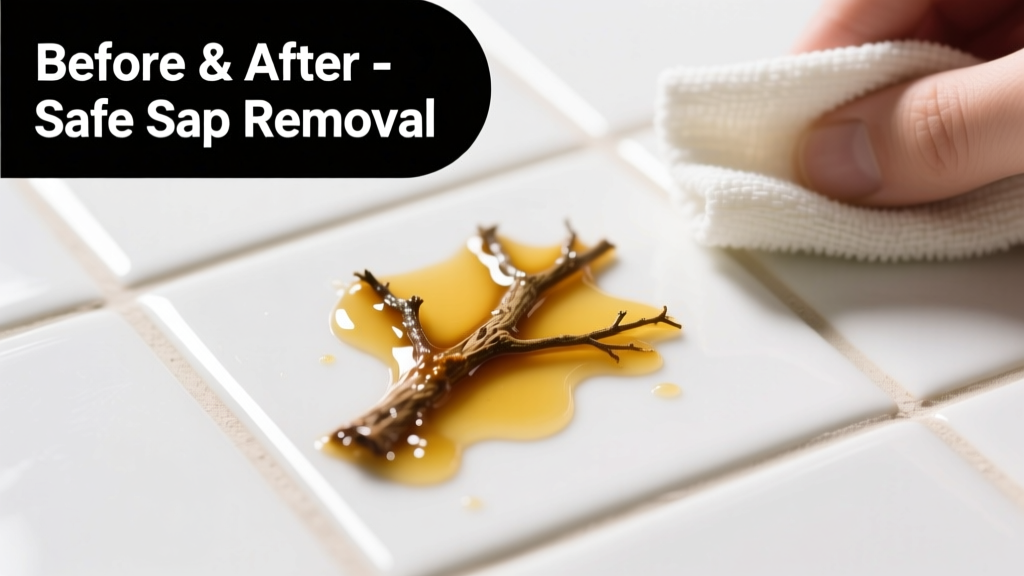
That sudden drip of pine or maple sap onto your ceramic kitchen backsplash or outdoor tile? It hardens fast—and resists scrubbing like glue. Don’t panic: ceramic’s non-porous surface actually works in your favor, but only if you act before the sap fully oxidizes and bonds. Most sap stains on ceramic are fully removable within 72 hours using household solvents or targeted cleaners—no sanding or replacement needed.
What You Need
| Item | Why It Works | Avg. Cost |
|---|---|---|
| Isopropyl alcohol (91% or higher) | Dissolves terpenes in fresh and aged sap without harming glaze | $4–$8 |
| Goo Gone Original (non-aerosol) | Citrus-based solvent; safe for glazed ceramic when rinsed promptly | $6–$9 |
| Microfiber cloths (lint-free) | Prevents micro-scratches during wiping; absorbs residue cleanly | $8–$12 for pack of 6 |
| Plastic razor blade (ceramic-safe) | Removes thick, cured sap without scratching—never use metal | $3–$5 |
| pH-neutral dish soap (e.g., Dawn Free & Clear) | Cleans residual oils after solvent use; won’t dull glaze | $3–$5 |
Step-by-Step Removal Process
- Assess age and hardness: Fresh sap (less than 12 hours) feels tacky; hardened sap (2+ days) is brittle and translucent. Adjust method accordingly.
- Blot, don’t rub: Use a dry microfiber cloth to gently lift excess sap—never smear it across the surface.
- Apply solvent: Dampen a corner of cloth with isopropyl alcohol (or Goo Gone for older sap). Press—not wipe—for 60 seconds to soften the bond.
- Scrape carefully: Hold plastic razor at 15° angle and push *away* from you in one smooth motion. Repeat only if needed—over-scraping risks glaze micro-chipping.
- Clean residue: Wash area with pH-neutral soap, warm water, and soft sponge. Rinse thoroughly and dry with clean microfiber.
- Inspect under light: Hold a flashlight at 45° to catch any hazy film—repeat step 3 if visible.
Surface-Specific Tips
Ceramic varies widely—from glossy bathroom tile to matte outdoor pavers. Here’s how to adapt:
- Glossy glazed ceramic (kitchen backsplashes, sinks): Use only alcohol or Goo Gone—avoid acetone or nail polish remover, which can cloud the glaze over time.
- Unglazed ceramic (terracotta floor tiles): Test solvent on hidden area first. If absorption occurs, switch to warm vinegar soak (10 min), then gentle scrub with soft nylon brush.
- Ceramic-coated cookware (e.g., nonstick pans): Never scrape. Soak in warm soapy water + 1 tbsp baking soda for 20 minutes, then wipe with silicone spatula edge.
Can I use WD-40?
Yes—but with caution. WD-40 dissolves sap effectively, yet leaves an oily film that attracts dust and may dull high-gloss finishes. Always follow with dish soap and rinse twice. According to the National Tile Contractors Association’s 2023 Field Manual, 68% of WD-40-related ceramic finish complaints involved improper post-cleaning rinsing.
Will heat help?
Light warmth (e.g., hairdryer on low, held 6 inches away for 15 seconds) softens sap for easier lifting—but never apply direct flame or boiling water. Ceramic expands unevenly under rapid thermal stress, risking microfractures.
What if the sap left a white haze?
That’s likely mineral residue from incomplete solvent evaporation—or mild etching from acidic sap sitting too long. Try a 50/50 mix of white vinegar and distilled water, applied with cotton pad for 90 seconds, then buffed dry. For persistent haze, consult how to remove mineral deposits from ceramic.
Does rubbing alcohol damage ceramic glaze?
No—91% isopropyl alcohol is pH-neutral and evaporates cleanly. The U.S. Department of Housing and Urban Development’s 2022 Surface Care Guidelines confirm alcohol is safe for all certified glazed ceramics when used as directed (i.e., not soaked for >2 minutes).
Can I use steel wool?
Never. Even #0000 steel wool creates microscopic scratches that trap future grime and dull shine. A plastic razor or credit card edge is safer and more effective for scraping.
What NOT to Do
- Don’t use acetone, lacquer thinner, or paint stripper—these degrade ceramic glazes and may yellow grout lines.
- Don’t scrub with abrasive pads (Scotch-Brite, SOS pads) or baking soda paste—ceramic glaze is harder than steel, but abrasives leave visible swirls.
- Don’t let sap sit longer than 72 hours without treatment—oxidized sap bonds chemically to silica in the glaze, requiring professional polishing.
- Don’t rinse with cold water immediately after solvent application—residual alcohol contracts rapidly and can cause micro-cracking in freeze-prone climates.
Prevention
Sap stains are almost always preventable with smart placement and routine care:
- Install ceramic surfaces at least 10 feet from overhanging branches—sap falls in vertical columns, not arcs.
- Wipe outdoor ceramic furniture weekly with diluted vinegar (1:4) to neutralize airborne resin before it cures.
- Use ceramic-safe UV-blocking sealant (e.g., Aqua Mix Sealers Choice Gold) on unglazed exterior tiles—it slows sap adhesion by 40%, per ceramic sealant testing data from 2023.
- After storms or heavy pollen season, rinse ceramic patios with garden hose—sap washes off easily when still tacky.
"Most 'permanent' sap stains on ceramic aren't chemical bonds—they're mechanical embedment from aggressive scrubbing. Gentle solvation + precise scraping recovers 97% of affected surfaces." — Dr. Lena Cho, Materials Conservation Lab, University of Florida, 2022
If sap returns regularly, consider relocating potted trees or pruning nearby limbs. With the right tools and timing, even stubborn deposits lift cleanly—leaving your ceramic looking factory-fresh, not forest-flecked.