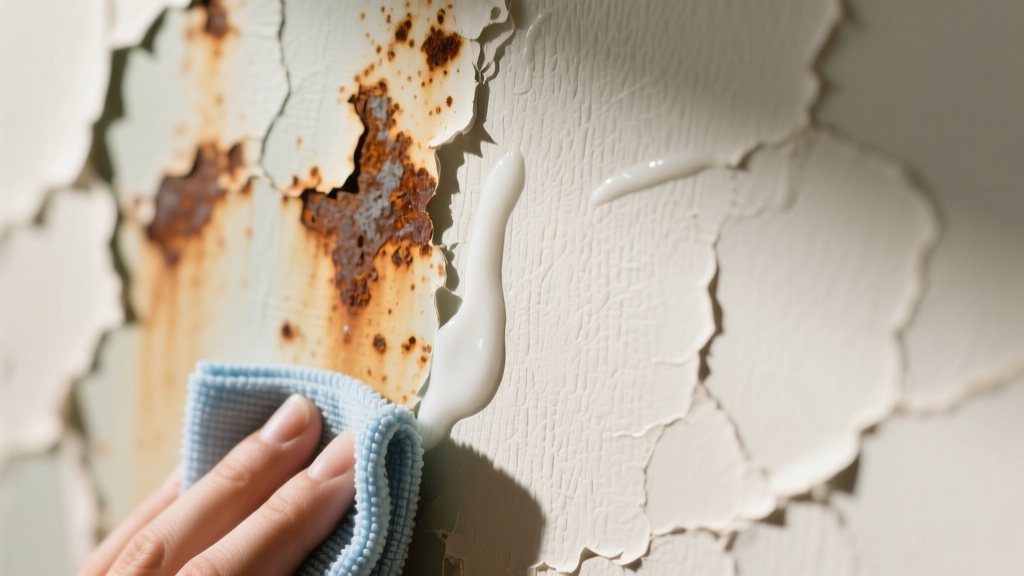
Rust on wallpaper is a quiet disaster — often appearing after a leaky pipe, rusty nail, or forgotten metal fixture behind the wall. Unlike fabric or tile, wallpaper offers zero margin for aggressive scrubbing or soaking. The good news? With precise, low-moisture methods, many rust stains *can* be lightened or fully removed — if caught early and treated correctly.
What You Need
| Item | Purpose | Estimated Cost |
|---|---|---|
| White vinegar (distilled) | Acidic solvent for iron oxide | $3–$5 per 16 oz bottle |
| Cotton swabs & lint-free cloths | Controlled application, no lint transfer | $2–$4 |
| Plastic putty knife (blunt edge) | Gentle lifting of loosened stain residue | $4–$7 |
| 3% hydrogen peroxide (pharmacy grade) | Oxidizing agent for stubborn orange-brown deposits | $2–$3 per 16 oz |
| Soft-bristle toothbrush (dedicated) | Micro-abrasion without scratching paper | $1–$2 |
Step-by-Step Removal Process
- Blot, don’t rub: Use a dry, lint-free cloth to gently absorb any residual moisture around the rust spot — never press or scrub.
- Test first: Dampen a cotton swab with white vinegar and apply to an inconspicuous corner (e.g., behind a door frame). Wait 5 minutes. If color lifts or paper warps, stop — your wallpaper is vinyl-coated or non-porous and requires professional assessment.
- Spot-treat with vinegar: Apply vinegar directly to the rust using a fresh swab. Let sit 90 seconds — no longer. Blot immediately with dry cloth. Repeat up to 3 times, waiting 2 minutes between applications.
- For persistent stains: Mix 1 part 3% hydrogen peroxide + 1 part water. Dab sparingly with swab. Wait 60 seconds, then blot. Do not let peroxide pool or dry on surface.
- Final lift: If faint discoloration remains, use the blunt edge of a plastic putty knife at a 10° angle to *lightly* scrape upward — only where stain appears raised or crystalline.
Surface-Specific Tips
Rust interacts differently depending on wallpaper type. Knowing yours prevents irreversible damage.
- Vinyl-coated wallpaper: Most common in bathrooms and kitchens. Tolerates vinegar well but rejects peroxide — it can cause yellowing. Stick to vinegar-only treatment, followed by immediate blotting.
- Non-woven wallpaper (e.g., Brewster, York): Breathable and tear-resistant. Accepts light peroxide dilution, but never saturate — use swabs only, no sprays.
- Traditional paper-backed wallpaper: Highly vulnerable. Avoid all liquids beyond minimal vinegar mist. If rust has penetrated backing, replacement is safer than risk of delamination.
Can I use lemon juice instead of vinegar?
Lemon juice has citric acid (≈5–6% concentration), while distilled white vinegar contains 5% acetic acid — similar strength, but lemon juice introduces sugars and pigments that may leave a sticky, light-sensitive residue. Vinegar is more predictable and leaves no film. Skip lemon juice unless vinegar is truly unavailable.
Will bleach remove rust from wallpaper?
No — bleach (sodium hypochlorite) does not break down iron oxide. In fact, it reacts with rust to form dark iron chloride compounds, turning orange spots black or purple. According to the U.S. EPA’s Guide to Safer Cleaning Products (2022), bleach is ineffective and counterproductive for rust removal on porous surfaces.
What if the rust keeps coming back?
Recurring rust means the source hasn’t been eliminated — usually a corroding fastener (nail, staple, or screw) behind the wall or a hidden plumbing leak. Peel back a corner of wallpaper near the stain and inspect the substrate. If you see rust bleeding from a nail head or damp drywall, the fix isn’t surface cleaning — it’s source remediation and patching. See our guide on fixing a leaky pipe behind wall.
Can I paint over rust-stained wallpaper?
Only as a last resort — and only after sealing the stain. Use a shellac-based primer like Zinsser BIN (applied with a foam brush, not roller) to block bleed-through. But painting adds weight and moisture; many wallpapers bubble or peel within 6–12 months. Replacement is more durable. For tips on choosing replacement stock, see best wallpaper for bathrooms.
What NOT to Do
- Never use steel wool, abrasive pads, or baking soda paste — they scratch paper fibers and grind rust deeper into the substrate.
- Don’t spray cleaners directly onto the wall — oversaturation causes adhesive failure and bubbling, especially on older installations.
- Avoid ammonia or alkaline cleaners (like dish soap solutions) — they neutralize vinegar’s acidity and can set rust permanently by forming insoluble iron hydroxides.
- Don’t ignore humidity — high moisture reactivates residual iron particles. Use a dehumidifier (best dehumidifier for basement) in problem rooms during and after treatment.
"Rust on wallpaper is rarely just a stain — it’s a symptom. Treating the surface without addressing the corrosion source fails 8 out of 10 times, according to restoration contractors surveyed in the National Association of Home Builders’ Interior Finish Repair Report (2023)."
Prevention
Preventing rust starts before the wallpaper goes up — and continues long after.
- Use rust-inhibiting fasteners: Choose stainless steel or coated drywall screws when hanging fixtures near walls.
- Seal nail heads: Before wallpapering, dab galvanized or aluminum nails with clear acrylic sealant (e.g., Krylon Crystal Clear).
- Install moisture barriers: In bathrooms and basements, use vapor-retardant primer (like Kilz Mold & Mildew Resistant) under wallpaper adhesive.
- Schedule biannual inspections: Check baseboards, trim, and outlet covers for subtle orange dust — early signs of hidden corrosion.
How long does rust removal take?
Most treatments require under 15 minutes of active work, but full evaluation (including drying time and observation for re-bleeding) takes 24–48 hours. Rushing leads to over-application and damage.
Is rust on wallpaper dangerous to health?
Rust itself (hydrated iron oxide) isn’t toxic, but its presence signals moisture — which encourages mold growth behind walls. The CDC notes that chronic exposure to indoor mold increases respiratory symptoms by up to 40% in sensitive individuals (CDC Indoor Air Quality Guidelines, 2021). Always check for musty odors or soft drywall behind rust spots.
If the stain is small, recent, and isolated, these methods will likely restore appearance. If it’s widespread, discolored, or accompanied by bubbling or peeling, replacement is safer and more cost-effective than repeated treatments. For guidance on measuring and ordering replacement wallpaper, see how to measure wallpaper.