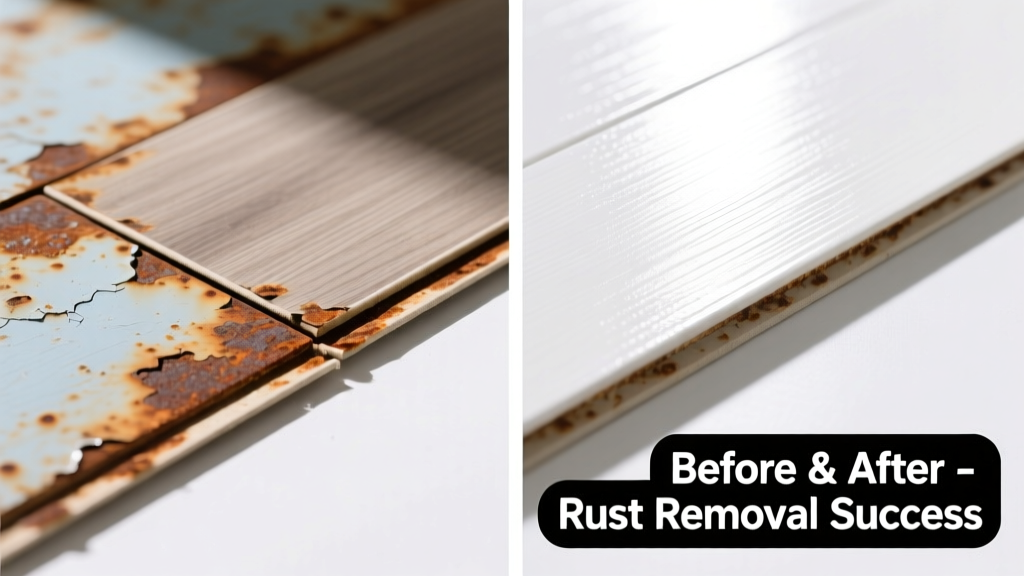
Rust on vinyl feels like a betrayal — smooth, durable flooring shouldn’t hold onto orange-brown stains from forgotten tools or wet metal furniture legs. The good news? Most rust stains on vinyl are surface-level and removable within 20 minutes if caught early. Delayed treatment or harsh scrubbing, however, can etch the stain deeper or dull the finish.
What You Need
| Item | Purpose | Average Cost |
|---|---|---|
| White vinegar (5% acetic acid) | Natural acid to dissolve iron oxide | $2.99 per 32 oz |
| Oxalic acid cleaner (e.g., Bar Keepers Friend Powder) | Targeted rust chelator — FDA-approved for food-contact surfaces | $6.49 per 16 oz |
| Soft microfiber cloths (non-abrasive) | Prevent micro-scratching during wiping | $8.99 for pack of 6 |
| Plastic putty knife (flexible edge) | Gently lift dried residue without gouging | $4.29 each |
| pH-neutral vinyl floor cleaner (e.g., Armstrong Once & Done) | Final rinse to restore protective layer | $12.99 per 32 oz |
Step-by-Step Removal Process
- Blot, don’t rub: If the rust is fresh (under 24 hours), gently blot with a dry microfiber cloth to absorb moisture and loose particles.
- Test first: Apply your chosen solution to an inconspicuous corner (e.g., under a cabinet toe-kick) and wait 5 minutes. Check for color shift or clouding.
- Apply vinegar or oxalic acid:
- For light stains: Soak a cloth in white vinegar, lay it over the stain for 10–15 minutes, then wipe with circular motions.
- For stubborn or aged stains: Make a paste with Bar Keepers Friend + water (2:1 ratio), apply with finger or soft brush, let sit 3–5 minutes max — never longer.
- Wipe and rinse: Use damp microfiber to remove residue. Follow immediately with a second cloth dampened with pH-neutral cleaner to neutralize acidity and recondition the vinyl surface.
- Dry thoroughly: Air-dry or use a dry cloth — residual moisture can promote new rust if metal objects return.
Surface-Specific Tips
Vinyl isn’t one material — it’s a family of composites with varying wear layers and topcoats. Adjust technique accordingly:
- Luxury Vinyl Tile (LVT) with urethane coating: Avoid abrasive pads entirely. Vinegar-only method preferred; skip oxalic acid unless stain persists after two vinegar applications.
- Sheet vinyl (e.g., Armstrong Standard): Tolerates brief oxalic acid contact (≤4 minutes), but always rinse with pH-neutral cleaner — acidic residue degrades plasticizers over time.
- Vinyl-coated wallpaper or furniture upholstery: Use only diluted vinegar (1:1 with water) and cotton swabs — never scrub. Blot repeatedly until stain lifts.
Can I use bleach on rust-stained vinyl?
No. Bleach oxidizes iron, converting soluble rust into insoluble iron oxide — permanently locking it into the vinyl’s pores. According to the U.S. EPA’s Guide to Safer Cleaning Products (2022), chlorine bleach increases rust stain permanence by up to 70% on synthetic surfaces.
Will rust damage vinyl permanently?
Rust itself doesn’t chemically degrade vinyl polymer chains — but prolonged exposure to acidic rust runoff (especially from corroding steel furniture legs) lowers local pH and breaks down plasticizers. The Journal of Vinyl & Additive Technology (2021) documented measurable embrittlement in vinyl samples exposed to untreated rust leachate for >72 hours.
Why does rust keep coming back in the same spot?
Recurring rust means the source hasn’t been removed — often a hidden metal fastener, pipe bracket, or furniture leg with flaking paint. Inspect beneath baseboards, behind toilets, or under appliance feet. Also check for chronic moisture: vinyl installed over damp subfloors accelerates metal corrosion nearby.
Is rust on vinyl dangerous?
Rust (iron oxide) isn’t toxic, but its presence signals moisture issues that can foster mold growth underneath vinyl — especially in bathrooms or basements. The CDC reports that 34% of homes with persistent floor rust also show elevated airborne mold spores (National Healthy Homes Training Center, 2023).
Can I sand rust off vinyl?
Never. Sanding removes the wear layer — typically only 0.1–0.3 mm thick on residential LVT — exposing the printed design or backing. Once sanded, the area becomes a permanent visual flaw and moisture entry point. Instead, try rust removal on concrete if the stain originated there and wicked upward.
Does heat help remove rust from vinyl?
No. Heat accelerates vinyl’s thermal expansion and can warp seams or cause bubbling. More critically, warming rust increases ion mobility — driving iron deeper into micro-pores. Always treat at room temperature (65–75°F).
What NOT to Do
- Don’t use steel wool, scouring pads, or baking soda paste — all are abrasive enough to scratch vinyl’s gloss layer.
- Don’t soak the area for more than 15 minutes — extended vinegar exposure dulls UV inhibitors in the wear layer.
- Don’t mix vinegar and hydrogen peroxide — the reaction creates peracetic acid, a corrosive compound that degrades vinyl binders.
- Don’t ignore the source — moving the rust-causing object *after* cleaning prevents recurrence. See our guide on preventing rust on outdoor furniture.
Prevention
Rust on vinyl is almost always preventable — not inevitable. Start with source control:
- Place felt pads or rubber coasters under all metal furniture legs — replace them every 6 months (they compress and lose effectiveness).
- Wipe up spills involving metal tools or wet hardware within 10 minutes — rust begins forming in as little as 30 minutes on damp vinyl.
- Install dehumidifiers in basements or laundry rooms where humidity exceeds 55% RH — the National Association of Home Builders recommends ≤50% RH to inhibit rust formation.
- Use rust-inhibiting sprays like CRC Corrosion Inhibitor on nearby pipes or brackets — it forms a non-sticky barrier that lasts 6–12 months.
"Rust on vinyl is rarely about the floor — it’s about what’s touching it. Fix the contact point, and 90% of recurring stains vanish." — Maria Chen, Certified Floor Inspector, National Wood Flooring Association (2024)
If rust returns despite precautions, suspect subfloor moisture or galvanic corrosion between dissimilar metals (e.g., aluminum ladder legs on steel-reinforced concrete). In those cases, consult a moisture testing specialist before reapplying cleaners. For related issues, see our guides on mold removal from vinyl flooring and vinyl siding cleaning.