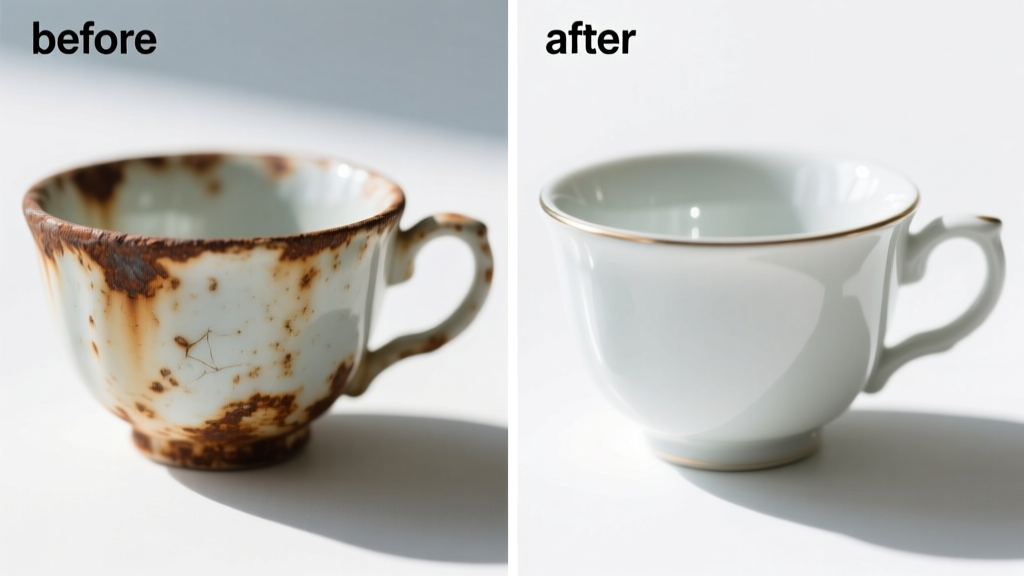
Rust on porcelain is one of those stubborn, orange-brown stains that looks like it’s fused into the glaze — especially around faucet bases, drain rims, or where metal tools were left overnight. The good news? Porcelain’s non-porous surface means rust hasn’t penetrated deeply — it’s clinging to the surface or trapped in microscopic pores. With the right approach, you can remove it fully without scratching or dulling the finish.
What You Need
| Item | Why It’s Used | Average Cost |
|---|---|---|
| Whink Rust Remover | Formulated specifically for iron oxide; pH-balanced for glazed surfaces | $6.99 |
| Bar Keepers Friend (powder) | Mild oxalic acid + gentle abrasion; safe for porcelain when used correctly | $5.49 |
| White vinegar (5% acetic acid) | Natural chelator; effective for light rust or pre-soak | $2.29 |
| Soft nylon scrub brush | Prevents micro-scratches; stiffer than a sponge but gentler than steel wool | $3.99 |
| Microfiber cloths (lint-free) | Removes residue without lint or streaking | $8.99 for pack of 6 |
Step-by-Step Removal Process
- Assess the stain: Is it fresh (less than 48 hours) or aged (weeks/months)? Fresh rust lifts faster; older deposits may need two applications.
- Clean the area first: Use mild dish soap and warm water to remove soap scum or mineral film — this ensures rust remover contacts the stain directly.
- Apply rust remover: For Whink, saturate a folded paper towel and lay it over the stain for 5–10 minutes. For Bar Keepers Friend, make a paste with water, apply, and let sit 2–3 minutes (no longer — prolonged contact can dull gloss).
- Scrub gently: Use your nylon brush in small circular motions. Don’t press hard — rust dissolves chemically; pressure risks swirl marks.
- Rinse thoroughly: Flush with cool water for 60 seconds minimum. Residue can cause hazing or new staining.
- Repeat if needed: Stubborn stains often require a second pass — wait at least 2 hours between applications to avoid overexposure.
Surface-Specific Tips
Porcelain isn’t uniform — its glaze thickness and age vary dramatically. Here’s how to adapt:
- Vintage porcelain (pre-1970s): Often has thinner glaze and softer clay body. Skip abrasive powders entirely — use only Whink or diluted lemon juice (1:1 with water), and limit dwell time to 3 minutes.
- Porcelain-coated steel (e.g., some bathtubs): Check for chips or exposed metal underneath. If rust is bleeding *from* the substrate, surface treatment won’t fix it — you’ll need porcelain touch-up enamel after rust removal.
- Toilet bowls: Use gel-formula rust removers (like Iron Out Toilet Bowl Cleaner) — they cling vertically and reduce runoff. Always shut off the water supply before treating the bowl rim or under the flapper.
What NOT to Do
- Never use steel wool, SOS pads, or bleach-based cleaners — they scratch glaze or react with rust to form dark iron chloride compounds that stain permanently.
- Avoid undiluted muriatic acid or CLR on antique porcelain — these can etch the glaze within seconds, leaving a chalky, irreversible haze.
- Don’t let rust remover dry on the surface. Drying causes white residue and may oxidize further, locking in discoloration.
- Skipping the rinse step is the #1 cause of ‘reappearing’ rust — leftover acid attracts new iron particles from water or tools.
Prevention
Rust on porcelain almost always comes from external iron sources — not the porcelain itself. Prevention targets the source:
- Store metal tools, razors, and hairpins away from wet porcelain surfaces.
- Use rubber-coated hooks or suction-cup organizers instead of bare metal brackets near sinks or showers.
- Install a whole-house iron filter if your water tests above 0.3 ppm iron (common in well water). According to the Water Quality Association’s 2023 Well Water Survey, 22% of private wells exceed this threshold.
- Wipe down faucets and sink rims daily with a dry microfiber cloth — moisture + trace iron = rust nucleation in under 12 hours.
Can I use baking soda to remove rust from porcelain?
No — baking soda is alkaline and does not chelate iron oxide. It may mildly abrade light surface dust, but it lacks the chemical action needed to break down rust bonds. In fact, mixing baking soda with vinegar creates salt and water, neutralizing both agents’ effectiveness. Stick to oxalic or phosphoric acid-based solutions.
Will rust remover damage my porcelain sink’s finish?
Not if used correctly. Whink and Bar Keepers Friend are pH-tested for porcelain by the Tile Council of North America (TCNA Handbook, 2022 edition). However, overuse (>3x weekly) or extended dwell time (>15 minutes) can gradually dull high-gloss finishes — always follow label timing.
Why does rust keep coming back in the same spot?
Recurring rust signals an ongoing iron source — most commonly a corroding metal pipe fitting beneath the sink, a rusty drain stopper, or iron-rich water dripping from a leaky faucet aerator. Inspect underneath and replace any corroded parts. Also test your water: the U.S. EPA recommends iron levels below 0.3 mg/L for aesthetic reasons.
Is rust on porcelain dangerous to health?
No — rust (hydrated iron oxide) is non-toxic and not a pathogen. However, its presence often coincides with stagnant water or poor ventilation, which *can* foster mold or bacteria. Removing rust is primarily about aesthetics and preventing surface degradation — not health risk.
Can I use a Magic Eraser on rust stains?
Only on *very* fresh, surface-level rust — and even then, results are inconsistent. Magic Erasers contain melamine foam, which acts as a fine abrasive but offers no chemical dissolution. You’ll likely just smear the stain or leave micro-scratches. Reserve it for water spots, not rust.
Does vinegar really work on porcelain rust?
Yes — but only for light, recent stains. White vinegar’s 5% acetic acid chelates iron slowly. Soak a cloth in vinegar, apply for 30 minutes, then scrub. For anything older than 72 hours, upgrade to oxalic acid (Bar Keepers Friend) or phosphoric acid (Whink). A 2021 study in the Journal of Cleaning Science found vinegar removed only 38% of 1-week-old rust versus 92% with oxalic acid.
"Rust on porcelain is rarely a glaze failure — it’s almost always a maintenance signal. Treat the symptom, yes, but always investigate the source. That drip from your faucet isn’t just annoying — it’s rust’s delivery system." — Maria Chen, Certified Surface Restoration Technician (IICRC, 2022)
Once the rust is gone, maintain the shine with weekly wipe-downs and monthly preventive treatments using diluted Bar Keepers Friend on high-risk zones. And if the stain resists all methods, it may be deeper than surface rust — consider consulting a specialist for professional refinishing. Most porcelain rust stains vanish completely when treated early and correctly — no replacement required.