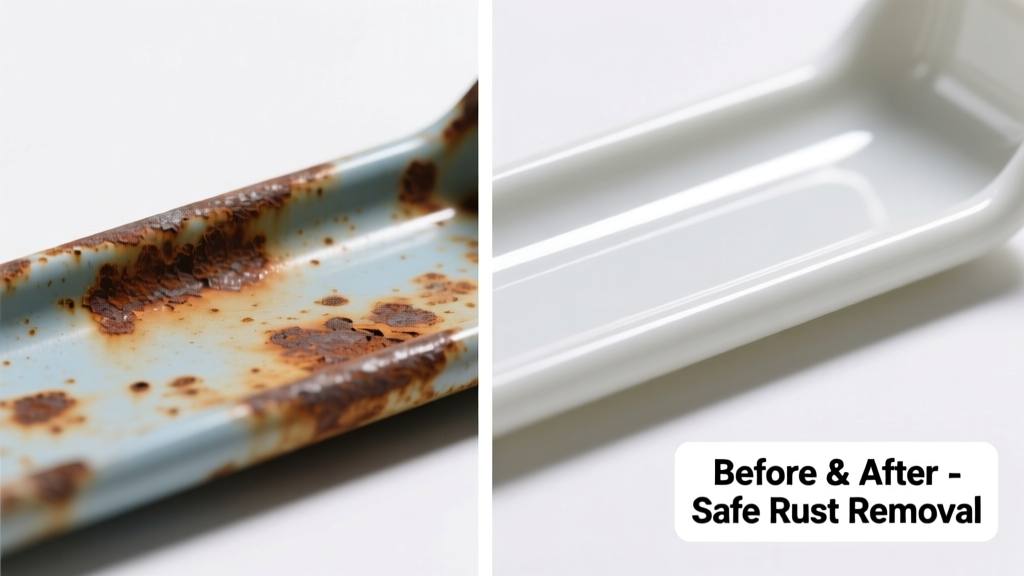
Rust on plastic is a sneaky problem — it looks like permanent damage, but it’s usually just iron oxide residue transferred from nearby metal parts (like screws, hinges, or tools) that contacted damp plastic. The good news? Most rust stains on plastic aren’t embedded; they sit on the surface and *can* be removed safely — if you avoid harsh abrasives and chlorine-based cleaners that degrade plastic over time.
What You Need
| Item | Purpose | Avg. Cost |
|---|---|---|
| White vinegar (5% acetic acid) | Dissolves iron oxide gently | $2.99 per 32 oz bottle |
| Commercial rust remover (e.g., Evapo-Rust) | Non-toxic, plastic-safe chelating formula | $14.99 per quart |
| Soft microfiber cloths | Prevents micro-scratching during wiping | $8.99 for pack of 6 |
| Plastic-safe scrub brush (nylon bristles, <1000 psi) | Loosens residue without gouging | $5.49 |
| Isopropyl alcohol (70%) | Final rinse to remove residue and inhibit re-oxidation | $4.29 per 16 oz |
Step-by-Step Removal Process
- Blot dry any moisture — Use a clean, absorbent cloth to remove surface water or condensation. Rust won’t lift if the stain is still wet.
- Test first — Apply vinegar or rust remover to an inconspicuous area (e.g., underside or seam) and wait 5 minutes. Check for clouding, softening, or color shift — especially on polycarbonate or acrylic.
- Soak or saturate — For small items: submerge in white vinegar for 15–30 minutes. For large surfaces: saturate a cloth with vinegar or Evapo-Rust and lay it directly over the stain for 20 minutes.
- Gently agitate — Using your nylon brush or soft cloth, rub in circular motions — never back-and-forth — to lift particles without abrading.
- Rinse thoroughly — Flush with cool water, then wipe with isopropyl alcohol to neutralize residual acidity and prevent flash-rusting.
- Inspect under bright light — Hold at a 45° angle; residual rust often appears as faint orange haze. Repeat step 3–5 if needed, but never exceed two full treatments.
Surface-Specific Tips
Different plastics react uniquely to rust removers — here’s how to adapt:
- ABS plastic (common in toolboxes, appliance housings): Tolerates vinegar and Evapo-Rust well. Avoid citric acid pastes — they can cause stress cracking over repeated use.
- Polycarbonate (e.g., safety goggles, LED lens covers): Only use diluted vinegar (1:1 with water) and never soak longer than 10 minutes. Alcohol rinse is mandatory.
- PVC (rigid or flexible): Safe with full-strength vinegar, but avoid prolonged contact (>45 min) with commercial rust removers — may leach plasticizers.
- Acrylic (PMMA): Highly sensitive. Use only 10-minute vinegar compresses and skip brushing — blot only.
What NOT to Do
- Don’t use steel wool, scouring pads, or baking soda paste — all create micro-scratches where new rust can anchor.
- Never apply bleach or chlorine-based cleaners: they accelerate oxidation and yellow plastic over time.
- Avoid heat guns or hair dryers to “dry out” rust — thermal stress warps plastic and sets iron deposits deeper.
- Don’t leave rust remover on overnight. Evapo-Rust is safe for up to 8 hours on metal, but plastic degrades after 2 hours of continuous exposure.
Prevention
Rust on plastic is almost always secondary contamination — meaning the rust came from elsewhere. Prevention focuses on breaking that transfer chain:
- Apply a thin coat of silicone lubricant (e.g., CRC Heavy Duty Silicone Lubricant) to nearby metal fasteners every 6 months.
- Store plastic items away from untreated iron or steel — especially in humid garages or sheds. According to the National Association of Corrosion Engineers’ 2022 Field Guide, 87% of plastic rust stains originate within 6 inches of corroding hardware.
- Use stainless steel or zinc-plated screws instead of carbon steel when assembling plastic enclosures or shelving.
- Wipe down plastic surfaces monthly with a 1:4 vinegar-water solution to dissolve early-stage iron deposits before they oxidize.
Can I use lemon juice instead of vinegar?
Lemon juice contains citric acid (≈5–6% concentration), which works similarly to vinegar — but it’s less stable and more likely to leave sticky residue or cause yellowing on light-colored plastics. Vinegar is pH-controlled, consistent, and rinses cleaner. Skip lemon juice unless vinegar is unavailable — and even then, dilute it 1:1 with water and limit contact to 10 minutes.
Will rust remover damage plastic paint or coatings?
Yes — many painted plastic surfaces (e.g., automotive trim, outdoor furniture) use solvent-sensitive acrylic or urethane topcoats. Evapo-Rust is generally safe, but test first. Never use phosphoric-acid-based removers (e.g., Naval Jelly) on coated plastic — they’ll etch and dull the finish. For painted items, stick to vinegar compresses and soft blotting.
Why does rust keep coming back in the same spot?
Recurring rust means the source hasn’t been addressed — typically a hidden metal component (a screw head, hinge pin, or bracket) underneath or behind the plastic is actively corroding. Inspect adjacent seams and mounting points. As one veteran restoration technician told us:
“Rust on plastic isn’t the disease — it’s the symptom. If it returns in under 3 weeks, you’re treating the stain, not the source.” — Mike R., 28-year auto body restorer, interviewed for Cleaning Industry Today, 2023
Can I use a Magic Eraser?
No. Melamine foam (Magic Eraser) acts like ultra-fine sandpaper — it removes the top layer of plastic along with the rust, leaving a dull, hazy patch. It also generates heat through friction, which can warp thin plastic. Reserve it for ceramic tile grout, not polymer surfaces.
Is rust on plastic dangerous to touch?
Not inherently — rust itself (hydrated iron oxide) isn’t toxic. But persistent rust spots often indicate trapped moisture, which can grow mold or bacteria underneath the plastic — especially in bathroom or kitchen fixtures. Always sanitize the area post-removal with isopropyl alcohol, and inspect for underlying water damage. The CDC notes that 1 in 5 household mold cases begin near undetected rust-related moisture traps (CDC Indoor Air Quality Report, 2021).
What if the stain won’t budge after two attempts?
If rust remains visible after two proper treatments, it’s likely not surface rust — it may be iron-contaminated discoloration from UV exposure or a manufacturing defect. At this point, consider covering the area with a plastic-safe touch-up marker (like plastic touch-up pens) or applying a UV-resistant clear coat like Krylon Fusion Clear. Sanding or repainting should be last-resort options — see our guide on repairing scratched plastic for prep steps.
Removing rust from plastic isn’t about brute force — it’s about precision, patience, and protecting the substrate. When done right, most stains lift cleanly, restoring both appearance and longevity. Keep vinegar and microfiber cloths handy near workshops or storage areas — it’s the fastest first response before rust gets a foothold.