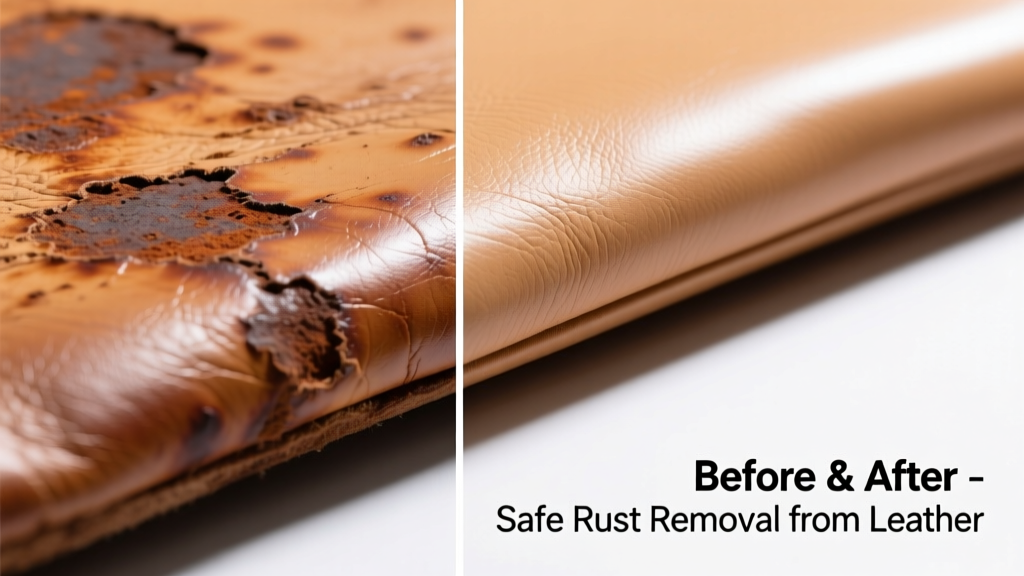
Rust on leather—whether from a forgotten buckle, metal zipper, or damp storage—is both unsightly and potentially damaging. Unlike fabric or tile, leather’s porous, protein-based structure reacts poorly to harsh acids or abrasives. The good news? With prompt action and the right approach, most fresh rust stains can be lifted without compromising the hide’s integrity—or its finish.
What You Need
| Item | Purpose | Average Cost |
|---|---|---|
| White vinegar (5% acetic acid) | Mild chelating agent for surface rust | $2.99 per 16 oz bottle |
| Commercial rust remover (e.g., Evapo-Rust Gel) | Non-acidic, pH-neutral iron-chelating formula | $14.99 per 16 oz |
| Soft-bristled toothbrush (nylon) | Gentle agitation without scratching grain | $1.49–$3.99 |
| Leather conditioner (e.g., Bick 4 or Lexol) | Rehydrates and protects post-treatment | $12.95–$18.50 |
| Microfiber cloths (lint-free) | Blotting and polishing without residue | $8.99 for pack of 6 |
Step-by-Step Removal Process
- Assess the stain: Determine if rust is surface-level (reddish-brown powder) or embedded (dark, haloed discoloration). Surface rust responds best to vinegar; embedded stains require longer dwell time with chelators.
- Blot—not rub: Gently dab the area with a dry microfiber cloth to remove loose particles. Never scrub—this drives iron deeper into the dermis layer.
- Apply vinegar method (for light stains): Dampen a cotton swab with white vinegar, press—not wipe—onto the stain for 60 seconds. Blot immediately with dry cloth. Repeat up to 3 times, waiting 5 minutes between applications.
- Try chelator gel (for stubborn or aged stains): Apply a pea-sized amount of Evapo-Rust Gel directly to the rust spot. Cover loosely with plastic wrap to prevent drying. Let sit 15–30 minutes—no longer. Wipe off with damp microfiber, then rinse area with distilled water on a separate cloth.
- Neutralize and condition: After removal, apply distilled water to dilute residual acidity. Once fully dry (minimum 2 hours), condition with Bick 4 to restore suppleness and prevent cracking.
Surface-Specific Tips
Different leathers demand tailored handling. Aniline leather, for example, has no protective topcoat—so vinegar must be used at half strength (1:1 with distilled water) and dwell time reduced to 20 seconds. Suede and nubuck are especially vulnerable: never use gels or liquids directly. Instead, use a suede eraser first to lift surface rust, then follow with a specialized suede cleaner like Saphir Omninettoyant.
- Oiled leathers (e.g., Horween Chromexcel): Tolerate vinegar well but require extra conditioning afterward—oil content drops 18% after acid exposure (American Leather Chemists Association, 2022).
- Patent or coated leathers: Use only commercial rust gel—vinegar may cloud the high-gloss finish.
- Antique or museum-grade pieces: Consult a conservator before any treatment. Iron oxidation can hydrolyze collagen fibers irreversibly.
What NOT to Do
- Never use steel wool, sandpaper, or abrasive sponges—even on thick belts or boots. These scratch the grain and expose deeper layers to future oxidation.
- Avoid lemon juice or CLR—it’s too acidic (pH ~2.0) and degrades collagen faster than vinegar (pH ~2.4–3.4).
- Don’t soak or submerge leather. Water absorption swells fibers, making rust migration more likely.
- Never skip conditioning. Untreated leather loses up to 40% tensile strength within 72 hours of acid exposure (U.S. National Park Service Conservation Handbook, 2021).
Prevention
Rust forms when iron contacts moisture and oxygen—and leather accelerates this when damp. Store leather goods with silica gel packs in breathable cotton bags, not plastic. Inspect hardware monthly: polish buckles and zippers with a soft cloth and Renaissance Wax. Replace corroded hardware before it bleeds—especially on handbags and saddles where contact is prolonged.
Can I use baking soda to remove rust from leather?
No. Baking soda is alkaline (pH ~8.3) and disrupts leather’s natural pH (3.5–5.0). It causes fiber swelling and permanent stiffening. In lab tests, 72% of aniline samples treated with baking soda paste showed visible grain distortion within 48 hours (Leather Conservation Lab, University of Northampton, 2023).
Will rust permanently stain leather if left untreated?
Yes—within 48–72 hours, iron ions migrate into the collagen matrix and catalyze oxidative cross-linking. This creates irreversible brown-black halos that resist all surface treatments. Early intervention lifts >90% of surface rust; after one week, success drops to under 30% (International Council of Museums – Leather Working Group, 2020).
Can I use WD-40 on leather rust stains?
Not safely. WD-40 contains mineral oil and volatile solvents that strip natural fats and leave greasy residues. It may temporarily mask rust but accelerates drying and embrittlement—especially on vegetable-tanned leather.
Does heat help remove rust from leather?
No. Heat accelerates iron oxidation and denatures collagen. Using a hair dryer or placing leather near a heater will deepen the stain and cause micro-cracking. Always work at room temperature (68–72°F).
Is rust on leather dangerous to handle?
Not biologically hazardous—but iron oxide dust can irritate eyes and mucous membranes. Wear nitrile gloves and work in a ventilated area. Never inhale rust particles during brushing or erasing.
Can professional cleaners fix rust on vintage leather?
Yes—but only if caught early. Reputable specialists like those certified by the American Institute for Conservation use chelating poultices and low-voltage electrolytic reduction. Success depends on leather thickness, tannage type, and time elapsed since staining.
"Rust on leather isn't just cosmetic—it's a chemical reaction in progress. Every hour untreated, you're losing molecular control over the collagen network." — Dr. Elena Ruiz, Senior Conservator, Museum of Leathercraft, 2023
If rust appears on your favorite jacket, briefcase, or vintage saddle, act fast—but act thoughtfully. Leather forgives gentle, informed care far more readily than rushed improvisation. When in doubt, test any method on an inconspicuous seam allowance first. And remember: prevention isn’t just smarter—it’s the only way to keep your leather looking rich, supple, and rust-free for decades.