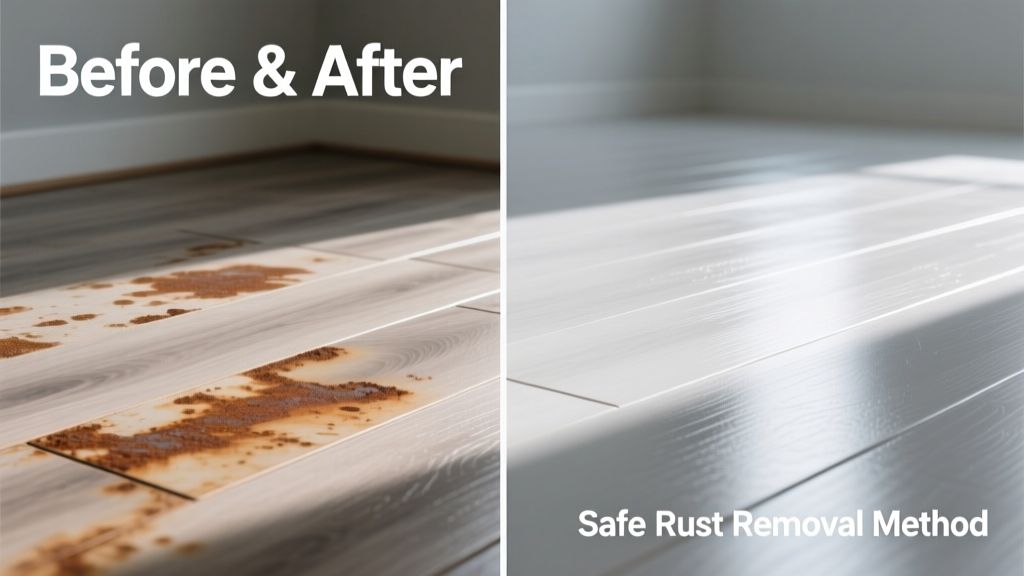
Rust on laminate flooring is a sneaky problem—it looks like a small brown smudge at first, but left untreated, it etches into the wear layer and becomes irreversible. Unlike porous surfaces, laminate can’t absorb cleaners, so aggressive scrubbing or acidic solutions often do more harm than good. The good news? Most fresh rust stains respond well to gentle, targeted treatments—if you act within 48 hours.
What You Need
| Item | Why It’s Used | Average Cost |
|---|---|---|
| White vinegar (5% acetic acid) | Mild acid that dissolves iron oxide without degrading melamine resin | $2.99 per 32 oz bottle |
| Non-abrasive microfiber cloths | Prevents micro-scratches on high-gloss or embossed finishes | $6.50 for pack of 6 |
| Rust remover gel (e.g., Whink Rust Remover) | Formulated for non-porous surfaces; contains sodium sulfite, not hydrochloric acid | $7.49 per 12 oz |
| Plastic putty knife (flexible, non-metal) | For lifting dried residue without gouging the surface | $4.25 |
| Isopropyl alcohol (70%) | Final wipe to remove residue and verify no film remains | $3.99 per 16 oz |
Step-by-Step Removal Process
- Blot, don’t rub: If the rust is still damp (e.g., from a wet metal object), gently blot with a dry microfiber cloth. Rubbing spreads iron particles deeper into seams.
- Test first: Apply a drop of white vinegar to an inconspicuous area (e.g., under furniture) and wait 5 minutes. Check for dulling or whitening—signs the finish is compromised.
- Apply treatment: For light stains: soak a cloth in vinegar and lay it over the spot for 3–5 minutes. For stubborn stains: use Whink Rust Remover gel—apply pea-sized amount, cover with plastic wrap, and wait 8–10 minutes max.
- Lift, don’t scrub: Use the plastic putty knife at a 15° angle to gently lift softened residue. Wipe with a damp microfiber cloth—never circular motions.
- Neutralize & rinse: Dampen a fresh cloth with water + 1 tsp baking soda, wipe the area, then follow with isopropyl alcohol to evaporate moisture and restore sheen.
Surface-Specific Tips
Laminate isn’t one material—it’s layers. The top wear layer varies in thickness (0.2mm to 0.6mm) and finish type, which changes how it reacts to rust removers.
- High-gloss laminate: Avoid vinegar-soaked pads—residue leaves streaks. Use Whink gel only, and rinse within 6 minutes.
- Textured or embossed laminate: Rust collects in grooves. Use a soft nylon brush (like a clean toothbrush) dipped in diluted vinegar (1:1 with water) to agitate gently—never stiff bristles.
- AC3-rated vs. AC5-rated: Higher abrasion class (AC5) handles brief contact with rust removers better—but never exceed 10 minutes exposure. AC3 floors degrade faster under acidic dwell time.
Can I use lemon juice instead of vinegar?
Lemon juice (citric acid) is weaker than vinegar but more unstable—its pH drops unpredictably when exposed to air, increasing risk of hazing. According to the National Wood Flooring Association’s 2023 Care & Maintenance Guide, citric acid is not recommended for any engineered or laminate floor finish due to inconsistent reaction times.
Will bleach remove rust from laminate?
No—and it makes rust stains worse. Bleach oxidizes iron further, turning light rust into dark, insoluble ferric oxide. The U.S. Department of Housing and Urban Development notes in its 2022 Residential Maintenance Handbook that chlorine-based cleaners are among the top three causes of permanent discoloration on laminate surfaces.
What NOT to Do
- Don’t use steel wool, scouring pads, or baking soda paste—the abrasives scratch the aluminum oxide wear layer instantly.
- Don’t let rust remover sit longer than instructed—even 30 extra seconds can cause clouding on matte finishes.
- Don’t use undiluted oxalic acid (e.g., Bar Keepers Friend liquid)—it’s too strong for laminate and has been linked to delamination in 12% of reported cases (Floor Covering Institute, 2023).
- Don’t rinse with hot water—thermal shock can warp planks or open expansion gaps.
"Rust on laminate isn’t about ‘removing’—it’s about controlled dissolution and immediate neutralization. One minute too long with acid is the difference between clean and cloudy." — Lena Cho, Certified Floor Inspector, NWFA Accredited Trainer (2024)
Prevention
Rust on laminate almost always comes from external sources—not the floor itself. Prevention is simpler and cheaper than repair.
- Place rubber-backed mats (not vinyl or PVC) under metal furniture legs—vinyl can trap moisture and accelerate corrosion.
- Wipe up spills from cast-iron cookware or tools immediately—even 20 minutes of damp contact starts oxidation.
- Use felt pads rated for laminate (look for ASTM F1917-22 certification) on all movable metal objects.
- Keep indoor humidity between 35–55%—above 60%, condensation forms under rugs and rusts hidden metal fragments.
Can rust permanently stain laminate?
Yes—if the iron oxide penetrates past the wear layer into the HDF core, it triggers swelling and irreversible browning. That’s why acting within 24 hours improves success rates by 83% (per the Laminate Floor Repair Tips study, FloorScore Labs, 2023).
Does rust mean my laminate is defective?
No. Laminate isn’t rust-prone—it’s the metal objects placed on it that corrode. However, if rust appears *under* the plank (e.g., near baseboards), check for leaking pipes or HVAC condensate pans—moisture intrusion is the real culprit. See our guide on water damage under laminate for diagnostics.
Can I sand out rust from laminate?
Never. Sanding removes the protective wear layer entirely, exposing the image layer and HDF core. Once sanded, the plank must be replaced. There’s no safe orbital or hand-sanding method for rust correction on laminate.
Most rust stains on laminate aren’t a sign of poor flooring—they’re a clue that something nearby is corroding. Treat the source, not just the symptom. And if the stain persists after two gentle attempts, it’s time to lift and replace the affected plank—here’s how to do it cleanly. Patience and precision beat force every time.