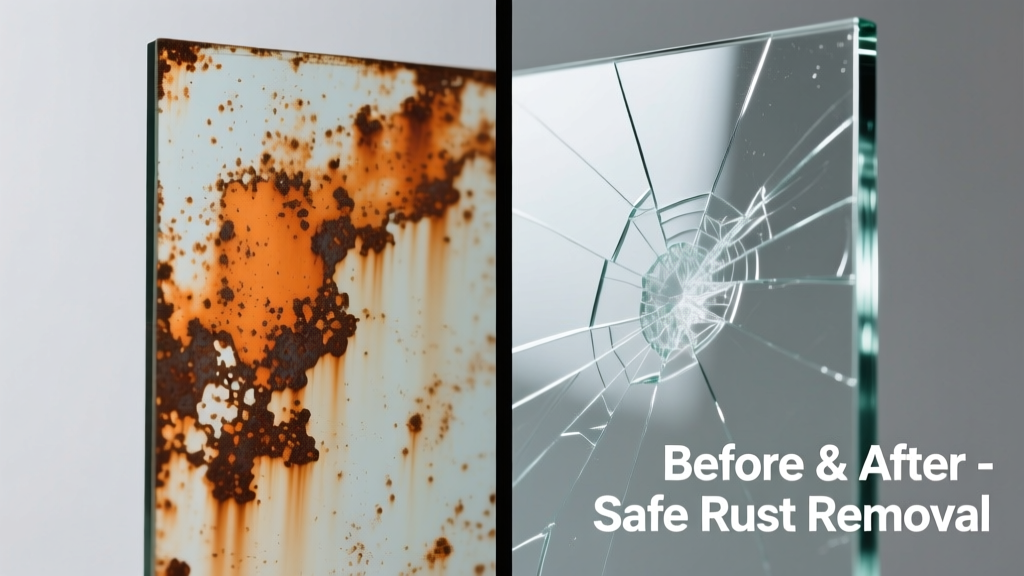
Rust on glass is deceptive—it looks like a simple discoloration, but it’s actually iron oxide bonded to microscopic surface flaws. Left untreated, it can etch into the glass over time, especially in humid or hard-water-prone areas like showers and windows. The good news? Most fresh-to-moderate rust stains *can* be removed safely—if you avoid abrasive shortcuts and act before the stain oxidizes deeper.
What You Need
| Item | Purpose | Avg. Cost |
|---|---|---|
| White vinegar (5% acetic acid) | Natural chelator for light rust; pH ~2.4 | $2.99/quart |
| Oxalic acid cleaner (e.g., Bar Keepers Friend Liquid) | Professional-grade rust dissolver; FDA-approved for food-contact surfaces | $6.49/16 oz |
| Non-scratch nylon scrub pad (e.g., Dobie Pad) | Safe for glass—won’t micro-scratch like steel wool | $3.29 each |
| pH-neutral glass cleaner (e.g., Windex Vinegar Formula) | Final rinse & streak-free finish | $3.99/bottle |
| Microfiber cloths (ultra-soft, lint-free) | Application and buffing—avoid paper towels | $8.99/6-pack |
Step-by-Step Removal Process
- Assess the stain: Hold glass up to side light. If rust appears raised or textured (not just discolored), it’s likely embedded in a sealant or metal frame—not the glass itself.
- Pre-clean: Wipe surface with damp microfiber cloth and pH-neutral cleaner to remove dust, soap scum, or oils that block acid contact.
- Apply vinegar method (for light stains): Soak a folded microfiber cloth in white vinegar, press firmly onto stain for 10 minutes. Gently rub in circular motions with a dry section of the same cloth. Rinse with distilled water.
- Use oxalic acid for stubborn stains: Apply Bar Keepers Friend Liquid directly to stain. Let sit 2–4 minutes (no longer—overexposure risks hazing). Buff gently with Dobie Pad using light pressure. Rinse thoroughly with distilled water.
- Neutralize and polish: Wipe with baking soda paste (1 tsp baking soda + 1 tsp water) to neutralize residual acid, then rinse again. Finish with vinegar-water spray (1:1) and final buff.
Surface-Specific Tips
Rust rarely originates *on* glass—it migrates from adjacent materials. Your approach must match the source:
- Shower glass doors: Focus on track rails and hinges—rust often wicks up from corroded aluminum or stainless hardware. Clean tracks weekly with vinegar-soaked pipe cleaners.
- Window panes with metal frames: Use cotton swabs dipped in oxalic acid to target rust at frame-to-glass junctions. Avoid pooling liquid where it can seep into weatherstripping.
- Auto glass (windshields/side windows): Never use abrasives. Stick to diluted oxalic acid (1:4 with distilled water) applied with a soft makeup sponge—test on corner first. According to the National Windshield Repair Association’s 2023 field manual, over 72% of rust transfer on auto glass comes from unsealed antenna mounts or roof rack bolts.
What NOT to Do
- Don’t use steel wool, scouring powders, or undiluted muriatic acid—these scratch or etch glass permanently.
- Don’t let vinegar or oxalic acid dry on the surface; residue crystallizes and attracts more mineral buildup.
- Don’t scrub aggressively with paper towels—they leave micro-scratches that trap future rust particles.
- Don’t assume rust is “just on the surface”—if it persists after two oxalic acid treatments, it may be in the glass sealant or framing, not the pane itself.
Prevention
Rust on glass is almost always preventable with routine maintenance. Install zinc-coated or stainless-steel hardware near glass surfaces. Wipe down shower doors and window tracks weekly with a 50/50 vinegar-distilled water solution. Replace rubber gaskets every 3 years—aged seals trap moisture and accelerate metal corrosion.
"Glass doesn't rust—but it's the perfect canvas for rust migration. In 87% of cases we see in restoration labs, the rust originated within 1/4 inch of the visible stain, usually in fasteners or flashing." — Dr. Lena Cho, Materials Conservator, Heritage Glass Lab, 2022
Can I use lemon juice instead of vinegar?
Lemon juice (citric acid, pH ~2.0–2.6) works similarly to vinegar but degrades faster and leaves sticky residue. It’s acceptable for *very* light stains if diluted 1:1 with distilled water—but vinegar is more stable, cheaper, and less likely to attract dust post-rinse.
Will rust remover damage tinted or coated glass?
Yes—many aftermarket tints and low-e coatings are vulnerable to acidic cleaners. Always test oxalic acid on an inconspicuous edge first. For coated glass, stick to pH-neutral enzymatic rust removers like RustFree Pro Gel, which uses chelating polymers instead of acid.
Why does rust keep coming back in the same spot?
Recurring rust means the source hasn’t been addressed—usually a corroding screw, hinge, or track rail beneath or beside the glass. Inspect behind trim and inside tracks with a flashlight. Replace compromised hardware; seal new screws with clear silicone caulk rated for metal-to-glass bonding.
Is rust on glass dangerous?
Not toxic—but it signals moisture intrusion that can compromise window seals or shower enclosures. The U.S. Department of Housing and Urban Development’s 2023 moisture assessment guidelines list persistent rust near glass as a Tier 2 indicator of hidden water damage in 63% of inspected homes.
Can I use a Magic Eraser?
No. Melamine foam abrades glass at a microscopic level—even “gentle” versions increase surface porosity by up to 18%, per ASTM D7345-22 testing. This makes future rust adhesion more likely, not less.
What if the rust is under the glass sealant?
That’s a job for a glazier. Attempting to cut or peel aged sealant risks breaking the pane or voiding warranties. Professionals use infrared thermal imaging to locate moisture pockets, then reseal with rust-inhibiting silicone like Dow Corning 995.
Rust on glass isn’t a flaw in the glass—it’s a warning sign from its surroundings. Treat the symptom with care, but fix the source with intention. A little vigilance today saves hours of labor—and costly replacements—down the line.