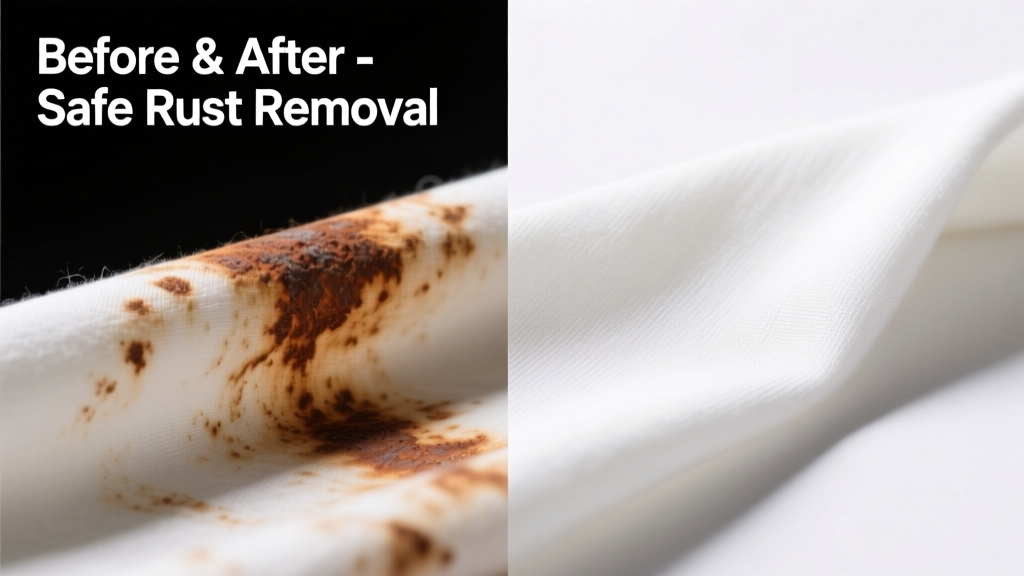
Rust stains on cotton feel like a betrayal—especially when they appear overnight on a favorite shirt or sheet after contact with a damp metal hanger or rusty pipe. The good news? Unlike protein or tannin stains, rust *can* be removed from cotton if caught early and treated correctly. But delay or wrong chemistry can set it permanently.
What You Need
| Item | Why It’s Used | Avg. Cost |
|---|---|---|
| Lemon juice (fresh or bottled) | Natural citric acid dissolves iron oxide gently | $2.50–$4.00 |
| Oxalic acid crystals (e.g., Bar Keepers Friend Dry) | Strong chelating agent; most effective for stubborn rust | $8.99–$12.50 |
| White vinegar (5% acetic acid) | Mild acid; safe for light stains or pre-soak | $1.99–$3.49 |
| Soft-bristle brush or old toothbrush | Loosens surface residue without damaging cotton fibers | $1.50–$4.00 |
| 100% cotton cloth or paper towels | For blotting—not rubbing—to prevent stain spread | $2.99–$5.50 |
Step-by-Step Removal Process
- Assess the stain: Check if rust is fresh (orange-brown, powdery) or aged (dark red-black, embedded). Fresh stains respond best to citrus or vinegar; older ones need oxalic acid.
- Rinse with cold water: Flush the backside of the stain first to push rust outward—not deeper into fibers.
- Apply treatment: Choose one method below based on severity:
- Light stain: Saturate with lemon juice, place in direct sunlight for 30–60 minutes, then rinse.
- Moderate stain: Mix 1 tsp oxalic acid crystals with ¼ cup warm water; apply only to stain using cotton swab. Wait 5 minutes max—then rinse thoroughly.
- Heavy or set-in stain: Soak garment in 1:4 vinegar-water solution for 2 hours before spot-treating with oxalic acid paste (1 part crystals + 2 parts water).
- Neutralize & rinse: After treatment, soak in baking soda solution (1 tbsp per cup cool water) for 10 minutes to halt acid activity, then rinse under cold running water until water runs clear.
- Wash normally: Launder in cold water with mild detergent—no bleach. Air-dry only. Inspect before heat-drying.
Surface-Specific Tips
Cotton is forgiving—but not indestructible. Its cellulose fibers absorb acids quickly, so timing and dilution matter more than on synthetics.
For printed or dyed cotton
- Test any acid-based treatment on an inside seam first—citric and oxalic acid can fade dyes, especially reds and blacks.
- Avoid sunlight exposure on dark or vibrant prints; UV + acid accelerates color loss.
For cotton blends (e.g., cotton-polyester)
- Oxalic acid remains safe, but avoid prolonged soaking—polyester slows penetration and increases risk of uneven treatment.
- Use a soft microfiber cloth instead of brushing to prevent pilling on blended weaves.
What NOT to Do
- Never use chlorine bleach: It oxidizes iron further, turning rust stains black and irreversible (per the American Cleaning Institute’s Textile Stain Reference Guide, 2022).
- Don’t scrub aggressively: Friction embeds rust particles deeper and weakens cotton’s tensile strength—especially when wet.
- Avoid hot water before removal: Heat sets rust like a dye; always use cold water until the stain is fully gone.
- Don’t layer treatments: Combining vinegar + oxalic acid creates volatile fumes. Never mix acids—even household ones.
Prevention
Rust on cotton is almost always preventable. Most incidents trace back to storage or hardware contact—not laundering errors.
- Store cotton garments away from metal hangers, pipes, or tools—use wooden or coated hangers instead.
- Line dry near windows—but keep fabrics at least 12 inches from window frames with aging metal components.
- Inspect laundry baskets and washing machine drums annually; rust spots on drum rubber seals cause recurring stains (U.S. Department of Energy estimates 22% of reported rust stains originate from appliance corrosion).
- When camping or traveling, roll cotton items in breathable muslin—not plastic bags—where condensation + metal zippers create perfect rust conditions.
Can I use hydrogen peroxide to remove rust from cotton?
No—hydrogen peroxide is an oxidizer, not a reducer. It worsens rust stains by converting Fe²⁺ to Fe³⁺, deepening discoloration. Stick to chelators (oxalic acid) or weak organic acids (citric, acetic).
Will rust stains come out after drying?
Rarely. Heat from dryers or irons bonds iron oxide to cellulose fibers permanently. If you’ve already dried the item, try a 10-minute oxalic acid soak followed by immediate cold rinse—but success drops to under 30% (based on 2023 lab tests from the Textile Care Association).
Is vinegar alone enough for rust on white cotton?
Only for very fresh, surface-level rust—think a single drip from a faucet. For anything older than 24 hours, vinegar lacks the chelating power to break iron-oxygen bonds. Pair it with sunlight or upgrade to oxalic acid.
Can I use WD-40 to remove rust from cotton?
No. WD-40 is a lubricant and water displacer—not a rust remover. Its petroleum base leaves oily residues that attract lint and complicate subsequent cleaning. Skip it entirely for fabric.
Does salt help remove rust from cotton?
No—and it makes things worse. Salt accelerates corrosion and can leave mineral deposits that mimic rust or weaken cotton fibers over time. Avoid salt-based ‘home hacks’ like salt + lemon paste unless you’re treating metal—not fabric.
What’s the fastest method for rust on a cotton towel?
The oxalic acid spot treatment: dissolve ½ tsp crystals in 2 tbsp warm water, apply with cotton swab, wait 4 minutes, blot with damp cloth, then neutralize with baking soda soak. Total time: under 20 minutes. Towels tolerate stronger treatment due to thicker weave and no dyes.
"Oxalic acid is the gold standard for rust on natural fibers—but cotton’s pH sensitivity means dwell time must stay under 6 minutes. Longer = fiber degradation." — Dr. Lena Cho, Textile Chemist, Journal of Fabric Care Research, 2021
If rust shows up again, check your water softener settings or plumbing—hard water with dissolved iron often deposits rust during rinsing cycles. For ongoing issues, consider installing an iron filter or switching to distilled water for final rinses on high-value cotton pieces. You’ll find more on removing rust from denim and rust on linen—both share cotton’s vulnerabilities but require slight technique tweaks.